Part 3
That’s the difference. Pelé and Beckham were ambassadors. Messi is still a weapon. In the CONCACAF Champions Cup, he’s not just selling jerseys — he’s winning games. The 900th goal wasn’t a penalty or a tap-in; it was a moment of pure, unadulterated Messi. The kind of goal that makes you forget his age, his league, his legacy. You just watch. And you wonder: is he the god of the game? The evidence keeps piling up.
The transcript from that match is a highlight reel of adoration: “He is a god of the game,” the commentator says. “The god of the game.” It’s not hyperbole; it’s a recognition. When Messi plays, the game bends to his will. The little man gets a lot, and he gives even more. Magic from Messi is not a rarity; it’s the baseline. And at 36, in a new league, with new teammates, he’s still the most dangerous man on the pitch.
[[AD]]
So, is he the god of the game? The Inter Miami era is the final chapter, and it’s not a victory lap. It’s a statement. The 900th goal is just a number, but it’s a number that reminds us: gods don’t fade. They just find new stages. And Messi’s stage is still the center of the football universe.
The Verdict: Is Messi the God of the Game?
You have probably seen the trailer: Messi, the ball glued to his left foot, defenders grasping at shadows. The question that hangs over every highlight reel, every debate, every late-night argument is simple: is Lionel Messi the god of the game? After three sections of evidence—Barcelona, Argentina, Inter Miami—we can finally deliver a verdict.
Let’s start with the raw material. At Barcelona, Messi didn’t just break records; he rewrote the sport’s aesthetic. That solo goal against Real Madrid in the 2011 Copa del Rey final? A slalom through a forest of white shirts, finished with a finish so calm it felt like a rehearsal. The 2011 Champions League final at Wembley? He didn’t just score; he ascended. The commentary that night: “He has wriggled and tiptoed his way to the gates of Wembley Stadium.” And then, against Liverpool in 2019, a free kick from another galaxy— “OH MY GOODNESS ME!”—a strike that made Alisson, one of the best goalkeepers on the planet, look like a statue.
But Barcelona was a symphony with a conductor. Messi had Xavi, Iniesta, Busquets—the greatest midfield trio of a generation. Does that diminish his genius? No. It contextualizes it. Even the most brilliant soloist needs an orchestra. Yet when the orchestra changed, Messi kept scoring. For Argentina, he dragged a nation to three consecutive major finals, finally winning the Copa América in 2021 and the World Cup in 2022. The weight of a country’s expectations—something Diego Maradona knew all too well—never crushed him. Instead, it forged him.
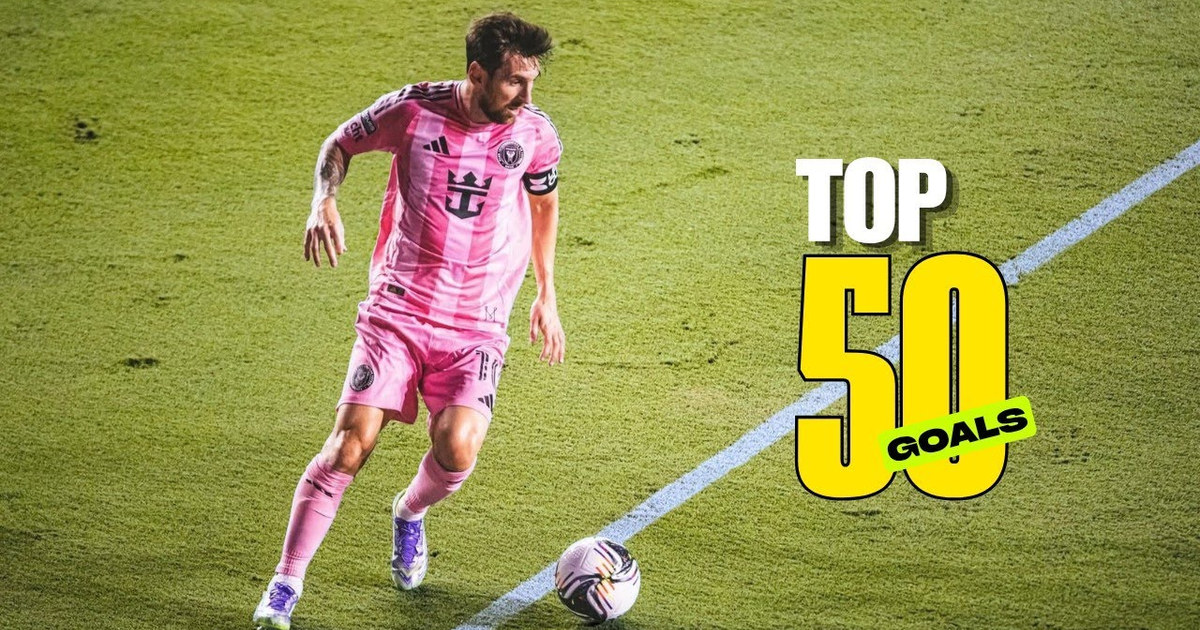
Then came Inter Miami. At 36, in a new league, he scored 11 goals in his first 12 games, including a debut winner from a free kick that felt scripted by a Hollywood director. The 900th goal of his career? A trademark curler against Nashville SC. The fans worshipped him. “He is a god of the game,” the commentator said. And in that moment, you believed it.
So, is he a god? The word implies omnipotence, infallibility. Messi is not that. He has lost finals, missed penalties, been accused of walking when he should run. But if we define a god as someone who transcends the sport, who makes the impossible routine, who turns a stadium into a church—then the case is compelling. George Best, Diego Maradona, Johan Cruyff—they’re all getting outshone by this incredible little man. That’s not hyperbole; that’s observation.
Yet football is a team sport. Messi’s success is intertwined with his teammates. Without Sergio Busquets, without Ángel Di María, without the Inter Miami squad that runs for him, the magic might not translate to trophies. But that’s true of any legend. Pelé had Garrincha, Santos, and a Brazilian machine. Maradona had Burruchaga and a hand of God. Messi’s individual brilliance is undeniable, but it’s his ability to elevate those around him that cements his legacy.
Perhaps the question isn’t whether Messi is a god, but whether we’ll ever see another player like him. The answer is likely no. The combination of vision, dribbling, passing, and finishing—all at an elite level for nearly two decades—is unprecedented. We may see great players, but we won’t see another Messi. The sport has changed; the tactical demands, the physicality, the data-driven approach. A player of his size and style might not be given the freedom to flourish in tomorrow’s game.
So the next time you watch Messi play, savor it. You’re watching a god of the game. Not because he’s perfect, but because he makes perfection seem attainable, if only for a moment. He is the reason we watch, the reason we argue, the reason we believe in magic. And when he finally hangs up his boots, we’ll tell our kids we saw him. We saw the little man who became a god.
In our next article, we’ll explore the greatest goals in Champions League history. From Zidane’s volley to Ronaldo’s bicycle kick, we’ll break down the moments that defined a competition. Stay tuned.


