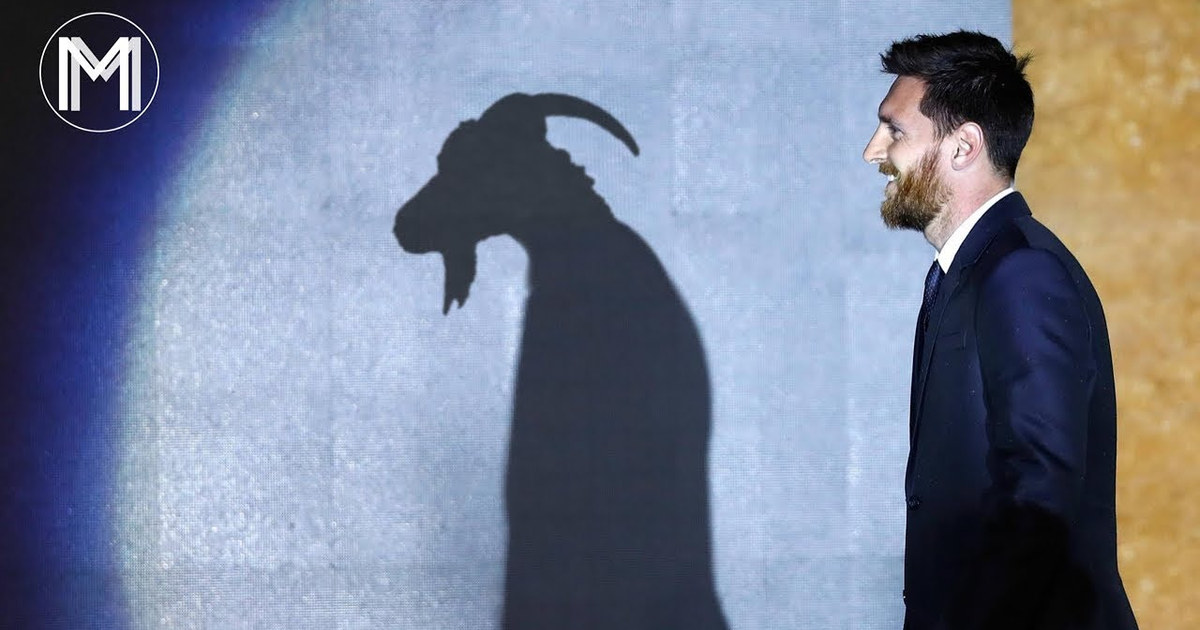
Part 3
And now go back and watch the opening again.
The Machine Years: Records, MSN, and the Chelsea Ghost
If you only knew Messi from highlight reels, why would you miss the real story? Because the highlight reel shows you the dribble past four defenders, the impossible assist, the goal from nothing. It does not show you the Tuesday night in February against a mid-table side when the game is stuck in second gear and he still finds a way to win it. The machine years are not about magic. They are about volume. They are about the terrifying regularity of a man who turned genius into a daily routine. Stand here a moment. Look at the wall of numbers. This is where the argument for Greatest of All Time stops being a debate and starts being a spreadsheet.
Stop 4 on our tour: the record-breaking machine. You have seen the boy follow Ronaldinho. You have seen the first goal. Now watch what happens when the boy becomes the system. In 2012, Lionel Messi scored 91 goals in a calendar year. Let that sit for a second. Ninety-one. The transcript puts it plainly: 'He is the man who scored more goals in the calendar year than anybody else... not Pelé, not Klose, not Maradona.' Not Pelé. Not Klose. Not Maradona. That is not a hot take. That is a statistic. And statistics, unlike opinions, do not care about your childhood heroes.
Think about what 91 goals means. It means he scored more than some entire teams. It means he scored from free kicks, from penalties, from open play, from impossible angles. It means he did it in La Liga, in the Champions League, in the Copa del Rey, for Argentina. It means he did it while being fouled, kicked, marked by two or three defenders at a time. The machine did not care. The machine just scored.
The Ballon d'Or cabinet tells a similar story. Five awards: 2009, 2010, 2011, 2012, 2015. Five years where the best player in the world was not a debate. Five years where the machine ran without a glitch. You can argue about the merit of individual seasons. You can argue that Xavi or Iniesta or Ronaldo had a case in one of those years. But you cannot argue with the pattern. The pattern is dominance. The pattern is a man who made the extraordinary look boring.
But the machine was never just one man. That is the mistake people make when they look at the numbers. They see Messi and they forget the system. They forget the teammates who fed him, the coach who built around him, the club that raised him. The machine was Barcelona. And the machine had a name for its most fearsome weapon: MSN.
MSN: The Three-Headed Monster
Messi, Luis Suárez, Neymar. Three names that should never have worked together. Three egos, three styles, three different kinds of danger. And yet they did. The transcript captures it in a single breath: 'Suarez Neymar spells danger spells gold.' That is not poetry. That is a scouting report. Suárez brought the bite, the relentless pressing, the goals from impossible angles. Neymar brought the flair, the dribble, the chaos. Messi brought the brain. The three of them together were not a forward line. They were a weather system.
The peak of that system was the 2014/15 season. Barcelona won the treble: La Liga, Copa del Rey, and the Champions League. It was not a fluke. It was the culmination of the machine years. Messi, Suárez, and Neymar did not just play together; they understood each other. They swapped positions, they combined, they destroyed defenses. The Champions League final in Berlin was the coronation. Juventus could not live with them. The treble was complete. The Champions League titles in 2006, 2009, 2011, and 2015 are the milestones. Four European crowns. Each one a different team, a different era, but the same conductor. The quote from the transcript says it all: 'This team is the best football team I've seen for 20-30 years.' That is not a fan talking. That is someone who has watched the game for decades. And they are not wrong.
If you want to understand sustained excellence, watch Senna. The 2010 documentary, directed by Asif Kapadia, runs 106 minutes. It is a portrait of a man who made winning look inevitable, who pushed a machine to its limit and beyond, who was brilliant and flawed and utterly compelling. Senna is not just a film about racing. It is a film about obsession. Asif Kapadia builds the story from archival footage, letting Senna's own voice tell the tale. There is no narrator. There is no talking head. Just the man, the machine, and the price of greatness. Messi's Barcelona is that film in motion. The same relentless pursuit. The same ability to make the extraordinary feel ordinary. The same sense that you are watching something that will not come again. You can find the evidence on FIFA+, UEFA.tv, and YouTube. Go watch the 2011 Champions League final at Wembley. Go watch the 2015 final in Berlin. You will see the machine in full flight.
The Chelsea Ghost
And now, the anomaly. The glitch in the matrix. The one team that Messi could not solve. The transcript says it with almost disbelief: 'Messi has never scored against Chelsea in eight matches.' Eight matches. Zero goals. This is the man who scored 91 in a year. This is the man who tore apart Real Madrid, Bayern Munich, Manchester United. And yet Chelsea remained a blank. A ghost. A rare gap in the machine.


