Part 1
The Question That Haunts Every Generation
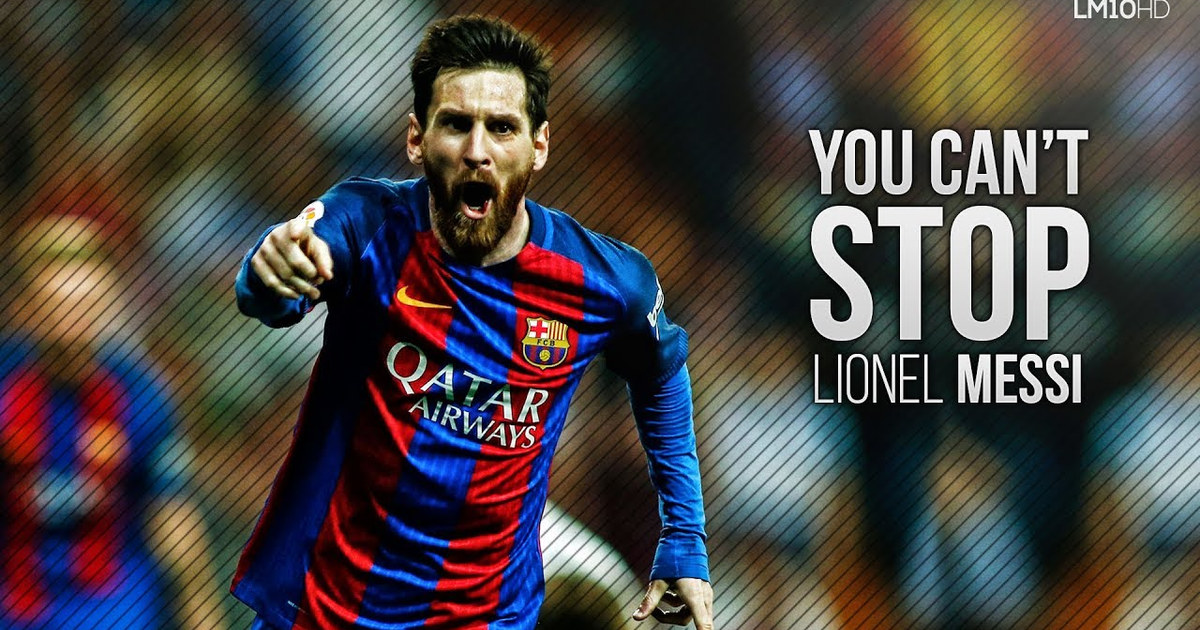
You have probably seen the trailer. Maybe it was the clip of Lionel Messi somehow regaining his balance while three defenders converge, the ball glued to his left foot like it’s on a string. Or the one where he teases the entire backline, dragging them into a labyrinth before slipping a pass that no one else saw. The commentary swells: “He is the best there ever has been, possibly the best there ever will be.” And just like that, you’re pulled into the debate that has haunted football for decades. Is Messi the greatest of all time? It’s a question that refuses to die, and for good reason.
The argument isn’t new. It stretches back to Pelé in 1970, when he orchestrated Brazil’s World Cup final with a performance that felt like a coronation. Then came Diego Maradona in 1986, a one-man hurricane who practically dragged Argentina to glory with a left hand and a left foot that defied physics. Each era crowns its own king, and each generation insists theirs was the best. But Messi? He’s the first to make us question whether we’ve been asking the wrong question all along.
The viral moments only scratch the surface. In the transcript, you hear the awe as Messi “somehow regains his balance retains the ball,” the way he “teases” defenders, the “dagger to the corner” that leaves goalkeepers grasping at air. The commentator calls him a “magician,” “unbelievable,” a player who “doesn’t score the goals but creates the goals.” And then there’s that line: “He just keeps rewriting the history work.” It’s not hyperbole. It’s a recognition that we’re watching something that transcends the sport.
But greatness isn’t just about highlight reels. It’s about context. Pelé’s 1970 World Cup final, a 4–1 dismantling of Italy in Mexico City, is often held up as the gold standard. He scored the opening goal, assisted two others, and floated around the pitch like a ghost. That performance, in that moment, on that stage, seemed untouchable. Maradona’s 1986 quarter-final against England—the “Hand of God” followed by the “Goal of the Century”—was a different kind of masterpiece: raw, defiant, almost mythological. Messi, by contrast, has built his case not on a single tournament but on two decades of relentless brilliance.
So why does the question persist? Because football is not a science. It’s a story we tell ourselves, and every generation wants its chapter to be the best. Messi forces us to confront that bias. He doesn’t just score; he orchestrates. He doesn’t just win; he elevates everyone around him. The transcript captures it: “Messi proves that in the footballing labyrinth world he is the minor looking for the overlap.” It’s a poetic way of saying he sees the game differently. And that difference is what makes the debate so maddening and so delicious.
To answer the question, we have to look at the evidence. And the evidence is overwhelming, but it comes in three distinct chapters. First, there’s Barcelona—the labyrinth where magic was born, where Messi turned a club into a dynasty and a style into a religion. Then there’s Argentina—the weight of a nation, the tears, the near-misses, and finally the Copa América and World Cup that silenced the doubters. And finally, there’s the genius itself—the balance, the vision, the impossible consistency that defies description. Each chapter adds a layer to the argument, and each one makes the case harder to refute.
But let’s not pretend this is a simple coronation. The ghosts of Pelé and Maradona still loom. Pelé won three World Cups, a feat no one else has matched. Maradona carried a mediocre Argentina team to glory in 1986, a feat of sheer will that Messi only replicated in 2022. The comparison isn’t about stats; it’s about moments. And Messi has given us more moments than any player in history. The transcript’s “teasing runs” and “dagger to the corner” are just a fraction of the highlight reel. Every week, for nearly twenty years, he has done something that makes you shake your head.
So when the commentator says “he is the best there ever has been, possibly the best there ever will be,” it’s not just hype. It’s a conclusion reached after watching him dismantle Real Madrid, after seeing him “sink his flaming spear into the hearts of Real Madrid,” after witnessing the “beautiful counterattack” where “all the pieces are falling into place.” The question isn’t whether Messi is great. It’s whether we’ll ever see his like again. And that’s the real haunting.
In the end, the question that haunts every generation is not just about who was the best. It’s about what we value. Do we prize Pelé’s three World Cups? Maradona’s defiant genius? Or Messi’s sustained, almost mechanical perfection? The answer depends on what you believe football is for. But one thing is certain: Messi has forced us to ask the question louder than ever. And as we dive into his Barcelona legacy, his Argentina redemption, and the sheer genius that defies description, the answer becomes clearer. Maybe, just maybe, we’ve been watching the greatest of all time.
Barcelona: The Labyrinth Where Magic Was Born
You have probably seen the clip a hundred times. Messi, ball glued to his left foot, weaving through a thicket of defenders who swipe at air. The commentary calls it a “footballing labyrinth,” and for once the hyperbole lands. Barcelona was the labyrinth, and Messi was the thread. From 2004 to 2021, he turned a football pitch into a hall of mirrors for anyone foolish enough to mark him.


