Part 3
But the transcript gives us the line that ties it all together: "There'll never be another like him. Enjoy him while he's here." That's not just a fan's plea. It's a critic's confession. We know we're watching something finite. We know the clock is ticking. And that knowledge makes every touch feel heavier, every run more urgent.
It's why we rewatch. Why we clip. Why we write. Because the end is always coming, and the only way to fight it is to pay attention.
There's a reason the commentary sounds like a film soundtrack. The repeated phrases—"Best player in the world, bar none," "Unbelievable piece of play," "Brilliant! Brilliant! Brilliant!"—aren't just filler. They're motifs. They're the director's cut. The music swells. The crowd roars. The camera lingers. This isn't sport. It's cinema.
[[AD]]
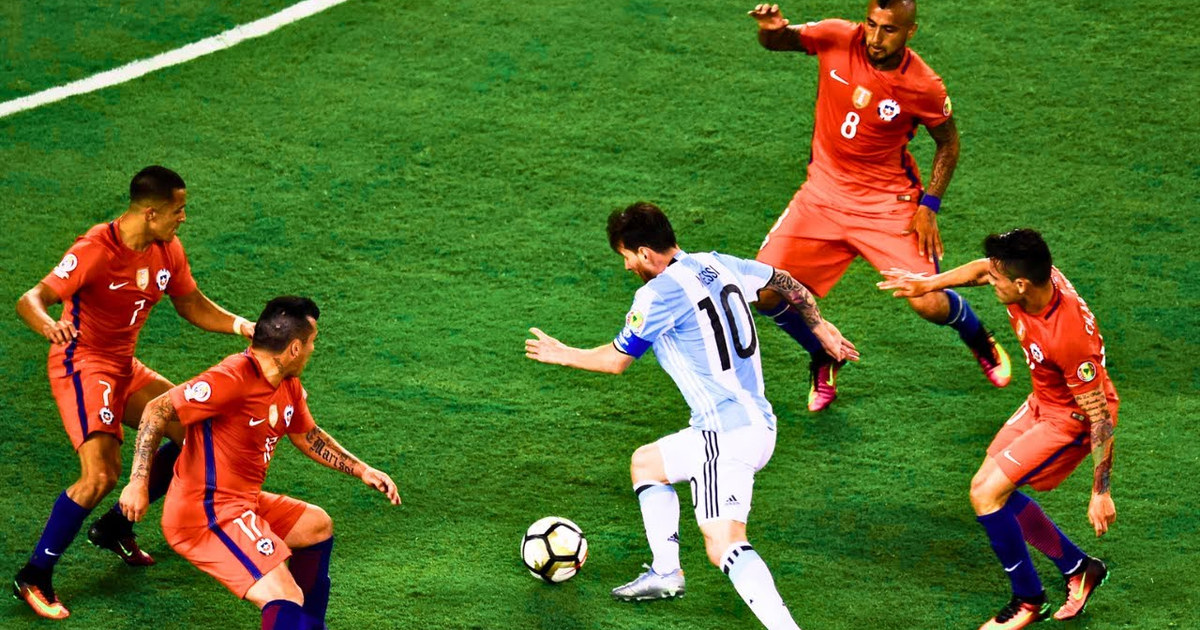
Think of the great sports films: Raging Bull (1980, Martin Scorsese, 129 minutes), Hoop Dreams (1994, Steve James, 170 minutes), The Damned United (2009, Tom Hooper, 98 minutes). They all try to capture the ineffable. But Messi doesn't need a director. He directs himself. Every dribble is a tracking shot. Every goal, a climax. The broadcasters know it. That's why they cut to the crowd, the bench, the coach's face. They're not just showing us a game. They're showing us a story.
And we, the audience, are complicit. We bring our own memories. We remember where we were when we saw that run against Getafe (2007, Copa del Rey, 89th minute). We remember the header against Manchester United in the 2009 Champions League final (Rome, 70th minute). We remember the free-kick against Liverpool in 2019 (Camp Nou, 82nd minute). Each moment is a frame in a film we've been watching our whole lives.
The commentary becomes a form of film criticism. When the announcer says, "This is more like vintage Messi now," he's not just describing a play. He's placing it in a lineage. He's saying: remember when? He's saying: this is what it means. He's doing what Roger Ebert did for movies—translating the visceral into the verbal, so we can hold onto it.
But the best criticism doesn't just explain. It invites. It says: look again. And that's what Messi's legacy does. It makes us look again. At the Wembley run. At the Camp Nou chip. At the Miami free-kick. We keep looking, hoping to see something new. And we do. Because genius isn't a fixed point. It's a conversation between the player and the moment, and the moment keeps changing.
Now, the Wembley run feels different. It's not just a goal anymore. It's an origin story. It's the first chapter of a book we've read a hundred times but still can't put down. The ball is still stuck to his boot, but now we see the weight of it. We see the years ahead. We see the joy and the heartbreak. We see the boy who would become a man, and the man who would become a legend.
And we see ourselves. Because Messi's genius isn't just in his feet. It's in the way he makes us see the game anew. He turns a simple pass into a poem. A dribble into a dance. A goal into a gasp. He makes us remember why we fell in love with this sport in the first place.
So when the commentator says, "Enjoy him while he's here," it's not just advice. It's a challenge. Can we? Can we slow down long enough to appreciate the fleeting? Can we watch without looking at our phones? Can we let the moment wash over us without already thinking about the next one?
That's the real legacy. Not the trophies. Not the records. The way he makes us pay attention. The way he makes us feel. The way he makes us believe that, for a few seconds, anything is possible.
The Wembley run is over. The ball has been passed. The crowd has settled. But the gasp remains. It echoes through the years, through the stadiums, through the screens. It's the sound of genius. And it's the sound of us, watching, together, unable to look away.
There'll never be another like him. But there will be other moments. Other players. Other gasps. And that's the beauty of it. The game goes on. The story continues. And we'll be here, watching, waiting for the next time the world holds its breath.
But what about the moments that didn't make the highlight reel? The quiet passes. The missed chances. The losses. The tears. Those matter too. Because they're part of the same story. And in the next part, we'll look at the other side of genius—the failures, the frustrations, the human behind the myth. Because to truly understand Messi, we have to see it all. The glory and the grief. The gasp and the silence.


