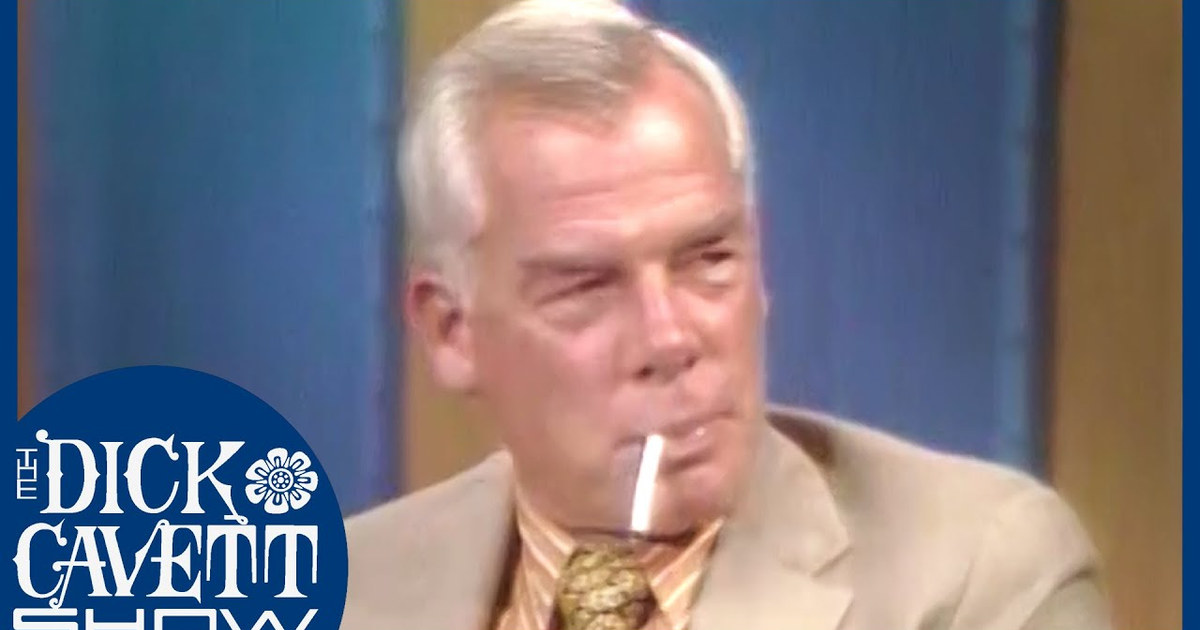
The camera cuts to Lee Marvin. He isn't posing. He isn't performing the 'star' persona. He’s sitting there, a man who has seen the business end of a rifle and the hollow center of a studio backlot, and he’s bored. Not by the interviewer, but by the performance of being interviewed. That single, weary shift in his posture tells you everything you need to know about his career: Lee Marvin was never interested in the myth. He was only interested in the work.
When you watch Marvin on screen, you’re watching a man who treats dialogue like a tactical maneuver. He doesn't waste syllables. He doesn't lean into the sentimentality that makes lesser actors sweat. In a famous sit-down, when asked about his past, his masculinity, and his war record, he doesn't offer a polished soundbite. He offers a shrug, a dry joke, and a refusal to romanticize his own life. That’s the thread we’re pulling today.
The industry loves to build monuments out of its actors. They want the 'tough guy' archetype to be a monolith of stoic perfection. But Marvin? He was the crack in the foundation. He understood that the image of the hero—the John Wayne silhouette—was a costume, not a personality. He wore the uniform, but he never mistook the fabric for his own skin.
[[AD]]
The Marine and the Movie Star
There is a fascinating tension in Marvin’s history. He enlisted as a kid, fueled by the same cinematic propaganda he would later help produce. He admits it: they all went in wanting to be John Wayne. They wanted the sword, the harem, the glory. Then reality hit. The 'search for masculinity' wasn't a philosophical journey; it was a survival instinct honed in the Pacific.
When he talks about his training, he describes it with a cynical clarity. The military and the studios were in lockstep. The Marines were free extras for the war effort, and the war effort was the ultimate box office draw. Marvin saw the seams. He knew the difference between a newsreel of death and a theatrical production of it. He chose the latter, not because he was a liar, but because he was a professional.
He didn't view his combat experience as a source of 'deep acting' wisdom. He viewed it as a personal, chaotic reality that no script could ever truly capture. To Marvin, the movies were a job. The war was something else entirely. He refused to conflate the two, even when the audience demanded he play the part of the war hero.
[[AD]]
The Dirty Dozen and the Violence Debate
Critics often pointed to *The Dirty Dozen* as a glorification of violence. They wanted Marvin to defend the morality of the film, to explain whether it was a 'good' or 'bad' influence on the public. His response is a masterclass in detachment. He wasn't there to moralize. He was there to work with Jim Brown and John Cassavetes.
He understood that his job wasn't to be a social engineer. It was to execute the scene. If the script called for the destruction of a German command post, he didn't stop to ponder the geopolitical ramifications. He focused on the footwork. He focused on the rhythm of the ensemble. That’s the mark of a true craftsman: he trusts the audience to handle the morality while he handles the mechanics.
This isn't apathy. It’s a radical form of honesty. By refusing to play the 'concerned citizen' role, he forces the audience to look at the film for what it is—a piece of entertainment—rather than a sermon. He strips away the pretension that usually surrounds 'serious' acting.
[[AD]]
The Wound and the Reality
The most telling moment in his interview isn't about his craft; it’s about his scar. When asked where he was wounded in the war, he doesn't spin a yarn about a heroic charge or a bullet meant for a comrade. He says he was shot in the ass. It’s a punchline that cuts through the myth of the 'glorious' war wound.
He contrasts this with his mother’s dream—a vision of him in dress blues with a bandaged head. It’s the perfect metaphor for the gap between the public image and the private man. The mother sees the hero in the doorway; the son knows the reality was much lower, much less cinematic, and much more human.
[[VIDEO]]
The Final Cut
Lee Marvin’s legacy isn't in his awards or his box office numbers. It’s in his refusal to be anything other than himself. He knew that if you spend your life performing, you eventually forget who is behind the mask. He kept the mask on the screen and left the man in the chair.
Next time, we’re going to look at how Marvin’s 'modesty'—that calculated, dry wit—actually became his most powerful weapon in *Point Blank*. We’ll break down his movement in the film and see how he turned silence into a cinematic force of nature.


