Part 1
The Question Hiding in Plain Sight: What Do We Owe the People Who Knew Us Before We Were Anyone?
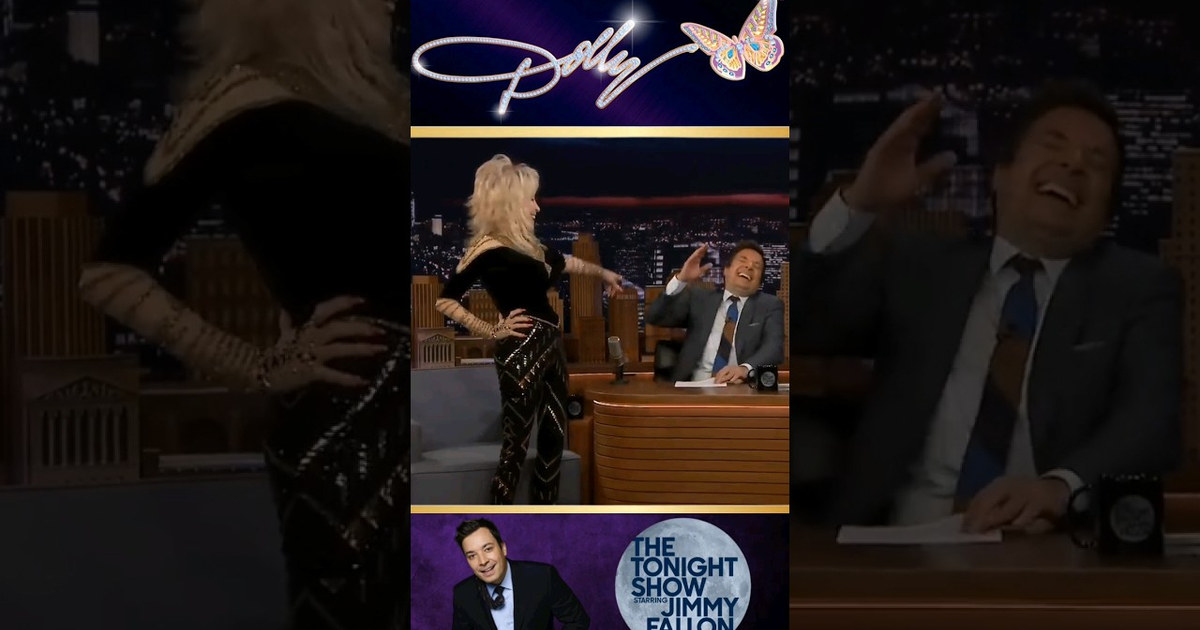
You have probably seen the trailer for this moment. Dolly Parton, mid-verse on The Tonight Show in March 2024, her voice simply stopping. Jimmy Fallon frozen behind his desk. Three hundred people holding their breath. The clip is everywhere, and it doesn't tell you what the question is. It shows you a reaction, not a reason. The question isn't 'What happened?' The question is: What do we owe the people who knew us before we were anyone?
That's the thing about viral moments. They flatten context. They turn a lifetime into a loop. But this wasn't a stunt. This was a collision between two lives that had been running on parallel tracks for 57 years. And the collision happened because one woman held up a photograph.
This is not a story about a celebrity surprise. It's a story about the arithmetic of fame — what gets multiplied, what gets divided, and what gets subtracted entirely. When you become a symbol, something has to give. Usually, it's the people who knew you when you were just a person.
The audience that night was a specific kind of crowd. Mostly women between 55 and 70. Many had driven in from neighboring states. Some had waited in line since 6 a.m. They didn't come because they'd seen a ticket giveaway on social media. They came because it was Dolly. They loved her the way people love something that shaped them before they knew they were being shaped. That distinction matters. They weren't there for a viral moment. They were there for her.
And then, from the third row, a 74-year-old woman named Maggie Callaway held something up. Not a phone. Not a sign. Just a photograph. A Polaroid-sized square, yellowed, edges soft from handling. The kind of thing you'd find folded inside an old Bible. She held it gently, the way you hold something that could come apart if you pressed too hard.
Dolly saw it from the stage. Her eyes moved to it the way eyes move when something registers before the mind catches up. Not recognition, exactly. Something earlier than recognition. Something from before language. Her mouth stayed open. The next lyric didn't come. Her left hand, the one holding the microphone, moved down slowly to her side. Her right hand went to her chest, fingers spread flat. Her face changed in a way that wasn't grief and wasn't joy, but something underneath both. Something that only surfaces when a person sees something they had convinced themselves they might never see again.
That phrase — 'before the mind catches up' — is the whole story in miniature. Because what happened in that studio wasn't a performance. It was a memory breaking through the surface. And to understand it, you have to understand the arithmetic of fame.
Think of the final scene in The Last Picture Show (1971), where Peter Bogdanovich shows you a small town emptying out and asks you to feel the weight of what's already gone. Same question: What happens to the people who stay behind when someone leaves for the bigger stage? Except here, nobody stayed behind. Maggie went home to Sevierville and built a life. Dolly went to Nashville and built a legend. And the photograph sat in a Bible for 57 years, waiting.
That's the arithmetic. Fame multiplies your reach, divides your time, and subtracts the people who knew you before the world did. Not because you want to, but because the math is brutal. You can't be everyone's Dolly. You can only be one person's Dolly. And the people who knew you first? They get the smallest piece of you, if they get anything at all.
But here's the thing about Maggie Callaway. She didn't hold up that photograph to get something. She held it up because she had carried it for 57 years. She had kept a promise no one asked her to make. And that's the real question this story asks: What does it cost to keep a promise no one asked you to make?
The Dolly Parton moment isn't about a reunion. It's about the invisible ledger between two people — one who became a symbol and one who chose to remain a person. The rest of this article answers the question: What does it cost to keep a promise no one asked you to make?
1967: The Night That Made the Question Real (And Why Maggie Callaway Never Told Anyone)
Spoiler warning: This section contains details from the backstory that the video reveals later. If you want to experience the story in order, watch the full clip first.
You have probably seen the trailer for this moment. A legend stops mid-song. A studio freezes. A name is whispered. But the real story begins 57 years earlier, in a rainy Nashville corridor, where a 21-year-old Dolly Parton stood crying with her guitar.
It’s March 1967. The Ryman Auditorium. Not the main stage—a secondary showcase room on the lower floor, maybe 200 seats, built for warm-up acts. The single stage spotlight was the warmest thing in the room all night. Dolly had performed for 31 people. Eleven left before her second song. She was crying quietly, holding her guitar by the neck.
[[AD]]
That’s when Maggie Callaway found her. Eighteen years old, a music student from Knoxville, she’d taken a Greyhound bus to Nashville because she heard a girl on the radio six months earlier and couldn’t stop thinking about the voice. No ticket to the main show. She asked around backstage until someone pointed her toward the lower room. She came alone because none of her friends understood why she loved that voice so much.