Part 4
The recurring details also do the work of visual motifs in a film. Water begins as an attractive idea, then appears as muddy force. The tent begins as private comfort, then becomes a comic trap. “Leisurely strolls” starts as marketing language and ends as a test of balance. Even the choir’s songs change meaning as the group moves from bus to river to camp.
A Marriage in the Middle of the Rapids
Under the jokes, the relationship between Robertson and Left Brain gives the story its spine. They disagree constantly, but the disagreements have the ease of long familiarity. She knows how to answer his objections. He knows when the assurances sound suspicious. Neither one is playing a stranger for the audience; they are a couple whose history makes a single sentence carry years of shared habits.
The rafting trip pushes that familiar rhythm into unfamiliar territory. They have to hold ropes when they can barely open jars. They sleep on bedrolls in a tent too short to stand in. They face a lizard in the dark after days without a bath. The humor comes from seeing an ordinary partnership forced to operate under absurd conditions, not from pretending the conditions are comfortable.
That is also why the rescue on the ledge matters. Robertson’s story can turn on a frightening event and then return to comedy without dismissing what happened. Someone helped her when she was sliding. She was grateful. Left Brain’s joke about not being able to help does not erase Tab’s courage; it lets the couple return to their familiar banter after the danger has passed.
[[AD]]
The best storytelling often knows when not to add another joke. Robertson lets a moment of worry sit long enough for the audience to feel it, then gives the tension a release that belongs to the characters. The laugh is not a switch that turns the danger off. It is how the people in the story carry the danger forward.
The Joke Beneath the Journey
Late in the story, a member of the South Carolina group tells Robertson that Al described her as someone who teaches people to find humor in stressful situations. The listener, the man says, had thought the ordeal might be a test from God—and that the rest of them had been dragged along for it. The laugh lands because the story has earned both readings: this trip has been funny, and it has also been very hard.
Robertson does not need to declare that every hardship is secretly a gift. She shows a group of people getting through one day after another, making jokes, helping each other, and discovering that the promised version of an adventure is rarely the version you get. The humor does not make the muddy water clean or the ledges safe. It changes how the travelers can tell the story once they are through it.
That distinction gives the performance its warmth. The group’s discomfort is not treated as a punchline from a distance. Robertson is in it. She trusted the website, climbed the ledges, slept in the tiny tent, and reached for a lizard in the dark. Her authority comes from being both the storyteller and the person the story keeps surprising.
[[AD]]
The trip’s most memorable line comes from Sparky, not one of the professional speakers. Robertson worries that, once the group leaves, the guide will forget them and take another raftload of travelers down the river. Sparky tells her he will never forget her, then calls her Harriet. It is a gentle final twist: he remembers her, but not quite by name.
That ending is a perfect match for the journey. The visitors may have felt that the Grand Canyon had singled them out for a private series of disasters, but to their guide they are one group among many. And still, the mistake is affectionate. The trip has not delivered the clear water, private comfort, or hotel waiting at the end. It has delivered a collection of people and moments that are now impossible to separate from one another.
The Tent Is Still Moving
Return to the dark tent. A hand reaches out, expecting a kiss. Instead, it meets a lizard. The small surprise contains the whole story: the plan, the mistaken expectation, the close quarters, the panic, and the people outside waiting to see what happens next. By the time Robertson reaches that scene, the audience understands why even a sleeping bag can become a setting for grand comedy.
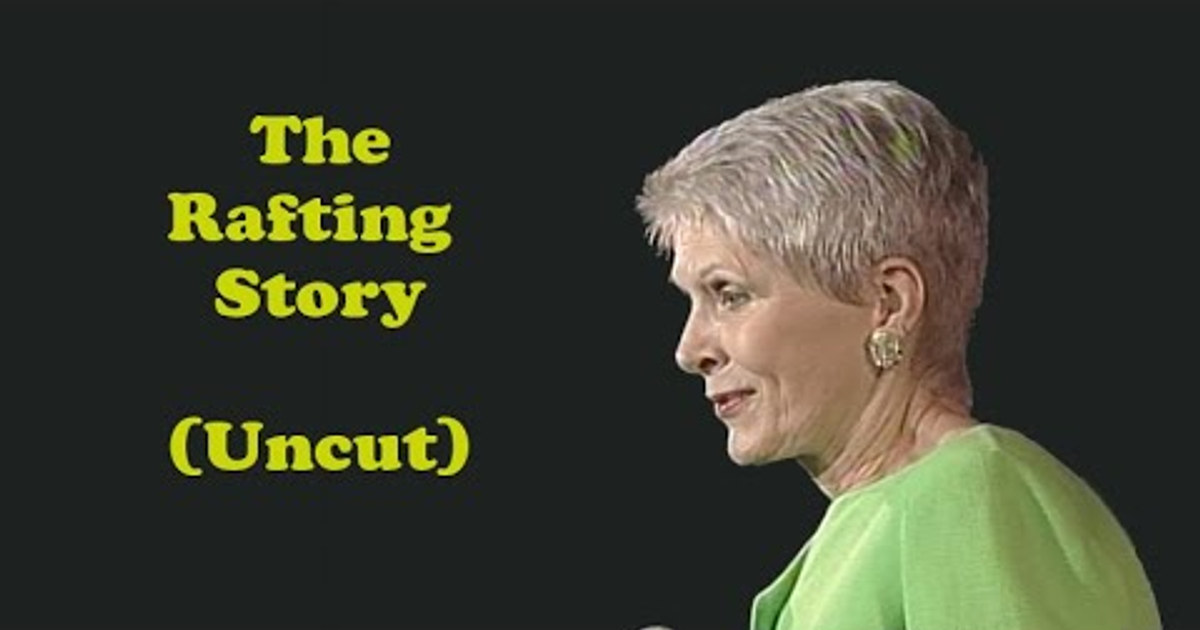
That is the pleasure of this performance. Jeanne Robertson turns an eight-day rafting trip into a fully staged comic adventure, complete with a stubborn husband, a determined persuader, a singing choir, a guide named Sparky, a treacherous website, and one lizard with superb timing. The Canyon may have delivered the wrong water and the wrong bed, but it gave her a story that keeps unfolding long after the raft reaches shore.
And just when the audience thinks the final image belongs to the lizard, Sparky supplies the last surprise with one affectionate, gloriously wrong name. The tent has stopped rocking. The story has not. Next time, we’ll follow another small moment until it opens onto something much bigger.


