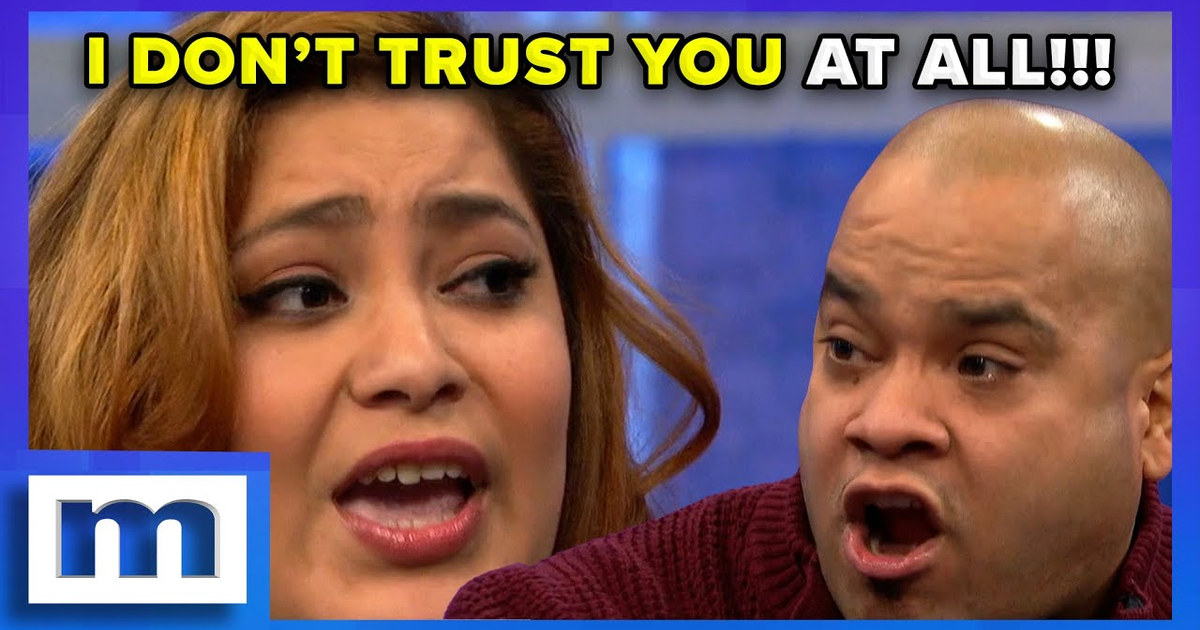
Part 2
[[AD]]
Underneath that graphic, the sound design drops a low-frequency thud—likely a synth hit tuned somewhere around 60 Hz. You feel it in your chest before you consciously hear it. That sub-bass thump is the same trick used in thriller trailers: it bypasses your intellect and goes straight to your gut. The audience gasp that follows isn’t just live reaction; it’s mixed and balanced to sit right on top of that thud, creating a one-two punch of sound.
But the real architecture of the moment is in the reaction shot sequence. After each lie, the director cuts to Maria (shock), then Angelica (vindication), then back to Jose (denial). This three-shot pattern repeats five times. It’s a rhythmic editing structure that builds momentum like a drum fill. Maria’s shock is the downbeat, Angelica’s smirk is the snare, Jose’s stammer is the crash cymbal. By the third lie, you can predict the cut, and that predictability is the point—it lulls you into a false sense of security before the next blow.
Compare this to scripted drama. The polygraph reveal is edited like a courtroom verdict in ‘A Few Good Men’ (1992, dir. Rob Reiner, 138 min). In that film, the cut from Tom Cruise’s cross-examination to Jack Nicholson’s confession is a hard cut that lands like a fist. The DNA test results in ‘The Maury Show’ paternity episodes follow the same grammar: question, answer, hard cut to graphic, reaction shots. The franchise has refined this language over decades. It’s consistent, reliable, and devastating.
[[VIDEO]]
Music plays a huge role. A tense, repetitive string ostinato runs under the results—think Bernard Herrmann’s score for ‘Psycho’ (1960), but simplified for daytime TV. It’s not subtle, but it works. The strings swell each time Maury says, “The lie detector test determined that was a lie.” That swell is timed to the syllable. By the fifth lie, the music is practically screaming, and so is the audience.
Now watch Jose’s physical performance. He touches his neck—the hickey site—shifts his weight from foot to foot, looks out at the audience for sympathy. These are unconscious tells, but the camera catches them. A cinematographer would call this “finding the beat in the body.” Jose’s hand goes to his neck right after the first lie, as if he can physically rub away the evidence. The camera operator holds the frame a beat longer than you’d expect, letting the gesture land. That’s not accident; that’s coverage.
And then there’s Ralph, the lie detector expert. He is never fully lit—always in shadow or off-camera. His voice is the voice of god. This is a deliberate power dynamic: the technician is anonymous, the results are absolute. Ralph doesn’t need a face because he represents the machine. The lighting on Ralph is classic film noir—single source, hard shadow, no fill. It makes him a silhouette, a disembodied authority. When he speaks, you lean in, because you can’t quite see where the voice is coming from.
The specific lies escalate the stakes with surgical precision. (1) Hickey from a woman. (2) Slept with a woman in the car. (3) Slept with an ex. (4) Slept with a woman he texted. (5) Secretly wants to be with an ex. Each one is a bigger betrayal than the last. The editing rhythm mirrors a boxing match: each lie is a punch, each reaction is a stagger. By the fifth lie, Maria says, “I’m done,” and the camera holds on her face for a full three seconds before cutting to black. That hold is an eternity in television time. It gives the audience room to feel the weight of her decision.
The platform matters too. ‘The Maury Show’ aired in syndication (NBCUniversal) and clips went viral on YouTube and TikTok. The vertical crop for social media often cuts out the audience, focusing on the two-shot of Maria and Jose. This changes the visual grammar. Without the audience, the reaction shots feel more intimate, more claustrophobic. You’re not watching a spectacle; you’re watching a relationship implode in a 9:16 frame. The editors know this, and they lean into it.
So the next time you see that red “LIE” flash across your feed, pay attention to the cut, the thud, the three-shot pattern. It’s not just drama—it’s craft. And it’s been perfected over decades of daytime TV.
What to Watch For: Lighting Cues, Blocking Shifts, and the Visual Language of a Relationship’s Final Frame
After the fifth lie, Maria stands up. She says, “I’m done with you,” and walks off. The camera stays on Jose, who turns to Maury and says, “I would take the test again.” The audience boos. That beat is the thesis of this entire segment: the visual language of a relationship’s final frame is built on a lighting shift, a broken axis, and a slow push-in that closes the door. If you want to understand how The Maury Show turns a polygraph into a mini-drama, watch the light, the blocking, and the cut.
[[AD]]
First, the lighting change when Maria stands. In the two-shot, the key light on her is warm—around 3200K, tungsten, with a soft box wrapping her face. It’s the same warm key that has been on both of them for the entire segment, visually uniting them as a couple. But as she rises and moves out of the two-shot, she steps into a neutral, cooler pool of light—likely a 5600K daylight-balanced source from the audience side. That shift is subtle but deliberate. It tells you she is no longer part of the couple’s visual unit. She has crossed into a different color temperature, a different emotional space. You see this same technique in Barry Jenkins’ Moonlight (2016), where Chiron’s isolation is often marked by a shift from warm sodium vapor to cool fluorescent. Here, it happens in real time, and it’s the first cue that the relationship is over.


