Part 1
The Maury Show Lie Detector as a Controlled Studio: Blocking, Lenses, and the Architecture of Confession
The Maury Show’s lie detector segments are not accidental—they are meticulously staged visual confessions, and the Jose and Maria episode is a masterclass in how production design, blocking, and lens choice turn a paternity-test reunion into high-stakes theater.
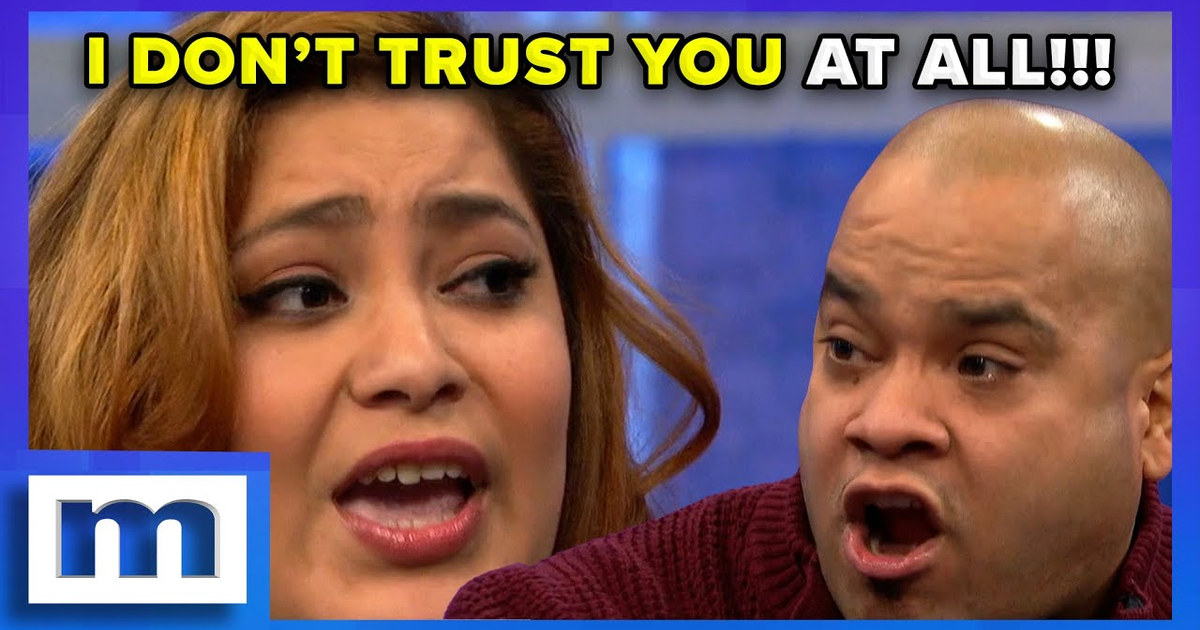
Watch the beat where Maria and Jose walk out to join Maury Povich on the set. It’s a circa 2010s syndicated episode, and the audience roar hits like a wall of sound. Maury holds a practiced pause—the kind of pause a director would kill for—before the camera cuts to Maria’s face. She’s tense, eyes darting. Then we get Jose’s nervous smile, a half-second too long. That’s not luck. That’s blocking.
As a cinematographer who’s shot second-unit, I can tell you: every frame here is engineered. The set is a courtroom disguised as a talk show. Two guest chairs angled toward each other but separated by Maury’s podium. The audience risers behind them, a human backdrop that reacts on cue. And that large screen used for the lie detector results—it’s the judge’s bench, the jury box, and the executioner’s chair all in one.
The lens package does the emotional heavy lifting. They’re likely using a 2/3-inch broadcast zoom, something like an 85–135mm equivalent. That long lens compresses the space, making the distance between Maria and Jose feel claustrophobic. You can’t escape their faces. When the camera cuts away to Angelica in the audience, it switches to a wider lens. She’s the chorus, the Greek commentary, the audience surrogate. That wider angle places her in the crowd, but her reactions are framed just tight enough to register as judgment.
Lighting is where the show really flexes. The audience wash is flat and high-key, with a half-blue gel on the backlights—standard studio fare that keeps the crowd visible but unimportant. The guests get a slightly warmer key, which makes them pop against the cool background. But the lie detector results reveal? That’s lit with a hard, cool spot from camera-left. When the screen flips to ‘That was a lie,’ the shift is visceral. It’s the same trick used in interrogation scenes on Law & Order: SVU (1999–present), where a single practical lamp or a harsh overhead creates a moral spotlight. Here, it’s a literal spotlight on deception.
Compare this to the reality-TV grammar of Jerry Springer (1991–2018). Springer’s set was chaos—wide, flat, and intentionally messy. Maury’s is controlled. It’s closer to The Truman Show (1998), where every element of the environment is designed to produce a specific emotional response. The audience isn’t just watching; they’re part of the set dressing. The lighting tells you who to trust and who to doubt.
The lie detector itself is a prop. The wires, the cuff, the off-screen technician (Ralph)—they’re all part of the ritual. But notice: the camera never shows the polygraph machine in detail. Only the results screen. That’s deliberate. Keep the audience focused on faces, not technology. The machine is a MacGuffin; the real drama is in the micro-expressions. Jose’s fidgeting, Maria’s clenched jaw, Angelica’s smug nods. The polygraph is just the excuse.
Three months prior, Jose denied paternity because Jacqueline had red hair and lighter skin. The DNA test proved he was the father. That backstory is recapped via flashback clips, cut with a slight desaturation to distinguish past from present. It’s a subtle cue, but it primes you: this is a man who lies. When he walks out now, you’re already suspicious. The desaturated flashbacks are a visual echo of his previous deception.
Maury’s blocking is classic three-point staging. He stands between them, physically and emotionally. When he steps toward the screen to read results, the camera follows, leaving the couple in a two-shot that isolates them. That’s the moment you see them not as a couple, but as two individuals about to be torn apart. The camera doesn’t cut back to Maury until after the verdict. He’s the judge, but the visual language makes him the executioner.
Every cutaway to Maria’s cousin Angelica, every reaction shot of Jose’s fidgeting, is a setup for the payoff. The episode’s visual language primes you for the lie detector results. By the time Ralph asks the questions, you’re already convinced. The lighting, the lenses, the blocking—they’ve all been telling you the same story: Jose is guilty. The polygraph just confirms what the camera already knew.
The Polygraph Reveal: How Editing, Sound, and Reaction Shots Manufacture the ‘That Was a Lie’ Moment
Maury asks Jose the question that will detonate the segment: “Did the hickey on your neck come from a woman you slept with?” Jose says no. The screen flashes “That was a lie.” The audience gasps. Maria’s face crumples. Jose’s mouth opens, but no sound comes out. In that instant, the show’s editors, sound designers, and director pull off a piece of television grammar so precise it deserves to be studied alongside any courtroom drama.
The cut from Jose’s answer to the results screen is a hard cut—no dissolve, no fade. That’s a deliberate choice. A dissolve would soften the blow, imply a passage of time. A hard cut slams the verdict into your retina. The screen graphic itself is a simple red “LIE” over a white background. High contrast, readable on a phone screen at arm’s length. It’s the visual equivalent of a judge’s gavel. No ornament, no ambiguity.


