Part 2
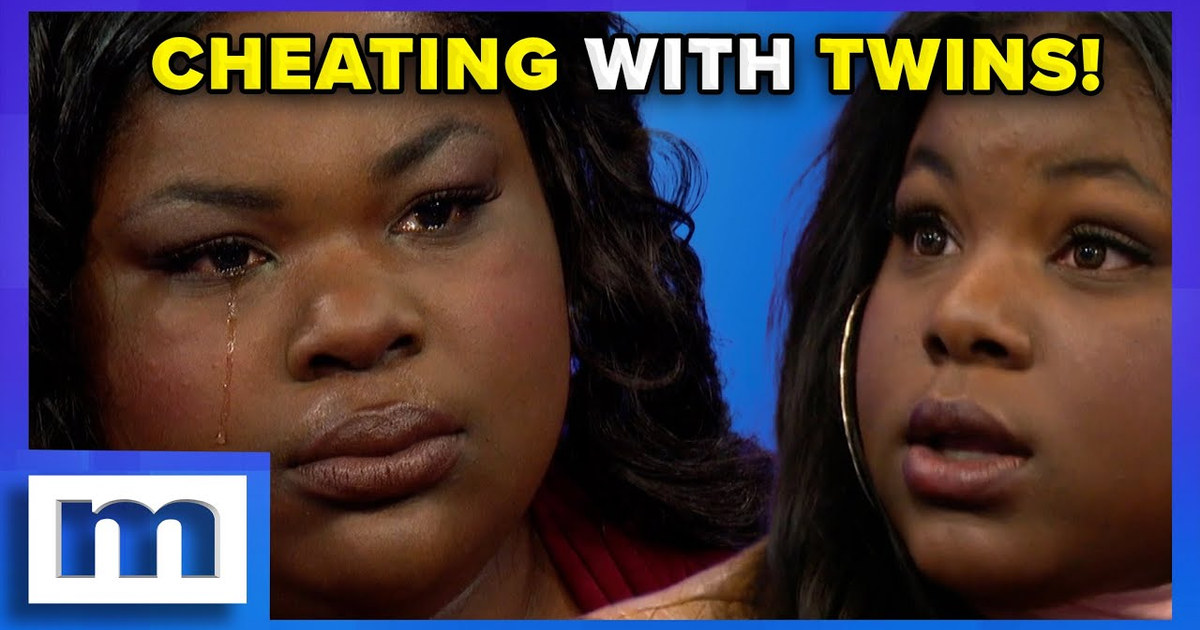
Akia doesn't mince words. She came home from work, expecting Robert at the door like always. He wasn't. It took him three minutes to answer. Three minutes. In those three minutes, she walked in to find her twin sister Ikea lying in bed with a shirt on and no panties. Robert was in the room. That's the image that launched a thousand daytime TV screams.
But the details matter. Akia says she and Robert have a routine. He's usually waiting at the door when she gets home. This time, he wasn't. That delay — those three minutes — is the crack in the foundation. It's the kind of detail that turns a suspicion into a conviction. And Akia is convinced.
Then there's the Hennessy. Akia says Robert and Ikea like to drink together. Specifically, Hennessy. "Hennessy make you lose it," she says. It's a line that lands like a punchline, but it's also a confession. She knows the combination: alcohol, proximity, and a twin sister who's supposed to be loyal. In vino veritas? Or just an excuse? Either way, the bottle is a character in this drama.
Akia's mistrust isn't just about Robert. It's about Ikea. "I don't trust her because she put her friends before me," Akia says. "We supposed to have a bond, and not only that, we twins. Twins, I mean, this is a strong bond." That's the heart of it. The twin bond is supposed to be unbreakable. But here, it's shattered. And the shards are cutting Akia in ways Robert can't.
Robert's side? He says he loves Akia. He wants to marry her. But he admits he cheated once. He calls Ikea "like my little sister." He says they "turn up" together. He acknowledges Ikea walks around half-naked. He even told her to put on panties. But then there's the text from his ex: "I might be pregnant after tonight." Robert laughs it off. Akia saw it with her own eyes. That laugh is the sound of a man who thinks he's untouchable.
[[AD]]
So what do we make of this? The twin sister as ultimate betrayer is a story as old as storytelling itself. In 'The Parent Trap' (1961, directed by David Swift, and the 1998 remake with Lindsay Lohan), twins are separated at birth and scheme to reunite their parents. The bond is pure, mischievous, and ultimately healing. Here, that bond is corrupted. Ikea isn't scheming to bring Akia and Robert together. She's the wedge.
It's like a Greek tragedy: the betrayal comes from within the family. The person you trust most is the one who holds the knife. And on 'Maury,' this isn't new. The show has built an empire on paternity tests, lie detectors, and "you are not the father" chants. But the twin sister affair? That's a special kind of cruelty. It's the kind of story that makes 'The Steve Wilkos Show' (2007–) look like a tea party.
[[VIDEO]]
Let's talk about the alcohol. Hennessy isn't just a drink; it's a recurring motif. It's the social lubricant that supposedly makes people "lose it." But does it excuse anything? In 'Leaving Las Vegas' (1995, directed by Mike Figgis, 111 minutes), Nicolas Cage's Ben drinks himself to death, and we're never quite sure if it's self-destruction or self-medication. Here, Robert and Ikea drink together, and Akia is left to wonder what happens when the bottle is empty. Robert claims he wouldn't do anything with the twin sister. But Akia's evidence — the half-naked scene, the text, the three-minute delay — suggests otherwise. The Hennessy is a convenient scapegoat. But it's not the villain. The villain is the choice.
Trust is the real subject of this episode. Akia says she can't trust Robert. But she also doesn't trust Ikea. That's a double betrayal. The twin bond is supposed to be the one thing you can count on. In 'Dead Ringers' (1988, directed by David Cronenberg, 116 minutes), Jeremy Irons plays twin gynecologists whose twisted relationship spirals into madness. It's a horror film, but the core is the same: when twins turn on each other, the fallout is catastrophic. Akia is living that horror in real time.
So here's the question that lingers after the segment ends: If you can't trust your twin, who can you trust? Akia is stuck in a nightmare where the two people closest to her are the two people she can't believe. Robert says he loves her. Ikea is her blood. But love and blood don't mean much when you come home to a half-naked sister and a boyfriend who took three minutes to open the door.
That's the anatomy of betrayal. It's not one big lie; it's a thousand small cuts. The Hennessy. The text. The panties on the floor. The three minutes. And the twin bond that was supposed to be unbreakable, now lying in pieces on the bedroom floor. Next, we'll ask the question that 'Maury' loves to dodge: Can a cheater ever be trusted again? The answer might surprise you.
Can a Cheater Ever Be Trusted Again? The Maury Show's Verdict
You’ve seen the trailer. You know the drill: a tearful confession, a half-naked sister, a man who swears he loves you but can’t keep his hands to himself. The Maury Show has turned infidelity into a spectator sport, but the question that lingers after the credits roll isn’t just about who did what. It’s about whether trust, once shattered, can ever be pieced back together. And if you’re Akia, sitting in that chair while your boyfriend Robert and your twin sister Ikea face the music, the answer feels impossibly out of reach.


