Part 1
The Question That Won't Stay Buried
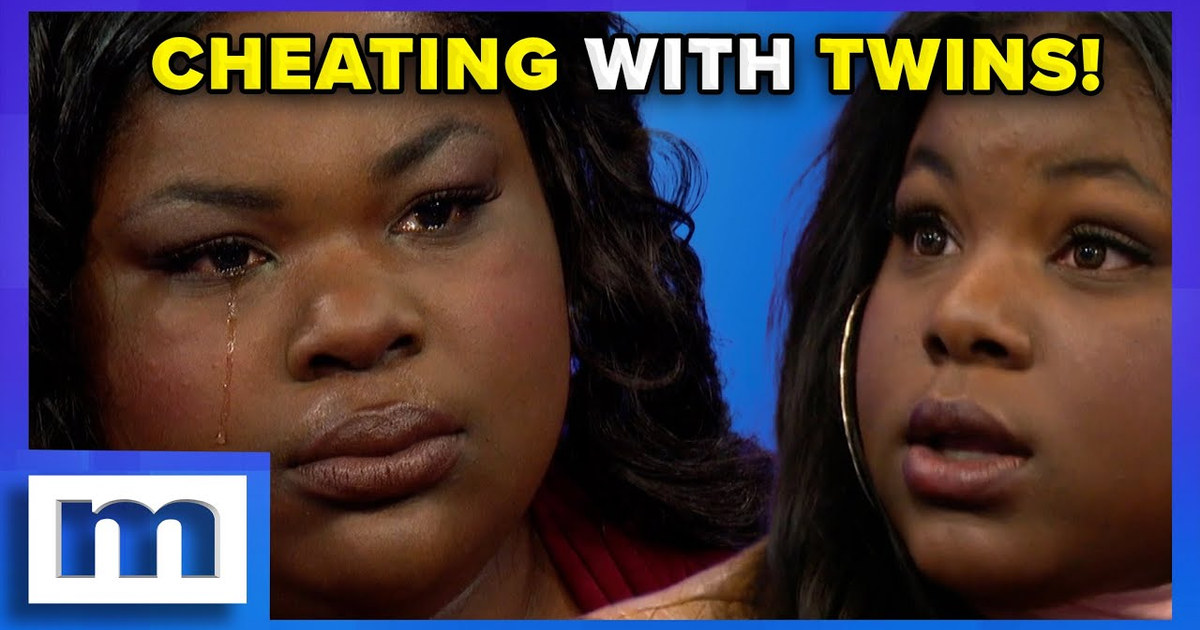
You have probably seen the trailer. Maybe it autoplayed while you were scrolling, or a friend sent it with a string of laughing-crying emojis. Akia walks into the house she shares with her boyfriend Robert and her twin sister Ikea. She calls for Robert to open the door. It takes three minutes. Three minutes that stretch like a lifetime. When she finally gets inside, she finds Ikea in bed, wearing a shirt and nothing else. No panties. Robert is there too, half-naked, scrambling. The clip is chaotic, raw, and impossible to look away from. It is also, underneath the shouting and the studio lights, a story about the oldest question in the book: Can you ever truly trust a cheater?
That question is why the Maury Show has lasted for decades. It is not just a parade of paternity tests and lie detector results. It is a theater of betrayal, a place where the worst-case scenario plays out in front of a live audience. And this episode—Akia, Robert, and Ikea—is a perfect case study. It has all the ingredients: a love story, a twin bond, a bottle of Hennessy, and a betrayal so intimate it feels like a Tennessee Williams play. The betrayal is claustrophobic, family-sized, and impossible to escape.
Akia's story starts like many others. She met Robert, he made her feel special, and they moved in together. For a year, they shared a home with Ikea. Twins share a bond that most of us can only imagine—a mirror, a built-in best friend. But Akia says that bond was broken. She noticed things. Robert and Ikea liked to hang out, get drunk together. There was a particular drink: Hennessy. Akia heard that Hennessy makes you lose your inhibitions. She is not saying a thing, she says, but she knows what Hennessy does. And she knows her sister's habits. Ikea does not wear panties to bed. So when Akia came home from work and found Ikea in bed with no panties and Robert taking three minutes to answer the door, the pieces clicked into place.
This is not a new story. Infidelity has been the engine of drama for as long as people have been telling stories. In Fatal Attraction (1987, directed by Adrian Lyne, 119 minutes), a one-night stand turns into a nightmare that threatens a family. In Unfaithful (2002, directed by Adrian Lyne, 124 minutes), a wife's affair leads to violence and devastation. And on television, Jerry Springer (1991–2018) made a cottage industry out of cheating partners and furious confrontations. The Maury Show follows in that tradition, but it adds a layer of raw, unscripted pain. These are not actors. These are people whose lives are falling apart in real time. Like a Tennessee Williams play, the betrayal is intimate and claustrophobic. The walls are closing in, and there is no exit.
But the question remains: Can you ever trust a cheater again? Robert's defense is as old as time. He says he loves Akia. He wants to marry her. But he also admits he cheated once before. That admission hangs in the air like smoke. Akia's pain is palpable. 'I let my guard down,' she says. 'I let him in and he hurt me like this.' She is not just angry. She is wounded. The twin bond, the one thing she thought was unbreakable, is shattered. 'You just don't trust your twin sister,' Maury says. 'No,' Akia replies, 'I don't trust her because she put her friends before me.' But the real betrayal is deeper. Twins are supposed to have a bond. 'We twins, so twins, I mean this is a strong bond,' Akia says. And that bond has been violated.
So we are left with the question. Is trust ever fully recoverable? Can you look at someone who betrayed you and see anything other than the betrayal? Robert says he loves Akia. But love without trust is just a word. Akia says she loves him, but she can't trust him. That is the trap. The Maury Show does not just entertain. It holds a mirror to our deepest fears about loyalty. It asks us to imagine the worst: the person you love most, in bed with the person you trust most. And then it asks: What would you do? Could you forgive? Could you forget? Or would you walk away?
The episode does not answer the question. It just amplifies it. Akia's story is a reminder that trust is fragile. Once broken, it can be rebuilt, but the cracks remain. You can glue the vase back together, but you will always see the lines. And when the betrayal involves a twin, the cracks run through your entire identity. The question that won't stay buried is not just about Robert and Ikea. It is about all of us. Can you ever truly trust a cheater? The Maury Show says: maybe. But you will never stop looking over your shoulder.
The Anatomy of Betrayal: Twins, Hennessy, and Half-Naked Truths
You've seen the trailer: a woman walks into her own home and finds her twin sister in bed wearing nothing but a T-shirt. Her boyfriend is in the room. The audience gasps. Maury Povich squints. But the real story isn't the gasp — it's the slow-motion car crash of trust that led there. And once you hear Akia tell it, you can't look away.


