Part 3
That's a different, sadder story than the one the fandom tells. It's also a more honest one. Because the supervillain read lets us off the hook. It says Cassandra is an anomaly, a monster, something other than us. The truth is she's a teenager who did what teenagers do — pushed boundaries, chased attention, and didn't realize until too late that the people on the other end of the screen were real. That doesn't excuse what she did. It doesn't make the damage any less real. But it does mean we should be asking a different question. Not 'how do we punish her?' but 'how do we stop the next Cassandra before she starts?'
The Real Villain of the Episode Is the Town That Made Her
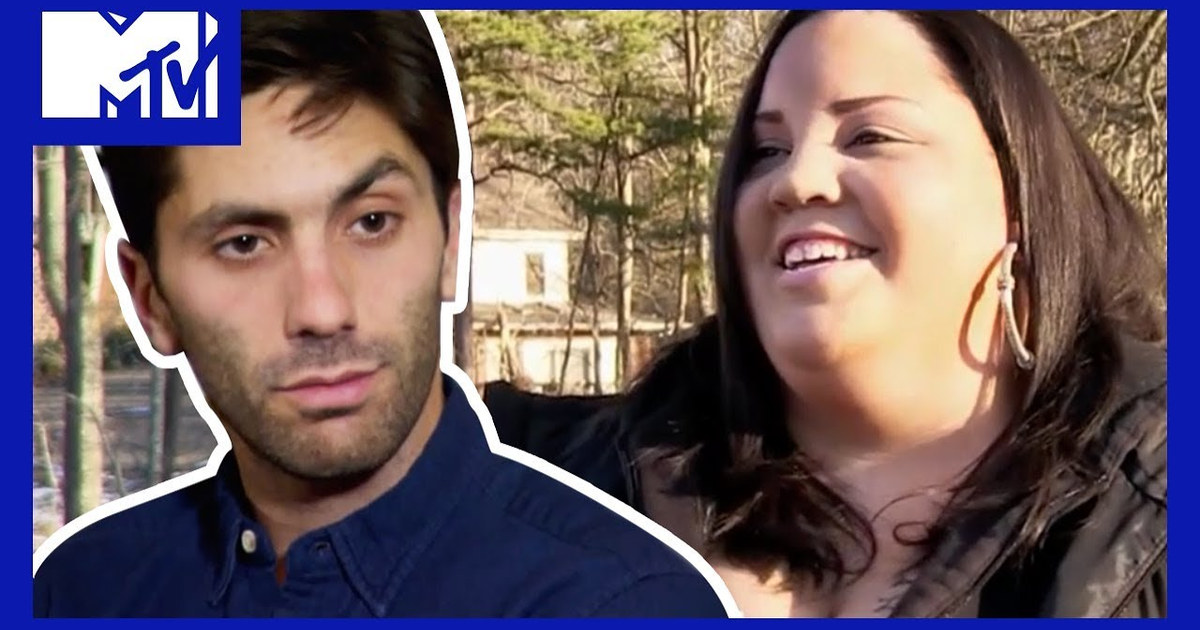
The consensus read of Cassandra is that she's an anomaly — a bad apple in an otherwise normal town. A glitch in the matrix. MTV's edit practically begs you to see her that way: the dramatic music, the ominous cutaways, the way the episode frames her as a one-girl crime wave. But if you actually listen to what she says in that second sit-down, the whole 'anomaly' theory falls apart. Cassandra isn't a supervillain. She's a product. And the factory that made her is the same town that's now clutching its pearls.
The most revealing moment in the entire episode isn't the reveal. It's not the confrontation in the driveway. It's when Cassandra finally drops the act and says, plain as day: 'I used to get bullied a lot, like real bad.' That's not a throwaway line. That's the thesis statement of the whole hour. And then she connects the dots herself: 'I guess I just know how people can kiss so mean, and I just did it bad… it felt good.' Read that again. She's describing the exact mechanism of bullying — hurt people hurting people — in her own words, without a therapist or a producer feeding her the line. She learned cruelty because cruelty was done to her first. MTV buried that under the reveal music, but it's right there in the transcript.
This is the part where the 'bad apple' theory really starts to rot. If Cassandra were truly an anomaly, her behavior would be random, chaotic, unconnected to her environment. But it's not. It's a mirror. She took the social dynamics of her town — the cliques, the gossip, the public shaming — and she weaponized them. She didn't invent the game. She just learned to play it better than anyone else. And the town hates her for it because she's holding up a mirror they don't want to look into.
Take the darkest moment of the transcript, and handle it carefully, because it deserves that. When Nev asks Cassandra if she ever tried to hurt herself, she doesn't deflect. She doesn't perform. She says she thought about it. She questions 'what's the point of being here.' That's not a supervillain monologue. That's a teenager in crisis. That's a kid who has been in so much pain for so long that she stopped believing her life mattered. And the consensus read — the one that paints her as a cold, calculating puppet master — has to ignore that moment entirely to survive. You can't be a mastermind and a suicidal teenager at the same time. One of those reads is wrong, and the transcript tells you which one.
Nev's response is the emotional thesis of the episode, and it's the moment that should reframe everything. He tells her, 'if you don't let yourself feel what it means to lose friends, then you're never gonna…' He doesn't finish the sentence, but he doesn't need to. He's not lecturing a con artist. He's talking to a kid who has been emotionally numb for years. He's trying to crack open the armor she built to survive. That's not the language of someone confronting a criminal. That's the language of someone confronting a wound.
And here's the irony the consensus completely misses: the same town that produced Cassandra's bullies also produced her audience. Everyone she 'blasted' on the Zou profile — the girls whose nudes she posted, the friends whose relationships she wrecked — they were all part of the same social ecosystem that chewed her up first. She didn't reach into some external pool of victims. She reached into the exact community that had already made her a target. That doesn't excuse her. Posting someone's nudes with their full name and school is indefensible, full stop. But it explains her. And explanation is not the same as absolution.
[[AD]]
Think about the structure of the episode. Craig comes in as the sympathetic victim. His sister Mariah is furious. The town is up in arms. But the deeper Nev and Max dig, the more the story stops being about Craig and starts being about Cassandra. She's not a predator who found a random target. She's a kid who was shaped by a specific environment and then turned that shaping outward. The 'real-life Gossip Girl' label is catchy, but it's also a dodge. Gossip Girl was a fictional character with a writer's room behind her. Cassandra was a real teenager with a real history of being bullied 'real bad.' Those are not the same thing.
The town wants Cassandra to be the villain because it's easier than admitting they're complicit. If she's an anomaly, they can exile her and go back to normal. If she's a product, they have to ask uncomfortable questions about what 'normal' actually means in their community. The episode's edit leans hard into the anomaly read because it makes for better television. A supervillain is a cleaner story than a systemic failure. But the transcript doesn't lie. Cassandra told us exactly who she was and exactly why she did it. We just weren't listening.


