Part 2
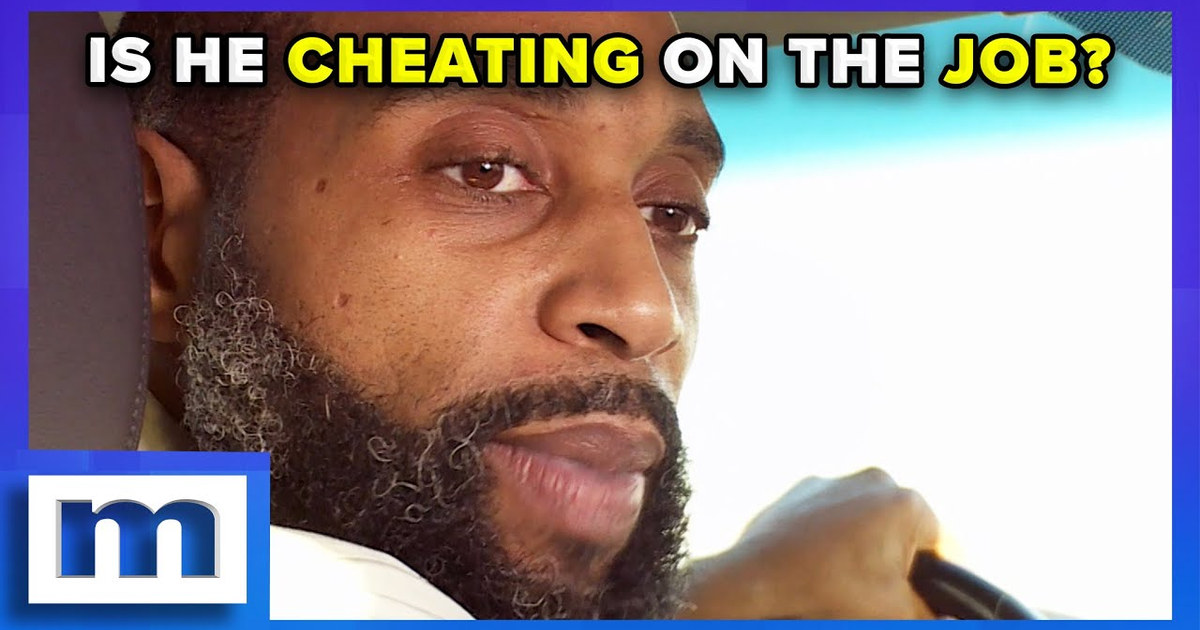
The host — Maury, or “Mari” in the transcript — does what a good host does: he repeats the defense back as a question. “You work for this internet car service. You’re just doing your job. You’re not using that to meet women.” Donnell agrees. “She got me the job. You’re right. You’re right. You’re right, Mar.” The repetition is a tell. The craft nerd knows that repetition under pressure is a stress response, not a confirmation. The genre fan knows that “you’re right, you’re right, you’re right” is what a man says when he’s trying to end a line of questioning before it reaches the next exhibit. And the next exhibit is always the sister.
Kamiya’s claims escalate the stakes. She says she saw Donnell at Walmart with another woman. She says she saw him at a hotel carrying bags. She says one of her co-workers claims to be in a relationship with Donnell. She says she overheard a girl talking about her boyfriend, walked up, and said, “How is that your boyfriend when that’s my sister’s husband?” Donnell’s response to the co-worker claim: “This doesn’t come out in a relationship with me.” His response to Kamiya’s sightings: “She always see every damn thing, Mar. She see everything. She got X-ray eyes.” His response to the hotel bags: “That’s part of my job.” His response to why the clients are always female: “I can’t control who I get. I can’t control it. I can’t control it.” The genre fan is now fully invested. The craft nerd is noting that Donnell has exactly one rhetorical move — reframe every accusation as a job requirement — and he deploys it with the consistency of a man who has been practicing in the mirror.
Then Donnell says something that changes the temperature: “You made one mistake. I made one mistake, Mari. And she won’t let it go.” This is the first admission of any wrongdoing. It’s vague. It’s unelaborated. But it’s there. The genre fan pounces on it. The craft nerd notes that it’s the first crack in the defense, and that it arrives just before the host pivots to the lie detector. Which is exactly where the segment wants you. The promise of the lie detector is the engine of the entire act. It’s the reason the audience sits through the earring, the Walmart, the hotel bags, and the toe. It’s the reason the genre fan doesn’t change the channel and the craft nerd doesn’t stop taking notes.
And here’s where the two audiences converge. The genre fan wants to know if Donnell is lying. The craft nerd wants to know how the show constructs the conditions under which a lie can be detected — and, more importantly, how it constructs the conditions under which the audience will accept the result as truth. Because a lie detector test on television is not a scientific instrument. It’s a narrative device. It’s a machine that produces a binary outcome, and that binary outcome is then edited, scored, and framed to deliver a catharsis. The genre fan feels the catharsis. The craft nerd reverse-engineers it. Neither is wrong. The show is designed for both.
This is the part where I should admit my bias. I’m a hobbyist programmer. I write code for fun. I think about systems. And when I watch a segment like this, I don’t just see a cheating confession. I see a pipeline. There’s an intake process — the pre-interview, the vetting, the decision to put Bianca and Donnell and Kamiya on stage together. There’s a data model — who accused whom, what evidence exists, what evidence can be shown on screen. There’s a user interface — the host, the audience, the lie detector. And there’s an output — the clip, the reaction, the share. The genre fan experiences the output. The craft nerd studies the pipeline. But the pipeline only works if the output lands. And the output only lands if the pipeline is sound. That’s the engineering with a soul.
So here’s the promise, and I intend to keep it. For the genre fan, we’re going to talk about the earrings, the hotel bags, and the big toe. We’re going to talk about Kamiya’s X-ray eyes and Donnell’s one mistake and the moment Bianca says, “Who does that? You’re freaking toe.” For the craft nerd, we’re going to talk about lie detectors, editing, and the engineering of consent — how a daytime talk show gets three people to sit on a stage and submit to a machine that will declare one of them a liar on national television. Both of these are the same story. Both of these are the same machine. And both of these are why this segment works.
If you’re the genre fan, you already know what you want. You want the result. You want the reaction. You want the moment the audience gasps. If you’re the craft nerd, you want the mechanism. You want the edit points. You want the way the host’s voice drops when he says, “Guess what? Not only did we give Donnell a lie detector test, we gave your sister a lie detector test.” That line is a genre beat and a craft decision at the same time. It raises the stakes for the fan and it reveals the show’s structural logic to the nerd. It’s a two-for-one. And that’s what we’re here to unpack.


