Part 2
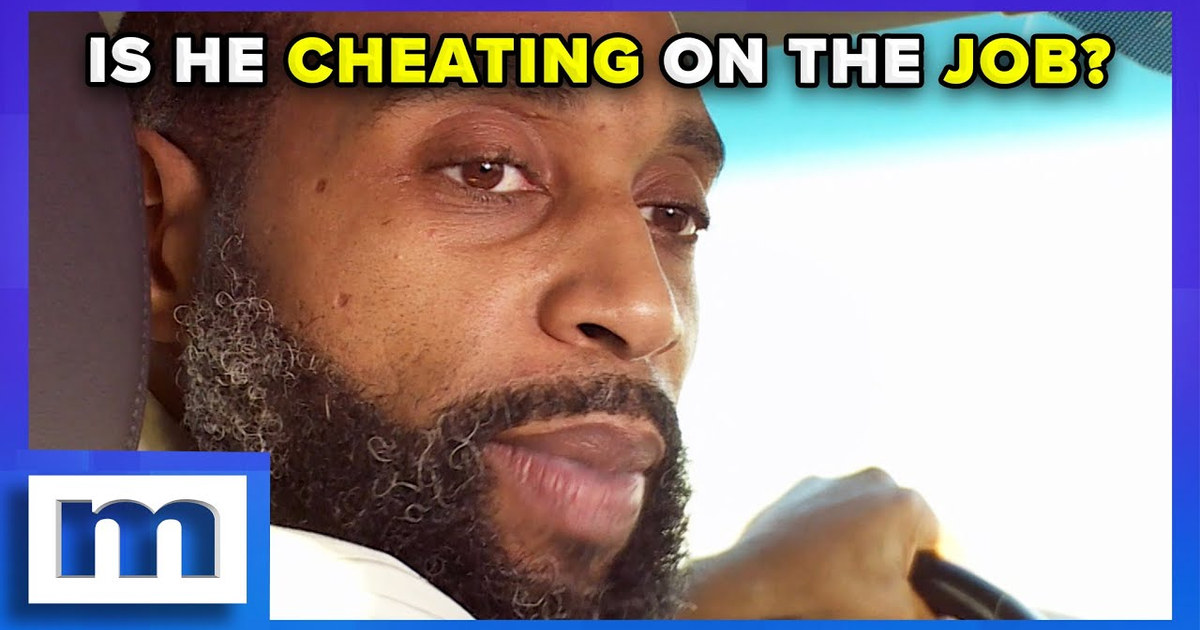
In the digital age, the toe is the new lipstick stain. It is the new earring. It is the thing that gets caught on camera, uploaded to social media, and dissected by strangers. It is the absurdity of infidelity in an era of surveillance — where every phone is a witness, every app is a tracker, every move is logged. Darnell used his toe because he could not use his thumb. He used his toe because he was trying to hide something. And in doing so, he created the perfect visual metaphor for the entire episode: a man so desperate to keep his secrets that he contorts his own body into a lie. It is funny. It is sad. It is deeply, deeply human.
The Maury Show understands this. It understands that we are all a little bit messy, a little bit desperate, a little bit ridiculous. It understands that the line between comedy and tragedy is thin, and that the best stories are the ones that make us laugh and wince at the same time. The toe is not just a toe. It is a window into a relationship, a family, a culture. It is a small, ridiculous detail that nonetheless speaks volumes. And it sets the stage for the deeper questions about trust, technology, and surveillance that will define the rest of this story.
Because the toe is only the beginning. There is the earring, the app, the sister, the hotel, the Walmart, the co-worker. There is the lie detector, the denials, the revelations. There is Bianca, who wanted to believe. There is Darnell, who wanted to get away with it. And there is Maury, standing in the center of it all, holding the envelope, ready to deliver the verdict. The toe unlocked the phone. But it also unlocked something else: a story about love and lies in the 21st century, where the evidence is always in your pocket, and the truth is always one swipe away.
The Earring, the App, and the Sister: How Suspicion Becomes a Story
The earring was small. It caught the light when Bianca slid it out from between the seats, a fleck of gold or silver or something that promised an answer. She held it up to Darnell like a detective holding a casing. He didn’t flinch. “A client left it,” he said. That was the whole explanation. A client. As if the car were a bus seat, a lost-and-found box, a place where strangers shed jewelry and never come back for it. But Bianca had already found the number. Not in a phone book, not on a receipt—on an app. The same app that was supposed to make his job transparent. The same app she had encouraged him to join. She scrolled through it, looking for a trip that would match the time the earring appeared, and found nothing. No trip. No fare. No client. Just a blank space where the truth should have been.
[[AD]]
That’s the thing about the ride-hailing app. It’s a surveillance tool disguised as a convenience. Bianca could see when Darnell was on a trip and when he wasn’t. She could track him in real time, or at least track the version of him that the app allowed her to see. But the app also gave him a new way to lie. He could log off. He could say he was between rides. He could claim the signal dropped. The same technology that was supposed to bring them closer became a screen between them, a digital curtain he could pull shut whenever he wanted. She wasn’t just suspicious of him anymore; she was suspicious of the app, of the gaps in the data, of the silence where a ping should have been.
And then there was Kamya. Bianca’s sister. The self-appointed private investigator. Kamya didn’t need an app. She had eyes. She saw Darnell at Walmart, standing in line with another woman, close enough to share a cart. She saw him at a hotel, carrying bags up the stairs for a woman who was not Bianca. Kamya reported these sightings like a war correspondent, each detail another nail in the coffin of Darnell’s story. But Darnell had a word for her: nosy. He called her a liar. He said she was making up stories because she didn’t have a man of her own. The audience laughed, but the accusation hung there—was Kamya a reliable witness or a bitter one? The lie detector would later say she was telling the truth, but in the moment, all Bianca had was her sister’s word against her fiancé’s.
[[VIDEO]]
The hotel detail was the one that stuck. Carrying bags up the stairs. Darnell said it was part of his job. “I got personal clients,” he explained. “They got to be at the airport at 6. They got to be at work at 4.” But Bianca and Kamya found it absurd. What kind of driver carries a woman’s bags to her hotel room? That’s not service; that’s intimacy. That’s the blurry line between a fare and a date. It reminded me of Michael Mann’s Collateral (2004, 120 minutes, available on Paramount+), where Jamie Foxx plays a cab driver whose routine night turns into a nightmare when a passenger—Tom Cruise’s silver-haired hitman—turns his car into a crime scene. The driver-passenger relationship is supposed to be transactional, but in that film, it becomes something else entirely: a forced partnership, a moral test, a blurring of roles. Darnell’s version of events asked Bianca to believe that he was just a driver, just a friendly guy helping a customer. But the image of him hauling bags up a hotel staircase looked like something else. It looked like a man making a house call.


