Part 1
The Toe That Unlocked Everything: Anatomy of a Daytime TV Moment
The video is nine seconds long, maybe less. A man’s foot, seen from below, hovers over a smartphone screen. The big toe — thick, deliberate, absurdly dexterous — presses down on the glass. The phone unlocks. The man is Darnell. He is sitting on the edge of a bed, or maybe a couch, in a room that looks like every room and no room at all. He does not know he is being filmed. He does not know that this small, private act of evasion will become the visual proof that launches a thousand memes, the kind of clip that gets stitched into reaction videos and looped on Twitter until the pixels blur. But here it is: a toe, a thumb’s understudy, a body part that has no business unlocking anything. And in that instant, everything changes.
The toe is funny. It is also devastating. Because a toe is not a thumb. A thumb is casual, thoughtless, the digit you use when you have nothing to hide. A toe requires planning. It requires a certain shameful ingenuity. It says: I cannot use my hands because my hands might be seen, because the phone might be snatched, because the evidence is too close to the surface. The toe is a confession in physical form. It is the body betraying the mind, the way a nervous laugh betrays a lie. In fiction, we would call it a telling gesture — the detail that reveals character without a single line of dialogue. In real life, on The Maury Show, it is simply a man trying to hide something and failing spectacularly.
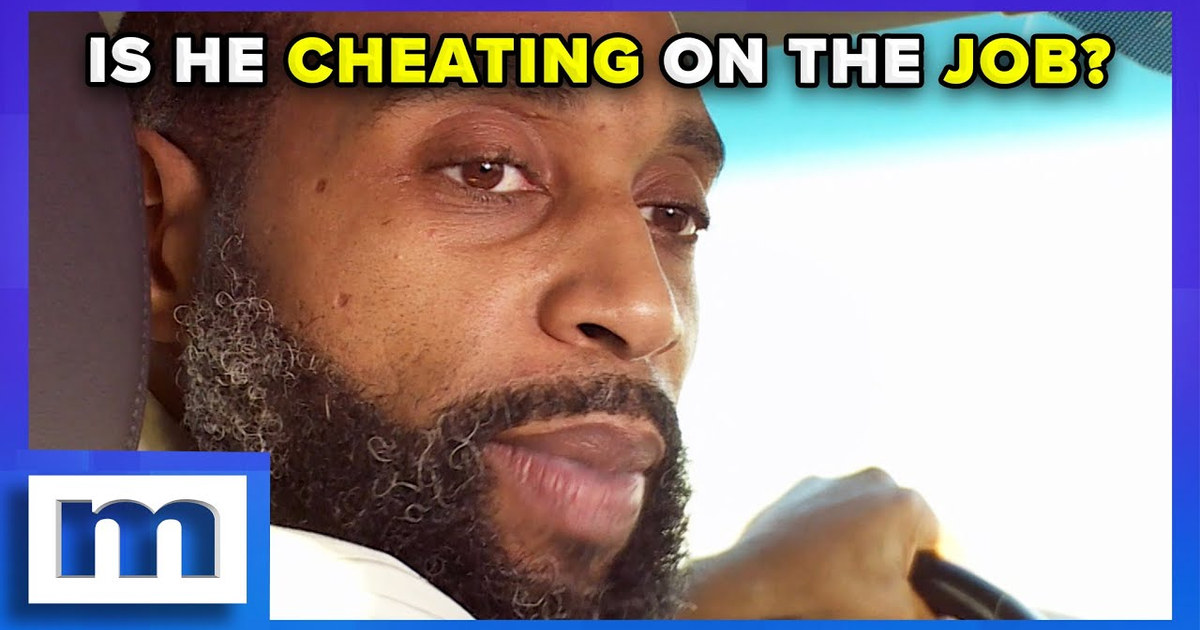
Darnell is a driver for an internet car service — the kind of gig-economy job that pays by the trip and keeps you on the road at all hours. His fiancée, Bianca, is the one who suggested he take the job. They have two children together. They are raising a family. Money is tight. So Bianca thought: why not? He can drive, they can earn, everyone wins. But then the late nights started. The phone calls went unanswered. The app showed no trips when she checked. He came home broke. And then she found the earring — a single earring, in the car, a small piece of jewelry that did not belong to her. Darnell said it was a client’s. Bianca said: how do you have her number? He said: there’s an app to report lost items. She said: then why do you have her number?
That is when Kamya entered the story. Kamya is Bianca’s sister. She has no man in her life, Darnell will later complain, and she sees everything — X-ray eyes, he calls them. Kamya spotted Darnell at Walmart with another woman, standing in line together like a couple. She saw him at a hotel, carrying a woman’s bags up the stairs. She overheard a co-worker talking about a boyfriend who sounded a lot like Darnell. And when she confronted the woman — “How is that your boyfriend when that’s my sister’s husband?” — the story began to crystallize. This was not just suspicion. This was surveillance. This was a sister with a mission, a fiancée with a phone, and a man with a toe.
The Maury Show has been a daytime institution since 1991. It is now in its 25th season. It moved to The CW in 2018. It has survived tabloid scandals, cultural shifts, and the rise of social media because it understands something fundamental about human nature: we cannot look away from other people’s messes. The show’s format is simple and brutal. Lie detector tests. Paternity tests. Relationship confrontations. Guests sit in chairs. Maury Povich stands before them, holding a manila envelope, delivering verdicts with the gravity of a judge and the showmanship of a carnival barker. “You are NOT the father!” he will shout, and the audience will erupt. “The lie detector determined that was a lie,” he will say, and the room will gasp. These catchphrases have become part of the cultural lexicon, memes before memes were a thing, punchlines that double as life sentences.
In this episode, the lie detector is not just a prop. It is the engine of the third act. Darnell takes the test. He denies cheating. He denies using his job to meet women. He denies everything. Kamya takes the test too. She says she saw what she saw. She says she heard what she heard. And then the results come back. The lie detector determined that Darnell was lying. The lie detector determined that Kamya was telling the truth. It is a moment of pure television — the kind of moment that makes you forget, for a second, that lie detectors are not admissible in court, that they are controversial, that they measure stress and not truth. On The Maury Show, the lie detector is God. It is the final arbiter. It is the thing that turns a he-said-she-said into a verdict.
But the toe is what we remember. The toe is what we share. Because the toe is a small, intimate detail that speaks volumes. It is the kind of detail a novelist would invent — the telling gesture that reveals a character’s desperation, their cunning, their shame. Think of The Apartment (1960), directed by Billy Wilder, where a lipstick stain on a collar tells you everything you need to know about a man’s infidelity. Think of Vertigo (1958), directed by Alfred Hitchcock, where a necklace — a piece of jewelry, like an earring — becomes the clue that unravels an entire identity. These are objects that carry meaning beyond their physical form. They are symbols. They are evidence. They are the things we notice when we are paying attention, and the things we miss when we are not.


