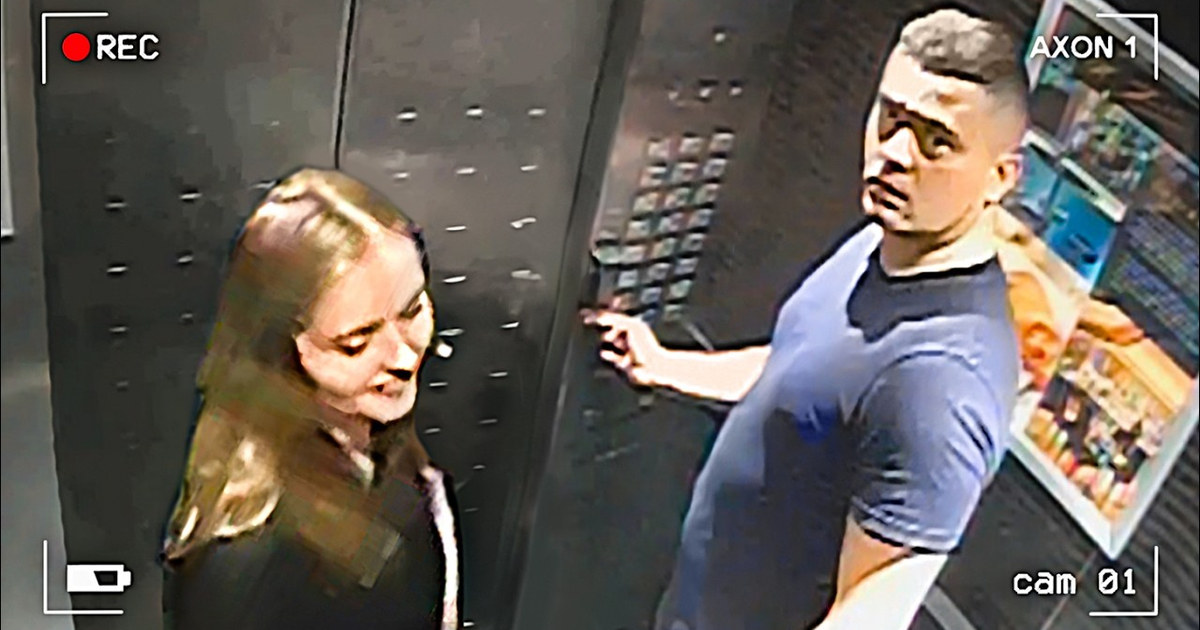
You have probably seen the haunting CCTV clips circulating on social feeds: a young couple laughing, hopping between vibrant downtown bars, looking like any other ordinary date on a weekend night. The footage poses a question that lingers long after the clip loops: how can a casual, modern dating interaction mask such a calculated and monstrous reality right in front of our eyes?
On December 1, 2018, 22-year-old British backpacker Grace Millane met 26-year-old Jesse Kempson in Auckland, New Zealand, after matching on Tinder. What began as drinks at a burger bar ended in a horrific tragedy that shocked the world and triggered a high-profile international investigation.
By examining the vast digital trail left behind—from elevator security feeds to credit card statements—we can answer how modern forensic tracking inevitably pierces through a killer's desperate deception.
[[AD]]
The Illusion of Security in the Modern Dating Landscape
When Grace stepped out of her hostile to meet Kempson, she took care to choose public venues. They frequented busy spots across Auckland, including Andy's Burger Bar and the Blue Stone Room, where they shared their first kiss around 8:54 p.m. Believing she was completely safe, Grace sent her final message to a friend, bubbling with excitement about how well the date was going.
Public spaces create a psychological sense of armor. Yet Kempson was playing a patient game, keeping his unsettling intentions entirely hidden until they reached his room at the CityLife Hotel.
Much like the unsettling public-facing deception explored in the true-crime documentary *The Tinder Swindler* (2022), the illusion of safety on dating apps often relies on our trust in visible social norms, making the sudden shift to peril all the more devastating.
[[AD]]
The Cold Mechanics of a Cover-Up Captured on Camera
By 8:00 a.m. the next morning—which happened to be Grace's 23rd birthday—Kempson was caught on elevator cameras glancing suspiciously upward. Over the next several hours, he embarked on an eerie shopping trip, purchasing a large suitcase, cleaning chemicals, and hiring a rental car, horrifyingly paying for items using Grace's own credit card.
Even more appalling was Kempson's chilling audacity: while Grace's body remained in his apartment, he went on a second Tinder date that very afternoon. During this date, he casually asked his companion terrifying hypothetical questions about hiding a body from the police, prompting her instincts to get her out of there immediately.
Kempson then rented a carpet cleaner, loaded the suitcase onto a porter's trolley, and drove out to bury Grace in the Waitākere Ranges. His methodical behavior mirrors the shocking, detached composure seen in *American Murder: The Family Next Door* (2020), where security footage consistently exposes the sharp contrast between a killer's calm exterior and their gruesome actions.
[[AD]]
The Unraveling Lies and the So-Called '50 Shades' Defense
When Grace was reported missing on December 5 after her family couldn't reach her, Auckland police quickly tracked down Kempson using surveillance video from the hotel lobby. Under interrogation, Kempson initially tried to spin intricate lies about catfishing and walking down different streets, completely unaware that detectives possessed hours of footage disproving his story.
Cornered by blood traces in his room and cell tower location data, Kempson switched tactics during a second interview on December 7. He attempted to deploy what media outlets dubbed the '50 Shades of Gray' defense, claiming Grace's death was an accidental result of consensual rough intimacy.
Forensic evidence completely tore this scapegoat defense apart. Investigators discovered Kempson had conducted Google searches on hiding bodies, taken photos of the victim, and inflicted physical injuries consistent with forcible restraint before strangulation.
This painstaking digital reconstruction brings to mind the relentless crowd-sourced and forensic tracking featured in *Don't F**k with Cats* (2019), demonstrating that no matter how cleverly a suspect tries to control the narrative, electronic footprints rarely lie.
[[VIDEO]]
[[AD]]
Reframing the Question: Justice in the Age of Digital Transparency
Kempson was found guilty of murder in November 2019 and sentenced in February 2020 to life imprisonment with a minimum non-parole period of 17 years. Following the trial, two additional women stepped forward, revealing Kempson had previously assaulted them after matching on Tinder, adding another 11 years to his prison sentence.
Ultimately, the Grace Millane case forces us to reframe our original question: it isn't just about how easily predators can hide behind digital profiles, but how the very technology they use to seek out victims ultimately secures their undoing.
What true crime case should we break down next? Drop your thoughts in the comments below, and stay tuned for our next deep dive into famous forensic investigations!


