Part 2
[[AD]]
Face-to-Face with 'Psycho': The Devil's Wage
Warning: The following section details genuine confessions of violent gang warfare and life inside CECOT, including direct accounts from high-ranking criminal leadership.
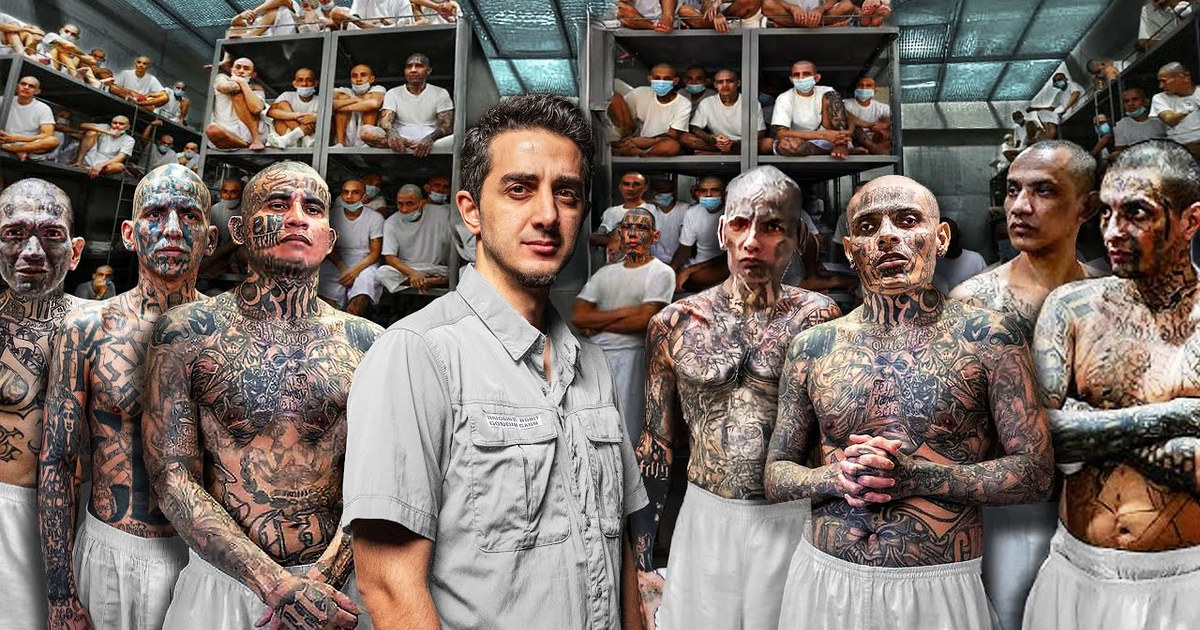
Flanked by a phalanx of twelve masked tactical guards wielding assault carbines, the documentary brings out forty-one-year-old Marvin Ernesto Metano Vasquez—known across the streets as 'Psycho.' A veteran of the underworld whose criminal rap sheet began when he was only eleven years old, Marvin carries the heavy Gothic lettering of MS-13 across his chest like an iron crest. Yet sitting on a metal stool beneath the sterile glow, his cadence is surprisingly soft, stripped of street bravado.
When pressed on the body count attached to his twenty-five-year run within the syndicate, Psycho doesn't flinch. He estimates his victims at well over fifty souls—lives snuffed out in street skirmishes and prison turf wars. He speaks of initiating his youth through family betrayal, building status in an organization that demanded everything and left him with nothing. 'This is how the devil pays,' he whispers in fluent, broken English, acknowledging that the empire he bled for has vanished into a lifelong cell.
[[VIDEO]]
The tragedy of his reflection arrives when he speaks of his son, whom he last saw as a five-year-old toddler. That boy is now twenty-one—an adult walking free in a world Marvin will never touch again. There are no visits permitted at CECOT, no phone calls, and no letters. As the timer hits the strict ten-minute limit and guards clamp down on his chains, Psycho offers only a stark warning to the youth outside: run from the streets, because this fortress is the only destination waiting at the end of the road.
[[AD]]
The High Price of Absolute Order
The raw statistics behind this mega-prison explain why the Salvadoran public overwhelmingly backs Bukele's iron fist. A country that once held the horrific title of the murder capital of the world—peaking at a catastrophic one hundred and four homicides per one hundred thousand citizens—has watched that figure plummet to a near-record two point four. Families walk neighborhood parks after midnight without paying protection ransoms for the first time in three decades.
Yet beneath the celebratory headlines lies a troubling, unresolved shadow. Over seventy thousand people—roughly two percent of the nation's entire adult population—were swept behind bars in mere months under emergency decree. Without standard due process, human rights organizations emphasize that hundreds of innocent workers, laborers, and mistaken suspects were swallowed into the same silent maw, leaving frantic families on the outside with zero word on whether their brothers and sons are even breathing.
Whether CECOT stands as a triumphant blueprint for reclaiming civilization from terror or an ominous preview of unchecked state power remains the defining question of modern Latin American politics. What is undisputed is that once its iron doors seal, the debate on human nature ends and pure survival begins.
The Sound of the Stones
Stepping back through the final armored threshold into the brutal Salvadoran sun, the silence of the cells suddenly gives way to the heat of the open sky. Behind you, the gravel perimeter path gleams bone-white under the noon glare. Those loose river stones remain waiting in the dust—not merely an acoustic tripwire for escaping feet, but the final, brittle boundary between an entire nation's newfound peace and the forty thousand ghosts locked beneath its floorboards.


