Part 1
A boot presses into the loose gray gravel outside Module Three, and the stones grind together with a sharp, dry snap. It sounds like bones rattling in an iron tray. The sound is completely intentional. In this compound, the earth itself is an acoustic tripwire, engineered so that even if a phantom somehow slipped through reinforced steel doors, razor coils, and fifteen thousand volts of current, the ground beneath his feet would scream before he took two paces.
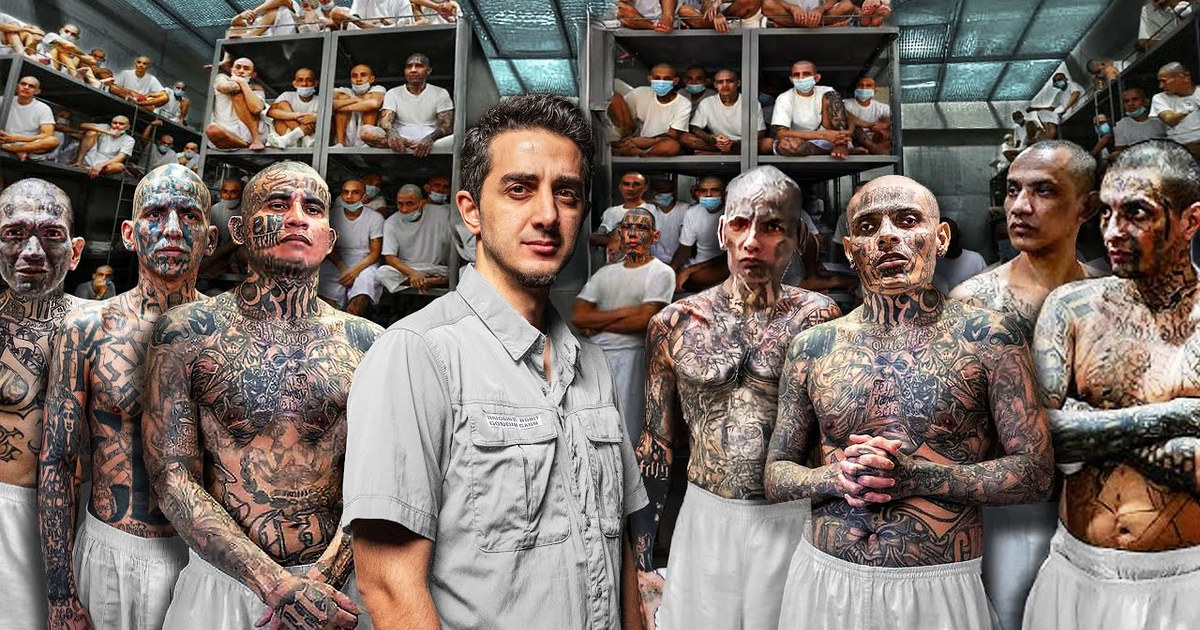
This is CECOT—the Terrorism Confinement Center in Tecoluca, El Salvador. Carved across four hundred and ten scorched acres of volcanic soil, it is less a penitentiary than a concrete monolith designed to swallow forty thousand human beings and never spit them back out. Built under President Nayib Bukele's sweeping 2022 gang crackdown, it represents the absolute perimeter of modern incarceration. Documentarian Ruhi Çenet walked past the sixteen checkpoints, through the signal-jammed dead zones, and into the roaring visual silence of the cells to capture a reality that feels ripped straight from a dystopian film reel.
The camera frames this fortress not merely as an architectural marvel, but as an unrelenting exercise in sensory erasure. The outer walls reach nine meters toward the sky, crowned with live wire and monitored by nineteen sniper watchtowers. Cell phone signals vanish two kilometers before you reach the front gates. In an age where digital technology connects the planet down to the second, CECOT operates as a black hole where the outside world ceases to exist the instant the iron gates clang shut.
[[AD]]
The Anatomy of Total Isolation
Before any lens crosses the threshold into the living blocks, the state strips away identity with surgical precision. High-capacity body scanners peel through skin to illuminate internal organs, hunting for swallowed microchips, SIM cards, and weapon shanks. Visitors surrender their wedding bands and unroll their socks; guards patrol in tight balaclavas to safeguard their faces from street vengeance. Once inside, an inmate receives no legal ID, no family visits, and no sunlight. A solitary fingerprint locks them into an institutional ledger meant to outlast their natural lives.
The architecture operates on pure psychological dominance. Eight discrete modules sit partitioned like bulkheads in a sinking submarine. Should an inmate dream of rebellion, the facility's independent power grids and emergency cisterns can sustain the entire fortress in total lockdown for a week without a single delivery from the outside world. The armory bristles with T65 rifles, twelve-gauge combat shotguns, and blunt anti-trauma riot shields, ready to extinguish the slightest ripple of unrest before it sparks.
Stepping across the yellow painted boundary line into the cell bays feels like walking onto an open soundstage where two thousand five hundred men stare directly through the camera. There are no bars made of wire mesh; there are only massive iron grids. Behind them, stacked four bunks high on bare sheet metal, sit dozens of men stripped down to uniform white cotton shorts and rubber slides. They move as one monolithic wave of bleached fabric and inked skin.
[[AD]]
Enemies Locked in Forced Communion
On the asphalt streets of San Salvador, crossing from an MS-13 sector into Barrio 18 territory was an instant death sentence that left entire neighborhoods drenched in blood. Inside CECOT, the state performed the ultimate social experiment: it forced the bitterest blood rivals on earth into the exact same eighty-man cells. There are no territories left to claim, no street corners to extort, and no alleys to ambush. The rival factions sleep inches apart on cold iron slabs without mattresses or pillows.
Every inch of flesh tells a story carved in ink. Devil horns arch across temples, clown masks grin with the ancient creed to laugh now and cry later, and spiderwebs spread across collarbones to signify entrapment in the judicial web. Most haunting are the teardrops pooled beneath hollow eyes—each droplet marking a life extinguished, with three tears signifying a butcher who simply stopped counting after the bodies piled too high.
Personal space here is measured at half a square meter per man. Two exposed toilets sit in the corner beside a solitary blue water basin used for drinking, washing, and rinsing metal trays. Overhead, cold fluorescent tubes hum without reprieve twenty-four hours a day, denying the inmates even the mercy of darkness. Men pull damp washcloths over their eyes just to simulate the sensation of nighttime, lying motionless beneath a ceiling that never sleeps.
[[AD]]
Sensory Deprivation: The Pitch-Black Void
For those who defy the razor-thin margin of order inside the barracks, CECOT holds a darker circle: the punishment bunker. These windowless isolation chambers are concrete tombs sealed with solid iron. Inside, the darkness is so impenetrable that prisoners cannot see their own knuckles held against their noses. A single circular port in the reinforced roof admits a faint needle of air and a sliver of gray light, serving as the sole tether to the living world.
Supervisors can remand an inmate to this sensory void for up to fifteen days at a stretch. Without books, conversation, or a ticking clock, the human mind rapidly consumes itself. It is the ultimate manifestation of state retribution against figures who once ran brutal urban fiefdoms—a total revocation of human stimulation that reduces the hardened ego to shivering dust.
Routine in the general population is hardly more generous. Meals arrive as monotonous heaps of cold starch: white rice, unseasoned pasta, boiled beans, and two corn tortillas, shoveled down with bare hands. Meat and dairy are nonexistent luxuries. Aside from a single mandatory hour of calisthenics or Bible study per week on a rotating schedule, existence within CECOT is an endless, silent wait in an immutable room.


