Part 1
The Thesis: Every Alibi Is a Lighting Setup, and Larry's Key Light Is a Lie
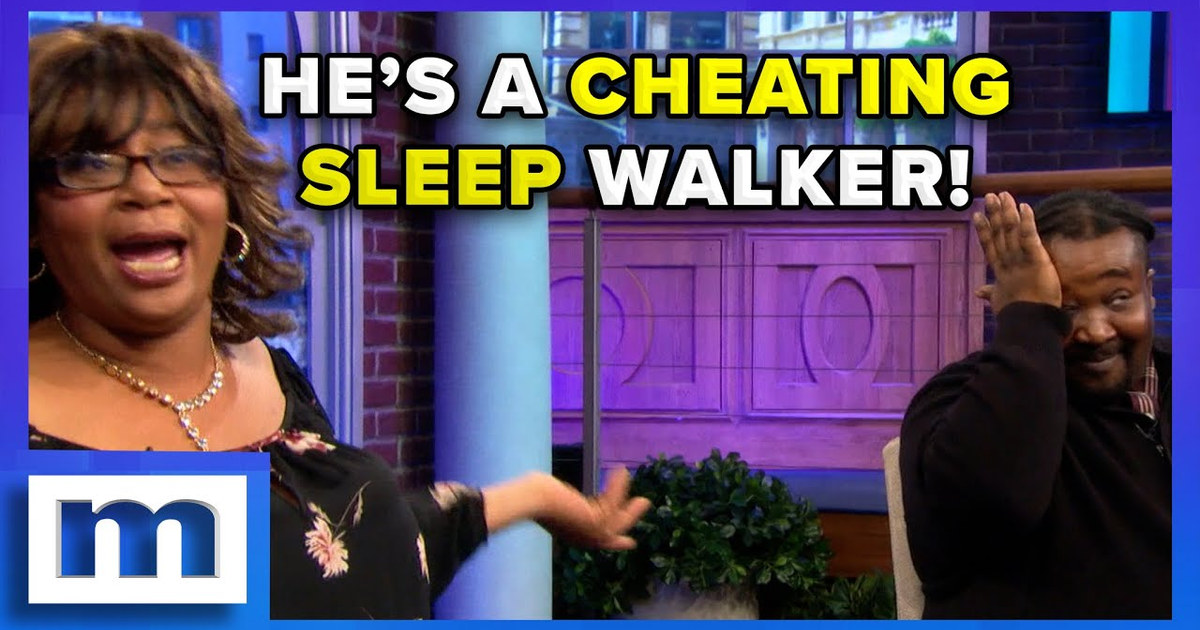
Larry’s entire defense is a lighting design—he controls what Carla sees by controlling when and where the light falls, and the Maury stage simply re-keys the scene until the shadows stop cooperating.
I’ve shot second-unit on enough night exteriors to know that the most dangerous light source in any bedroom isn’t a fresnel or a China ball. It’s a phone screen. A 5600K LED panel the size of a playing card, held six inches from a face, throwing blue-white spill across the cheekbones and nose. No diffusion. No flag. Just raw, unmotivated glow that reads as a key light because there’s nothing else in the room to compete with it. That’s the light Carla wakes up to. That’s the light she’s reacting to when she says, “all you hear all night is ding ding ding Messengers.”
So when Larry sits across from Maury and claims he’s up at 3 a.m. researching spiritualism, I hear a motivated-light claim. He’s telling us the glow on his face has a practical source—a legitimate, on-set reason for the illumination. In cinematography, motivated light is when the audience believes the source comes from something in the scene: a window, a lamp, a TV. Larry wants Carla to believe the source is spiritual inquiry. But the spill on his face isn’t coming from a candle or a sacred text. It’s coming from a Facebook thread.
Carla isn’t buying it. She tells Maury that Larry texts other women while she sleeps, and his counter is that he’s researching “various aspects of spiritualism.” That’s a gaffer’s excuse. He’s saying the light is motivated, but the motivation doesn’t hold up under a continuity check. Because if you’re researching spiritualism, you don’t need a thousand Facebook friends. You need a library card.
Let’s talk about that number. Larry has a thousand friends on Facebook. Nine hundred ninety-six of them are women. “All shapes sizes different colors different ethnics,” Carla says. That’s not a friend list. That’s a casting call. In production terms, that’s a call sheet with 996 names on it, and every single one is a potential day player. You don’t build a roster like that for spiritual research. You build it for coverage.
And Larry admits he cheated on Carla once. Once. Carla’s response is the line that should be printed on the slate: “a thousand more times that he didn’t admit.” That’s the coverage gap. In any film, the shots you don’t get are the ones that tell the real story. Larry’s giving us one take—a single admitted infidelity—and asking us to believe the rest of the footage doesn’t exist. But Carla’s been living in the dailies for a decade.
Ten years together. Eight years married. That’s not a one-off shoot. That’s a decade-long production with a consistent lighting problem. You don’t accidentally leave a pocketbook in your wife’s car after ten years of marriage. You don’t accidentally withdraw $200 from an ATM in Pennsylvania when you told your wife you were in Long Island. Those aren’t continuity errors. Those are set pieces. And every set piece has a lighting setup that Larry thinks he can control.
The Maury show is the ultimate re-key. It takes Larry out of his controlled environment—the dark bedroom, the phone screen, the 3 a.m. solitude—and drops him onto a stage with hard, flat, unforgiving light. There’s no place to hide. The shadows that once cooperated with him now betray him. Every bead of sweat, every eye dart, every nervous swallow is captured in high definition. The studio audience is the ultimate witness, and they’re not here for his motivated-light explanation.
So here’s what we’re going to do. We’re going to walk through three scene beats—three setups where Larry’s lighting fails. First, the ATM in Pennsylvania and the pocketbook in the car. Two practicals that don’t match the story. Second, the lie detector and the decoy. When the studio turns up the key light and Larry’s face can’t hide the truth. And third, the latex confession. Because nothing says “I’m not cheating” like coming home smelling like Magnums. Each beat is a masterclass in what happens when you lose control of your light. And by the end, you’ll know exactly what to watch for the next time someone says they have insomnia.
Scene Beat One: The ATM in Pennsylvania and the Pocketbook in the Car—Two Practicals That Don't Match the Story
Open on the beat: Larry tells Carla he’s driving to Long Island to see his daughter. That’s the establishing shot—wide, clean, family-man framing. Then Carla calls the bank. Two hundred dollars, withdrawn from an ATM in Pennsylvania. Not Long Island. Pennsylvania. That receipt is a timecode. It’s a timestamped light source that blows out the whole scene. In cinematography terms, it’s a practical in the frame the gaffer didn’t plan for—a rogue lamp that reveals the set was never where the director said it was.
You want to talk about motivated lighting? Larry’s alibi is the key light. The ATM transaction is the fill that doesn’t match. The color temperature is off by a mile. He says Long Island; the bank says Pennsylvania. That’s not a minor continuity error—that’s a different location scout entirely. And Carla, playing detective, just found the slate. She knows the scene was shot somewhere else.
Now cut to the car. Carla goes out for milk, eggs, and bread. First pass: nothing unusual. She gets in, gets out, comes back with the family. Second pass: there’s a pocketbook sitting in the back seat. She says she didn’t notice it the first time. That’s a prop that appears between takes. Either it was planted, or it was always there and the first pass was shot in a different light—maybe a different angle, maybe a different lens, maybe a different time of day. In film terms, this is a continuity nightmare. The script supervisor would be screaming. But this isn’t a movie. This is Larry’s life, and the pocketbook is evidence.


