Part 2
[[VIDEO]]
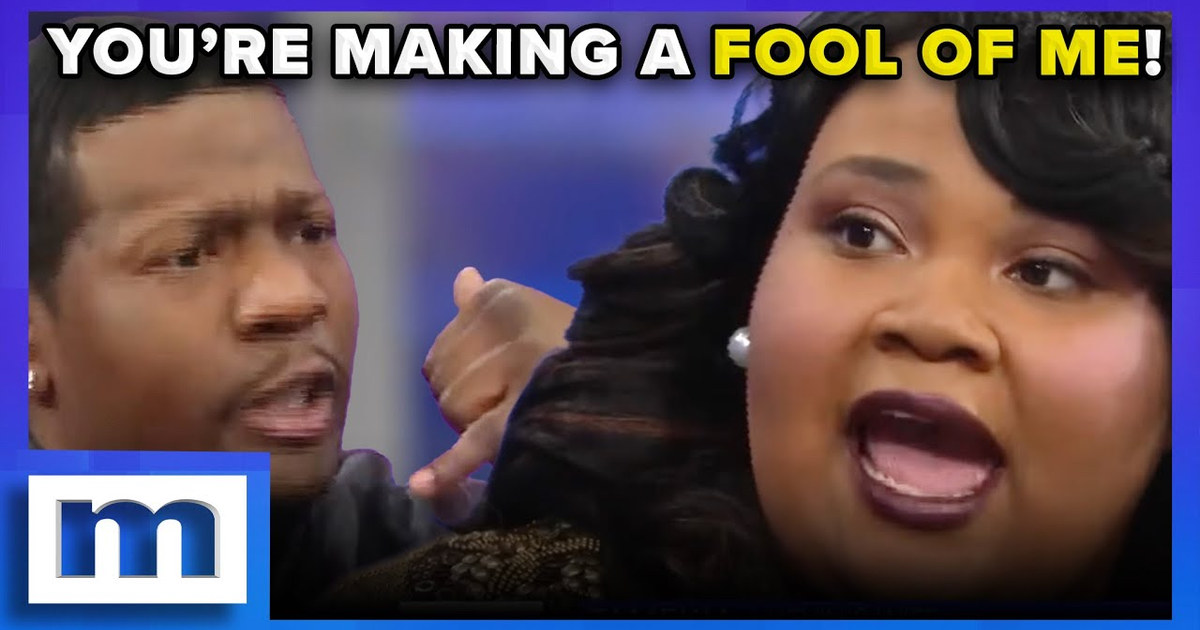
But let's zoom in on the key moments. Tamika's emotional testimony about finding the mirror message while pregnant is the emotional core. She was sick, couldn't walk, went to the hospital alone, and Kevin was out disclaiming her baby. That's the kind of raw, unfiltered pain that genre fans eat up. Then Kevin's defense: 'Showing your body is beautiful. Some people even call it art.' It's absurd, but it's also a perfect villain line. He's not just denying; he's reframing. And the back-and-forth about privacy? Tamika smells his private parts. Kevin calls it a violation. It's petty, it's gross, and it's exactly the kind of detail that makes daytime talk TV addictive.
Maury's role as host and referee is crucial. He's not just a moderator; he's the audience's proxy. He asks the questions we're all screaming at our screens. He gets Tamika to open up, then brings Kevin out to face the music. And while Maury is famous for 'You are not the father,' here the catchphrase is repurposed for cheating. The lie detector results are the climax: Tamika passes on the question of other men. Kevin fails on multiple counts—slept with children's mothers, the mirror message woman, women he sent sexual pictures to, text message women, and the woman during the sheriff stop. Each failure is a beat, a mini-reveal that builds to the final verdict. The audience gasps, boos, and cheers. They're not just spectators; they're part of the show's rhythm.
This segment hits every genre beat with precision. It's why the Maury Show has lasted for decades. It's why Jerry Springer and Steve Wilkos have similar formats. The drama is real, the emotions are raw, and the structure is as reliable as a for-loop. If you're a genre fan, this is your Super Bowl. But even if you're here for the craft, you have to admit: the engineering behind this chaos is impressive. And that's what we'll dig into next.
Craft Corner: Production Engineering Behind the Chaos
If you're the kind of viewer who watches a Maury segment like Kevin and Tamika and immediately starts thinking about the edit, the pacing, the backstage cutaways, and the lie detector as a narrative device, this section is for you. Because what looks like raw chaos is actually a tightly engineered machine.
Let's pop the hood. The first thing you notice is the editing rhythm. The segment opens with Tamika already in tears, then cuts to Kevin backstage. That's not an accident. The backstage footage is a pressure valve. It gives you a villain to watch before he even walks out. You see him pacing, you see him rehearsing his lines, and you start building a mental model of the guy. By the time he hits the stage, you already have a hypothesis. The show is running a pre-test on your emotions.
The pacing is relentless. Every accusation gets a reaction shot. Every reaction shot gets a sound effect. The lie detector test is the climax, but notice how it's positioned. It's not the first thing. It's saved for after Tamika has laid out the mirror, the texts, the Instagram messages, the Facebook photos, the neighbor's call, the missing work days, the hospital visit. That's a stack of evidence. The lie detector is the final assertion. It's the unit test that either passes or fails the whole build.
Now, about that lie detector. As a narrative device, it's brilliant. As a scientific instrument, it's about as reliable as a smoke detector in a sauna. Polygraphs measure stress, not truth. They can be gamed. They can misfire. But in the Maury ecosystem, the lie detector isn't about accuracy. It's about closure. It's the plot point that forces a verdict. The audience doesn't need a peer-reviewed study. They need a red folder and a dramatic pause. And Maury Povich, the host, is the orchestrator. He's not just reading cue cards. He's a traffic controller for human emotion. He knows when to lean in, when to pull back, when to say 'you be the judge.' He's been doing this since the early 1990s, and his production team has the staging down to a science.
[[AD]]
Compare this to The Jerry Springer Show. Springer's engineers leaned hard on security guards and audience participation. The crowd chants, the bouncers step in, the chairs fly. Maury's team takes a different approach. They use evidence. Text messages, social media screenshots, witness testimony. It's a courtroom, not a wrestling ring. The backstage footage of Kevin is the equivalent of a pre-fight interview. It's not about who throws the first punch. It's about who has the receipts.
And the receipts are very 2010s. Instagram, Facebook, naked pictures sent through DMs. This places the segment firmly in the social media era. If this were the 1980s, Tamika would be holding a Polaroid. Instead, she's scrolling through his phone. That's a production choice. It's cheaper to show a screenshot than to stage a reenactment. It's also more relatable. Everyone has checked a partner's phone. Everyone has seen a suspicious like on Instagram. The show is tapping into a universal anxiety.
But here's where the craft gets ethically murky. Tamika checking Kevin's phone, smelling his private parts, that's a privacy violation. Kevin's gaslighting, telling her she's crazy, that's emotional abuse. The show doesn't shy away from any of it. In fact, it amplifies it. The production team knows that real emotions are the fuel. They don't script the tears, but they do create the conditions for them. The backstage footage, the lie detector, the audience gasps, it's all designed to strip away the filter. Whether that's exploitation or entertainment depends on your perspective. But from a production standpoint, it's effective.
Let's tie this back to the programmer's lens. Debugging a relationship with print statements is exactly what Tamika is doing. The text messages are her print statements. She's logging every suspicious event. The Instagram messages are her console output. The lie detector is her unit test. It's a binary assertion: is he cheating or not? The problem is, relationships aren't deterministic. You can't just run a test and get a clean pass or fail. There's always edge cases. There's always false positives. But the show pretends otherwise. And that's the fantasy. That's why we watch.
The host, Maury Povich, is the senior engineer here. He's been hosting the show since 1991, and he knows how to guide the narrative. He asks the questions that the audience is screaming at their TVs. He pauses for effect. He lets the silence do the work. The production team behind him, the editors, the producers, the security, they're all part of the same machine. They're not just capturing reality. They're shaping it. And they've been doing it for decades.
So how does this satisfy both audiences? The genre fans get the cathartic verdict. They get the lie detector results, the dramatic music, the shocked reactions. The craft nerds get a masterclass in structured reality TV. They get to see how backstage footage builds anticipation, how evidence is stacked, how the lie detector is used as a narrative device, and how the host orchestrates the chaos. It's engineering with a soul. And it's been perfected over thousands of episodes.
Next time, we'll break down another Maury segment or maybe pivot to a different reality show. Because the craft is everywhere. You just have to know where to look.


