Part 2
Then there’s the job lie. Tamika called Kevin’s boss and learned he had called out or simply not come in. It’s a small detail, but it matters — because it shows a pattern of deception that extends beyond women. And then the hospital story. Tamika was pregnant, so sick she couldn’t walk. She went to the hospital alone. Meanwhile, Kevin was going around disclaiming the baby to everyone. When Maury asked if he accepts the child now, Tamika said, “It’s still hard to say.”
Finally, the all-night disappearance. Kevin and his cousin allegedly got pulled over by the sheriff and then went to the club. They left at 7 or 8 p.m. and didn’t get home until 7 or 8 the next morning. That’s a twelve-hour gap explained by a traffic stop and a night out. It doesn’t add up — and that’s the point. Each excuse, on its own, might be brushed aside. Together, they form a mosaic of avoidance.
What makes Tamika’s presentation so powerful is that she didn’t just accuse — she documented. She took a lie detector test before Kevin even came out. Her reason? “I had no reason to lie.” That line lands like a verdict. She’s not the one scrambling to redefine words. She’s the one who submitted to the test while her husband was still backstage, probably rehearsing his “socializing” defense.
[[AD]]
So when you watch this segment, don’t just focus on the naked photos or the mirror. Focus on the accumulation. It’s not one smoking gun; it’s a dozen little fires. And Tamika walked Maury through every single one, in order, with the precision of someone who’s been building this case for years. By the time she finished, the question wasn’t whether Kevin cheated. It was whether “cheating” even meant anything to him anymore.
Kevin's Defense: Privacy, Nagging, and the Art of Calling Your Wife Crazy
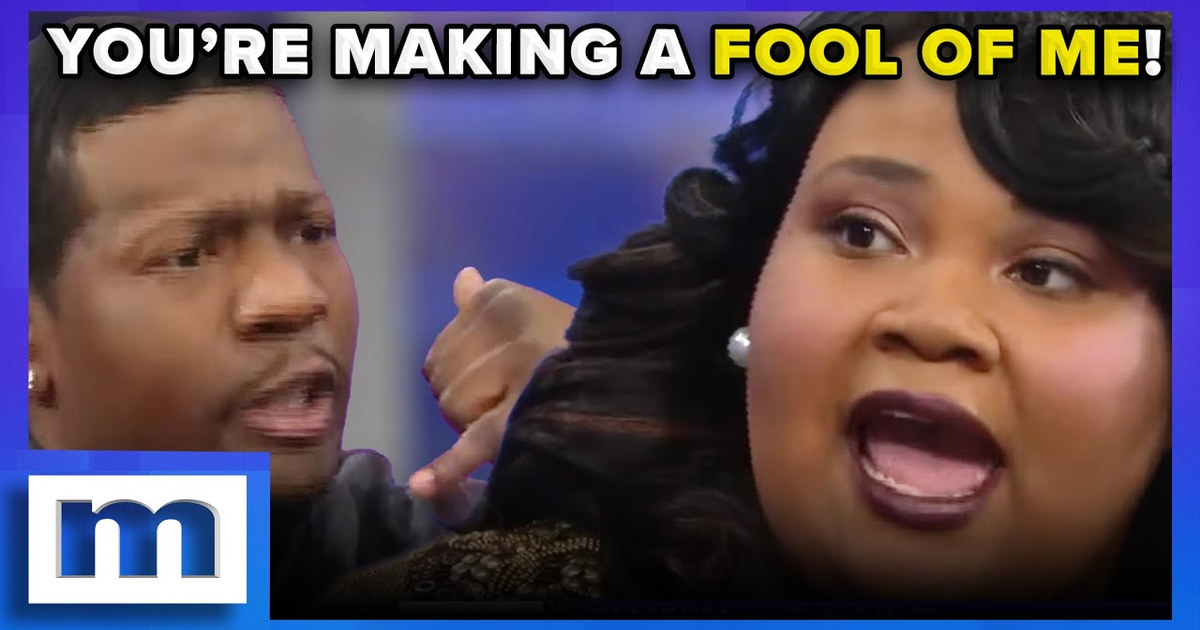
Kevin walks out to meet Maury with the weary dignity of a man who believes he's been misunderstood. His opening statement is a masterpiece of self-pity dressed as devotion: “My wife, Tamika, is the love of my life, but she's making my life unbearable.” The love is real, he insists. The problem is her behavior. “As soon as I come home, she checks my phone and smells my private part. She violates my privacy.” In Kevin's telling, he's the victim of a surveillance state run by his own wife, and the naked pictures, the sexy Facebook messages, the Instagram DMs — all of it — are just the harmless byproduct of a man who likes to socialize.
[[VIDEO]]
He doesn't stop there. He reframes the entire conflict as a matter of aesthetic appreciation. “Showing your body is beautiful,” he tells Maury, straight-faced. “Some people even call it art.” It's a line that belongs in a museum of audacity. Kevin isn't just denying infidelity; he's elevating it to a philosophy. The naked photos aren't betrayal, they're curation. The sexting isn't cheating, it's conversation. And if Tamika can't see that, well, that's her problem.
Then comes the threat, delivered with the calm of a man who thinks he's holding all the cards: “If you keep up this nagging, you going to lose the best thing that ever happened to you.” It's a classic move — the emotional equivalent of a hostage negotiation where the hostage is told they're lucky to be in the room. Kevin positions himself as the prize, Tamika as the ungrateful nag who might just nag herself out of a good man. The audience, of course, knows better.
When Maury asks him point-blank if he's cheating, Kevin's response is a staccato drumbeat of denial: “No, I'm not, Maury. I'm not cheating. I'm not cheating. I'm not cheating.” The repetition is telling. It's not the calm certainty of an innocent man; it's the frantic mantra of someone trying to drown out the evidence with volume. Maury, ever the showman, leans in: “I'm fascinated by your definition of socializing. Can you talk sexy on Facebook and all that stuff? Is that socializing?” Kevin doesn't blink. “Yeah, that's socializing.”
This is the heart of Kevin's defense: a semantic shell game. If he can redefine “cheating” as “touching,” and “socializing” as “sexting,” then he's technically innocent. He admits to the messages. He admits to the pictures. He just refuses to let those facts mean what they obviously mean. It's the same rhetorical trick pulled by con artists in documentaries like Fyre (2019), where the story being sold is so confident, so relentless, that it momentarily outpaces the evidence. Billy McFarland didn't deny the chaos; he just kept talking until the narrative shifted. Kevin is doing the same thing on a smaller, sadder stage.
But Kevin doesn't just deny. He counter-attacks. He claims Tamika is jealous and insecure. He says she calls his boss and puts the kids on the line. He says she pulls up to his work three or four times a day. And then he drops the bomb: “She's the one doing the cheating, which is why she's accusing me.” It's a classic DARVO maneuver — deny, attack, reverse victim and offender. Suddenly, Tamika isn't the betrayed wife; she's the paranoid cheater projecting her own guilt. The audience might not have the term for it, but they recognize the move.
Tamika, backstage, names it directly: “He turned it around on me and said I'm crazy, and I know I'm not crazy.” That line is the Rosetta Stone for this entire segment. Kevin isn't just arguing about fidelity; he's pathologizing Tamika's reaction. She's not hurt, she's hysterical. She's not suspicious, she's sick. By framing her as unstable, he delegitimizes every piece of evidence she's gathered. The lipstick on the mirror? His cousin's girlfriend — “I can't control that.” The ex in the house? Denied. The night with the sheriff? He was “just a passenger.” Every fact has a ready-made excuse, and every excuse is designed to make Tamika look like the problem.


