Part 4
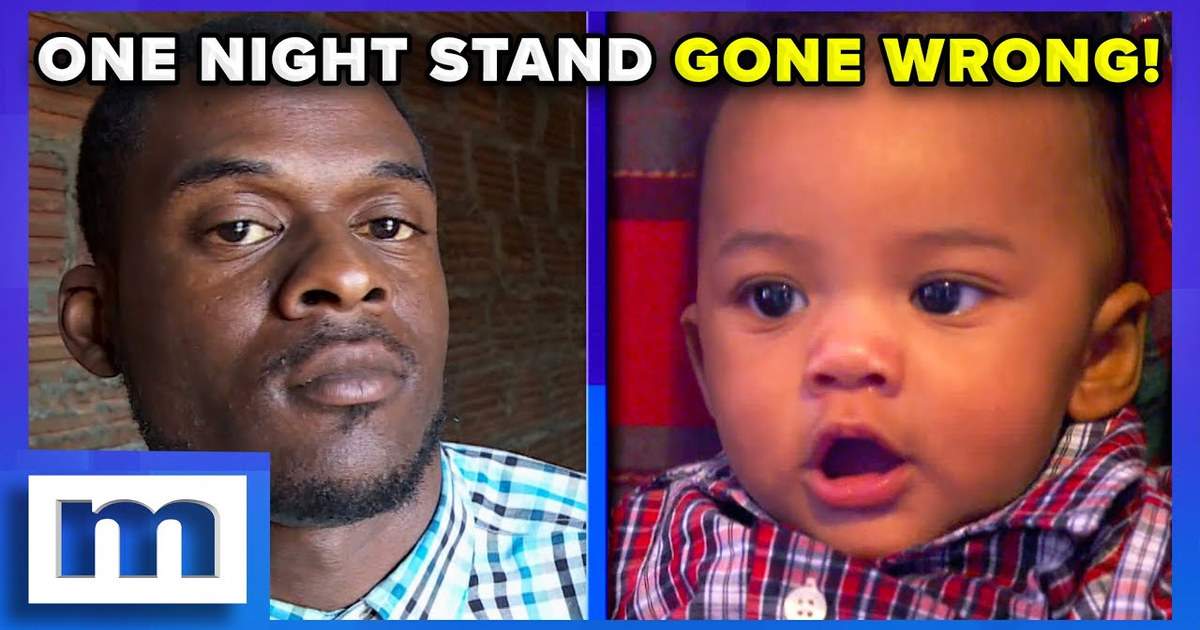
Allan, for his part, walks off the wall clean. 'In the case of four-month-old Jerel, Allan, you are not the father.' He came in denying nothing, which is its own kind of honesty. He said there's always a possibility when you sleep with somebody. He said the circle's real small. He was right about the circle. He was just wrong about whose name was inside it.
And the circle did get smaller. By exactly one.
That's the part the chyron doesn't capture. 'You are not the father' is a door closing. 'You are the father' is a door opening onto a room nobody's furnished yet. The test settles biology. It doesn't schedule a pediatrician. It doesn't buy a car seat. It doesn't show up at 3 a.m. when the baby won't sleep and the wipes run out. Tori said he'll 'hold mine down regardless.' He's got seven of them, he says. Seven. That's not a boast. That's a logistics problem. And Jerel just became number eight.
Crystal, for her part, says she knew all along. She said it on the way in, she said it on the way out. 'I told you. I told you. I am the daddy.' Wait — that was Tori. Crystal just stood there with the certainty of someone who'd already done the math in her own head and didn't need a lab to confirm it. She was right. That's the strange mercy of this episode. The person everyone doubted was the only one telling the truth.
But being right isn't the same as being held. Crystal did the pregnancy alone. Doctor's appointments alone. Hospital alone. Four months of diapers and wipes and nights, mostly alone, with one text to Tori that ended in 'stuff came up.' The verdict names a father. It doesn't name a partner. Those are different jobs, and only one of them comes with a Maury catchphrase.
This is where the show's machinery starts to show its seams. Maury Povich has been doing paternity reveals since the early '90s. The format is ancient by TV standards — older than most of the people sitting in those chairs. 'You are the father.' 'You are not the father.' They're not sentences anymore. They're memes. They're Halloween costumes. They're the punchline to a thousand group chats. American folklore, basically, the way 'Jerry! Jerry!' was folklore before it, the way Springer's chair-throwing became a genre unto itself. These phrases have outlived the specific families they were spoken over. They've become the way we talk about paternity in public, which is a strange thing to have happen to something so private.
And that's the trade. The show takes a question that used to be answered in living rooms, in whispers, in years of quiet resentment, and it puts it on a stage with a drumroll. It gives you closure in 22 minutes plus commercials. It gives you a verdict. What it can't give you is the morning after the verdict. The first doctor's appointment. The first time Tori actually holds Jerel instead of looking at him on a screen. The birth certificate with a signature on it. Those things don't happen on camera. They happen in the boring, untelevised hours that the show never films.
There's a long tradition of films that understand this better than the shows do. Kramer vs. Kramer, 1979, Robert Benton, 105 minutes — the whole movie is about what happens after the legal verdict, not during it. The courtroom is five minutes. The rest is a father learning to make French toast. Marriage Story, 2019, Noah Baumbach, 137 minutes on Netflix — same thing. The verdict is the easy part. The hard part is the drop-off schedule. Even something like Boyhood, 2014, Richard Linklater, 165 minutes — twelve years of a kid growing up, and the paternity question is barely a scene. Because that's the truth the Maury format can't hold. The reveal is a moment. The raising is a life.
Jerel is four months old. He has been seen by his father in a picture. That's the sentence I can't get out of my head. Not 'you are the father.' That one. A picture. One. And somewhere in a phone, there's a text thread where a mother asked for diaper money and a father said yes and then stuff came up. That's the real DNA of this episode. Not the double helix. The follow-through.
Tori says he'll do what he's got to do. Crystal says she knew all along. Allan leaves the wall and the circle shrinks by one. And Jerel, four months old, still needs diapers and wipes, and the only person who's been consistently there is the one who was never on trial. The verdict is in. The work hasn't started.
That's the thing about these reveals. They end. The episode ends. The credits roll. The audience applauds. And then everyone goes home to a life the cameras don't follow. The next episode will have a new name, a new baby, a new set of adults reading a face like a fortune cookie. The next reveal will land. The next family will learn its shape on national television, in front of strangers, with a drumroll. And somewhere, a four-month-old will still be waiting on a text that says more than 'stuff came up.'
Next time: another chair, another envelope, another circle getting smaller. Because the show never runs out of people willing to find out who they are in public. And the babies never get to choose the format.


