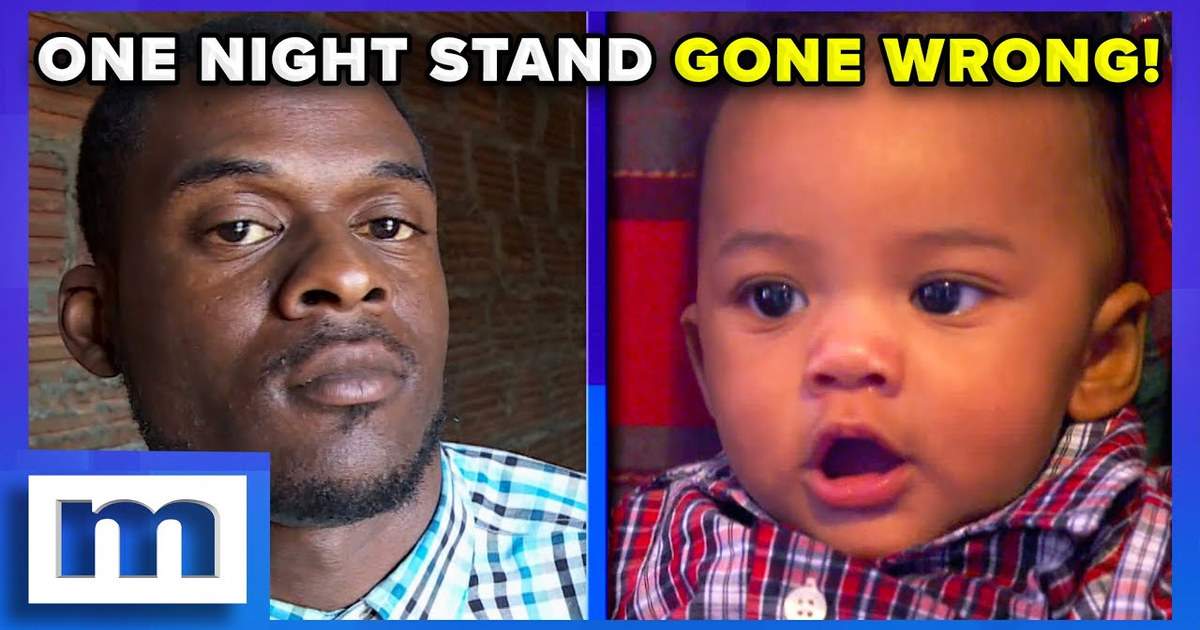
Part 3
Meanwhile, Tori's version of events is that Crystal is lying about everything — the begging, the relationship, the whole story. Crystal's version is that Tori is lying about everything. And Allan is standing in the middle, a man who already has three kids and a marriage into Crystal's family, saying the circle is small. Nobody in this triangle is claiming to be innocent. They're all just claiming to be less guilty than the other guy.
Maury, for his part, plays the role he's played since the 1990s: the calm referee in a room full of people who want to tear each other apart. He doesn't moralize. He just keeps the machinery moving — the questions, the cutaways, the slow build to the wall. It's a craft he's honed across thousands of episodes, and it still works.
[AD MARKER]
The Wall, the Envelope, the Pause
The show's grammar is rigid and beautiful in its way. First the wall, with the names. Then the envelope, held like a verdict. Then the pause — that long, cruel beat where Maury looks at the paper, looks at the men, looks at the audience, and lets the silence do the work. It's the same grammar you see in courtroom dramas from "A Few Good Men" (1992, Rob Reiner, 138 minutes) to "Anatomy of a Trial," but here it's compressed into ninety seconds of daytime television.
Maury says it again: first time he's had three people at the wall. Then the command that has become a catchphrase: "Turn it up. Turn it all the way up." The audience knows what's coming. The men don't. That gap is the entire engine of the Maury Povich show, and it's been running since he took over the format in 1991.
The results come in the order the transcript gives them. In the case of four-month-old Jerel: Allan, you are not the father. The room exhales. Allan's face does something complicated — relief, maybe, or just the exhaustion of a man who has been through this before. Then the second envelope. In the case of four-month-old Jerel: Tori, you are the father.
Crystal doesn't wait. "I told you. I am the daddy." She says it like she's been holding it in for four months, which she has. Tori, for his part, doesn't argue. The verdict is the verdict. The wall has spoken.
[VIDEO MARKER]
What Tori Promised
Before the results, Maury asks Tori the question that matters more than the DNA: will he take care of the child if it's his? Tori doesn't hesitate. "I'm going to hold mine down regardless. I got seven of them." Seven. That's not a typo. Tori is twenty-four years old and says he already has seven children. Maury, ever the showman, jokes about a number eight. Tori's response is the only moment of levity in the whole segment: "I ain't going to promise you that."
It's a funny line, but it's also the thesis of the episode. Tori is willing to claim Jerel — he says he'll hold him down, he says he'll do the work — but he's not willing to promise anything beyond that. Seven kids at twenty-four is a life already stretched thin. Adding an eighth isn't just a punchline. It's a math problem.
[[AD]]
And Allan? He walks away with a clean test and a small circle that just got smaller. He's not the father. But he was in the room. He was at the wall. He was part of the three. That's the part the verdict can't undo.
The episode ends the way these episodes always end — with a result, a reaction, and a camera that keeps rolling. But the image that stays is the three of them standing there, two men and a woman, with a four-month-old's name on a piece of paper between them. The wall doesn't care about feelings. It just reads the envelope. And the envelope said what Crystal already knew.
Next: what happens after the verdict — and why the Maury Povich DNA reveal has become one of the most durable rituals in American television.
What the Verdict Can't Say
The photo of Jerel is still on the screen. Same photo. Same four-month-old. But you can't look at it the same way now. The eyes that Maury's audience squinted at, the hairline Tori's people swore was a match, the nose Allan waved off with a 'nah, bro' — none of that was ever evidence. It was a Rorschach test with a studio audience. And the face everyone was reading like a sentence turns out to be a baby who still needs diapers and wipes. That's the whole verdict, really. Not a resemblance. A supply list.
Crystal texted Tori a couple of weeks before the taping. Asked him for money. Diapers. Wipes. He said yes. Then, when the time came, stuff came up. Supposedly. That's the timeline that matters more than any cheek swab. Not the moment the envelope opened. The moment the envelope stayed closed, and the baby still needed what he needed.
Tori is 24. He said so himself, like it was a defense. 'I'm 24 years old. What, I look like begging a woman for a child?' And maybe that's true. Maybe he never begged. Maybe Crystal's version is a story she told herself until it hardened into fact. But here's what isn't a story: he wasn't at the doctor's appointments. He wasn't at the hospital. He didn't sign the birth certificate. He's seen his son in a picture. One picture. That's the whole relationship so far. A JPEG and a text thread that ended in 'stuff came up.'


