Part 1
The Face on the Screen
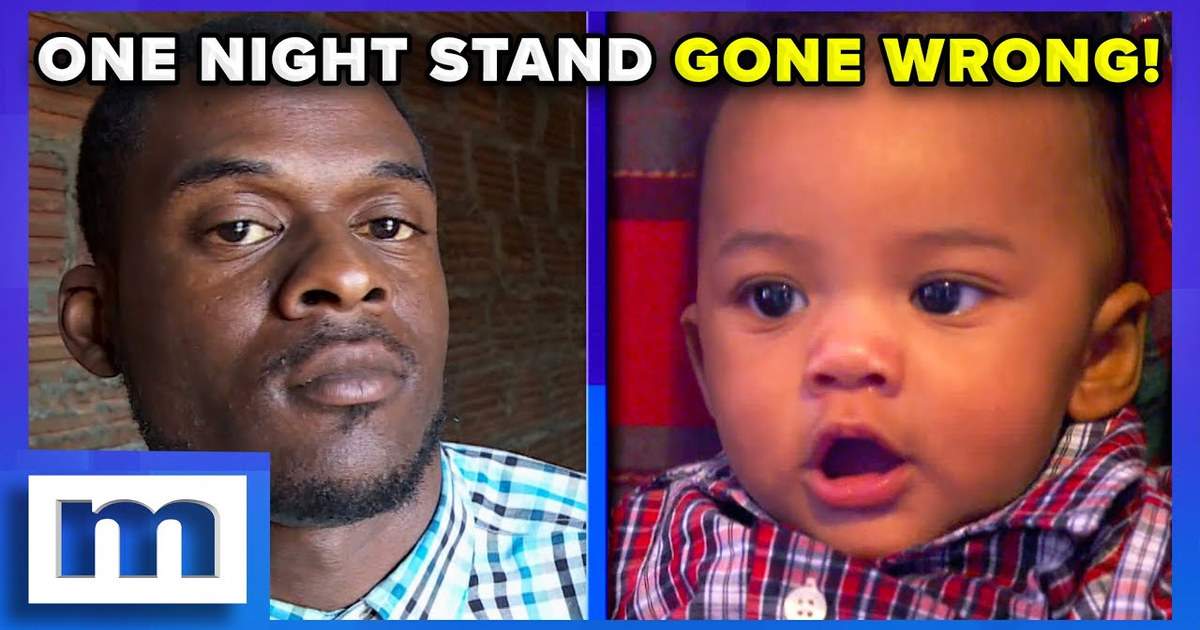
The studio lights hit the screen and the whole room leans in. A four-month-old boy fills the monitor: Jerel, cheeks soft as a thumbprint, eyes still deciding what color they want to be. Maury Povich stands at the center of it like a detective at a crime board, and he doesn't just show the photo, he reads it aloud. "Look at the eyes. Look at the mouth. Look at the hairline." The audience doesn't blink. They're not watching a baby. They're reading a sentence, and they think they already know how it ends.
Beside Maury, Crystal doesn't flinch. She's certain. She's been certain since before Jerel had a name. And in the grammar of daytime television, that certainty is the first clause of a much longer, messier sentence.
This is The Maury Show, the syndicated daytime institution hosted by Maury Povich since 1991, the man who turned the paternity reveal into a genre of American folklore. You know the rhythm even if you've never watched a full episode: the envelope, the pause, the verdict, the collapse. But the photo on the screen is where the story actually starts. Not with the test. With the face.
Crystal says her ex, Tori, is the father. She also says she had a one-night stand with an old friend named Allan. Two men. One baby. One very small circle of possibility. That's the math Maury's audience came for, and Crystal is ready to do the arithmetic out loud.
But here's what makes this particular episode feel less like a rerun and more like a short story: everyone in that studio is doing amateur forensics. Tori's eyebrows. Allan's nose. The hairline. The mouth. The audience is comparing features like handwriting experts squinting at a forged signature. And Crystal, standing there, is the only one who believes she doesn't need the science at all.
She says Tori begged her to have a baby. Not casually. Specifically. She says he told her it was the only thing that would make his mother and father proud of him. That's the sentence she's holding onto. That's the line she keeps reading back to the room.
Tori, when he eventually walks out, doesn't just deny it. He laughs at it. "I'm 24 years old. What? I look like begging a woman for a child?" He says he's too young for kids. He says he heard from friends, from family, even from the bodega workers that she was seeing multiple men. He calls her a liar. The audience, for its part, is already split, because the photo is still up there, and the photo doesn't testify.
Crystal's story has its own internal logic. She says she was on birth control. She says Tori wasn't at the doctor's appointments. Wasn't at the hospital. Didn't sign the birth certificate. Has only seen a picture of Jerel. She says she texted him weeks ago asking for money for diapers and wipes. He said yes. Then nothing. "He never came up," she says. That's the kind of detail that lands harder than any DNA swab, because it's not about biology. It's about showing up.
And then there's Allan. Allan, who Crystal says she slept with once, drunk, after she'd kicked Tori out for being too controlling. Allan, who didn't know Jerel existed until a couple of weeks ago. Allan, who is not a stranger to this stage at all. Maury tells the audience that Allan was here a month ago and was proven to be the father of three children. Three. The man has a track record, and the show knows exactly how to use it.
When Allan walks out, he and Crystal have a history that sounds like a country song: they met at a high school football game, linked up for a few, she "kidnapped" him for a week, he left, he had a baby with somebody else, and then he became part of her family when he married her cousin. That's not a plot twist. That's a family tree with a knot in it.
Allan doesn't deny the possibility. He says there's always a possibility when you sleep with somebody. But he also says the circle is small. "That circle's real small." He didn't know she was pregnant. He didn't see her throughout the pregnancy. He's not sitting there denying anything, but he's not claiming anything either. He's just standing in the light, waiting for the envelope.
Maury, meanwhile, is doing what Maury does best: narrating the face. He puts Tori on the left and Allan on the right and asks the room, "Who does he look like?" The audience says Tori. Maury points at the eyes. The hairline. The mouth. The nose. He's not a scientist in this moment. He's a close reader, and the photo is the text. And for a second, the whole studio forgets that DNA doesn't care what anybody looks like.
That's the trick of the paternity reveal. It turns a baby into a mirror. Everyone looks into it and sees whoever they already believed. Crystal sees Tori. Tori sees a setup. Allan sees a small circle. The audience sees eyebrows. And Jerel, four months old, sees nothing at all. He's just a face on a screen, being read like a sentence he didn't write.
The stakes are simple and enormous. Crystal says she was on birth control. She says Tori wasn't there for the appointments, wasn't there for the hospital, didn't sign the birth certificate, and has only seen a picture of his son. Tori says he's 24 and was never asked to be a father. Allan says he just found out. Three adults. One baby. And a host who knows exactly when to pause.


