Part 1
The Set Is the Story: How Maury's DNA Test Episode Uses Space, Light, and Blocking to Build Suspense
The Maury Povich DNA test episode is not just daytime drama — it is a masterclass in second-unit storytelling, where every camera position, lighting cue, and blocking choice does deliberate narrative work. I've shot second-unit on enough sets to know when a director is just covering a scene and when they're building a visual trap. This episode is the latter. Reality TV gets dismissed as cheap and unscripted, but the craft here is as intentional as any scripted drama. And it starts the second Mari welcomes Lauren to the stage.
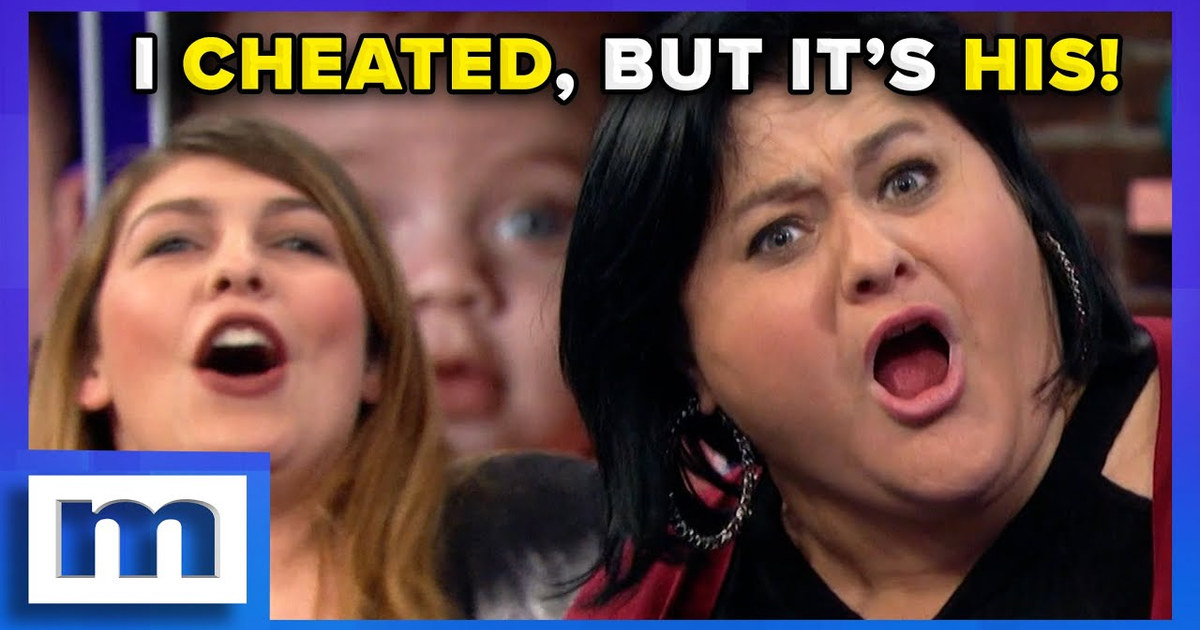
Lauren walks out under flat, high-key studio lighting — the kind of even, slightly cool wash that defines daytime TV from 9 AM to 5 PM. The audience is already murmuring. Her boyfriend Tyler has doubted he's the father of her daughter Kaylee since day one. And recently, Lauren admitted she slept with an ex around the time she got pregnant. That admission hangs in the air like smoke. The set knows it. The camera knows it. And if you're watching closely, you know it too.
The Maury show stage, circa 2010s, runs a three-camera setup that any sitcom director would recognize. There's the wide master shot to establish the audience — a sea of faces ready to judge. There's the medium two-shot for confrontations, framing two people in a visual standoff. And there's the tight close-up for reactions, the kind of shot that makes you feel like you're reading someone's mind. It's basic coverage, but the execution is anything but basic.
What makes it work is how the lighting shifts. When Tyler and his cousin Gunner walk out, the key light changes. The contrast increases. Shadows deepen on their faces. This is not accidental. A good gaffer knows that a half-stop drop in exposure can make a hero look like a villain. Here, it makes two men look like a threat. The flat, even wash that greeted Lauren is gone. Now we're in cooler, harder territory. The visual grammar has shifted from talk show to tribunal.
Compare this to the blocking on 'The Jerry Springer Show' (1991–2018) or 'The Steve Wilkos Show' (2007–present). Springer's set was a circus — chaotic, wide, built for brawls. Wilkos went the other way: sparse, confrontational, with a host who paced like a prosecutor. Maury's director splits the difference. The stage is wide enough for movement but tight enough to feel like a cage. And the camera — often a pedestal mounted with a long zoom — creeps closer as the DNA results approach. That slow push-in is a classic suspense tool, used by everyone from Hitchcock to Fincher. Here, it creates a sense of inevitability. The truth is coming, and the lens is going to be right there when it lands.
Take the beat when Lauren says, 'I told him that I cheated on him one time and it was a mistake.' The camera holds on Tyler's face for a full three seconds. No cut. No reaction shot from the audience. Just Tyler, processing. That is a choice. In a scripted drama, you'd call it a 'beat' — a moment of silence that lets the audience read the character's inner life. Here, it's a documentary-style hold that does the same thing. We see doubt flicker across his face. We see him calculate. And we feel the weight of that admission. Three seconds is an eternity on live TV. It's also exactly long enough to make you lean in.
Now let's talk lenses. Daytime TV typically uses a 2/3-inch sensor with a long zoom lens — something like a Canon HJ40x. That lens compresses the background, making the studio feel intimate and claustrophobic. When the camera cuts to the audience — like Gunner's fiancée Maria — the background is soft, isolating her. She's not just a face in the crowd; she's a witness on the stand. This is the visual grammar of judgment. The long lens flattens depth, pulling the subject forward and pushing everything else back. It's the same technique used in 'The Office' (2005–2013) to make talking heads feel uncomfortably close. Here, it makes every reaction feel like a verdict.
The blocking does the rest. Tyler stands on the left side of the stage. Gunner stands on the right. The host — Maury — stands center, a fulcrum between two opposing forces. It's a classic triangle, and it mirrors the conflict perfectly. When Lauren's daughter's picture is shown on the monitor, the camera cuts to a tight shot of the screen, then to Tyler's reaction. That is a Kuleshov effect — the meaning is created in the edit. We see the baby. We see Tyler. Our brain connects the two and creates a story: Does he see himself in her? Does he want to? The edit doesn't tell us. It lets us decide. And that's what makes it so powerful.
The set is not a neutral space. It is a pressure cooker, and the camera is the lid. Every wide shot reminds you that the audience is watching. Every close-up traps you in someone's doubt. Every push-in tightens the screws. By the time the DNA results are about to drop, you're not just watching a show — you're inside a machine built to extract truth. And that machine is run by a director who knows exactly what they're doing.


