Part 2
Maury reads the first question: “Did you sleep with any of the women who sent you x-rated pictures?” Shane said no. Maury’s voice drops: “The lie detector determined that was a lie.” The audience erupts. It’s the same energy as the “you can’t handle the truth” moment in *A Few Good Men* (1992, 138 min, directed by Rob Reiner) — except here the truth is a Facebook message and a pair of underwear.
The second question: “During your relationship with Sabrina, have you slept with any of the women you messaged on Facebook?” Shane said no. “The lie detector determined that was a lie.” The camera pushes in on Sabrina’s face. She’s not crying. She’s nodding, like she already knew. The audience is a Greek chorus of gasps and applause.
Third question: “Have you slept with any of your exes?” Shane said no. “The lie detector determined that was a lie.” Now the lighting shifts. The warm key light on Shane’s face drops a stop, and a cool blue fill from the left kicks in. It’s a color grade shift in real time — from the cozy amber of denial to the icy steel of exposure. If you’ve ever shot a night exterior with a 5600K HMI and then switched to a 3200K tungsten practical, you know the feeling. The mood goes from *The Godfather* (1972, 175 min, Gordon Willis’s legendary low-key lighting) to *Se7en* (1995, 127 min, Darius Khondji’s sickly green-yellow).
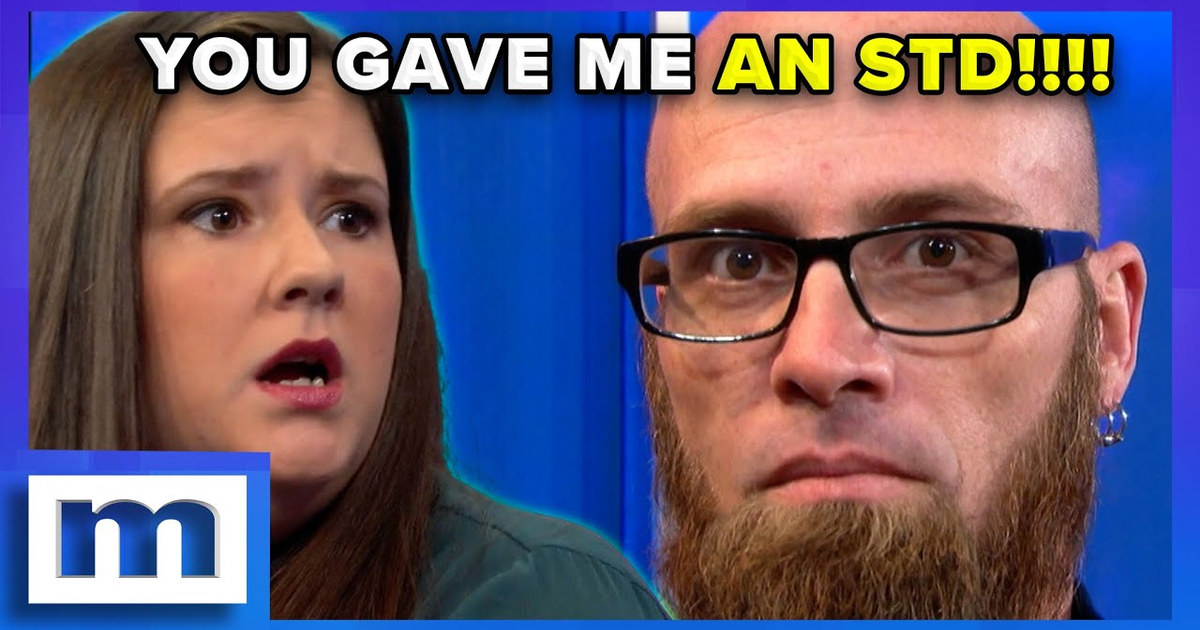
Fourth question: “Did Sabrina get an STD from you because you were sleeping with another woman?” Shane said no. “The lie detector determined that was a lie.” The audience is on its feet. Maury’s signature phrase lands like a gavel. Shane’s face is a study in controlled panic — the same look Gene Hackman gives in *The Conversation* (1974, 113 min) when he realizes he’s been bugged. The polygraph doesn’t care about your excuses. It only cares about your pulse.
Shane’s justification is a masterclass in deflection. “Without sex, there’s no relationship,” he says. He claims they used to have sex five to six times a day. Now it’s once a month, if that. He wants attention. He’s not getting it. So he goes elsewhere. It’s the same logic as Michael Douglas’s character in *Fatal Attraction* (1987, 119 min, directed by Adrian Lyne) — a moment of weakness spirals into a nightmare. Except Shane isn’t sorry. He’s indignant.
Sabrina’s response is the emotional core of the episode. “I don’t go out, I don’t interact with my exes. Why can’t I get that respect?” She’s not asking for much. Just basic decency. The camera holds on her while Shane talks over her. It’s a two-shot that feels like a boxing match. The audience is with her. You can hear it in the applause.
[[AD]]
The polygraph results are the climax, but the real drama is in the micro-expressions. Shane’s jaw tightens. His eyes dart to the side. He swallows hard. These are the tells that a cinematographer lives for. In *The Silence of the Lambs* (1991, 118 min, Jonathan Demme), the close-ups on Hannibal Lecter are terrifying because you can see the gears turning. Here, you see the gears grinding to a halt.
Maury’s delivery is impeccable. He doesn’t rush. He lets the words hang in the air. “The lie detector determined that was a lie.” It’s a catchphrase, but it’s also a verdict. The audience knows it. Shane knows it. Sabrina knows it. The only question left is what happens next.
The lighting change when the results are read is subtle but deliberate. The warm practicals in the background dim, and a cold overhead source becomes dominant. It’s the visual equivalent of a record scratch. If you’ve ever graded a scene from a golden-hour romance to a fluorescent-lit interrogation, you know the power of that shift. It tells the audience: the truth is ugly, and it’s about to get uglier.
Shane tries to explain. He says he admits he’s made mistakes. He said inappropriate things. Other women sent him pictures. But he never cheated. The polygraph says otherwise. Sabrina’s face is stone. She’s heard it all before. The audience is chanting. Maury is nodding. The tent in the backyard is waiting.
This is the moment where the episode earns its runtime. It’s not just about cheating. It’s about the lies we tell ourselves to justify our actions. Shane genuinely believes he’s the victim. He believes Sabrina pushed him away. He believes sex is the only currency in a relationship. The polygraph doesn’t care about beliefs. It cares about facts. And the facts are damning.
The polygraph test is a masterclass in dramatic tension. It’s a long take with no cuts. It’s a close-up with no escape. It’s a lighting change that tells you everything you need to know. Shane lied. Sabrina knew. Maury delivered. And the audience got exactly what they came for.
The Aftermath: What to Watch for in Toxic Relationships and Reality TV
[[VIDEO]]
Sabrina doesn’t just threaten to leave. She threatens to pitch a tent in the backyard and burn Shane’s clothes right beside it. That’s not a breakup line. That’s a final act in a three-act drama that’s been running for years. And if you’ve been following this Maury Show trainwreck, you know the tent is just the exclamation point on a sentence that should have ended a long time ago.


