Part 2
And the courts know it. In 1998, the U.S. Supreme Court ruled in United States v. Scheffer that military courts could ban polygraph evidence. The justices didn’t say the polygraph was useless—they said it was unreliable enough that its probative value was outweighed by its potential to mislead. In most U.S. courts, polygraph results are inadmissible unless both sides agree to admit them. Many countries—including Canada, Germany, and the U.K.—don’t allow them in criminal proceedings at all. If the polygraph were a truth machine, you’d think the justice system would use it. It doesn’t. Because it can’t.
The scientific consensus is even blunter. In 2003, the National Academy of Sciences released a landmark report on polygraph testing. After reviewing decades of research, they concluded that polygraphs are “unreliable” and that their accuracy in detecting deception is “far from perfect.” They found that the tests can be fooled by countermeasures—simple tricks like biting your tongue or pressing your toes to create a baseline of pain that masks the stress of lying. More importantly, they found that the tests produce too many false positives. Innocent people fail all the time. Guilty people pass. The machine doesn’t know the truth. It only knows what your body does under pressure.
So why does The Maury Show use them? Because they’re ratings gold. The polygraph is a narrative device, not a forensic tool. It gives the audience a villain to boo and a hero to cheer. It turns messy human drama into a binary: pass or fail, truth or lie, guilty or innocent. That’s not justice. That’s theater. And Maury, Jerry Springer, and Steve Wilkos have been running that same play for decades. The catchphrase isn’t a legal finding. It’s a punchline.
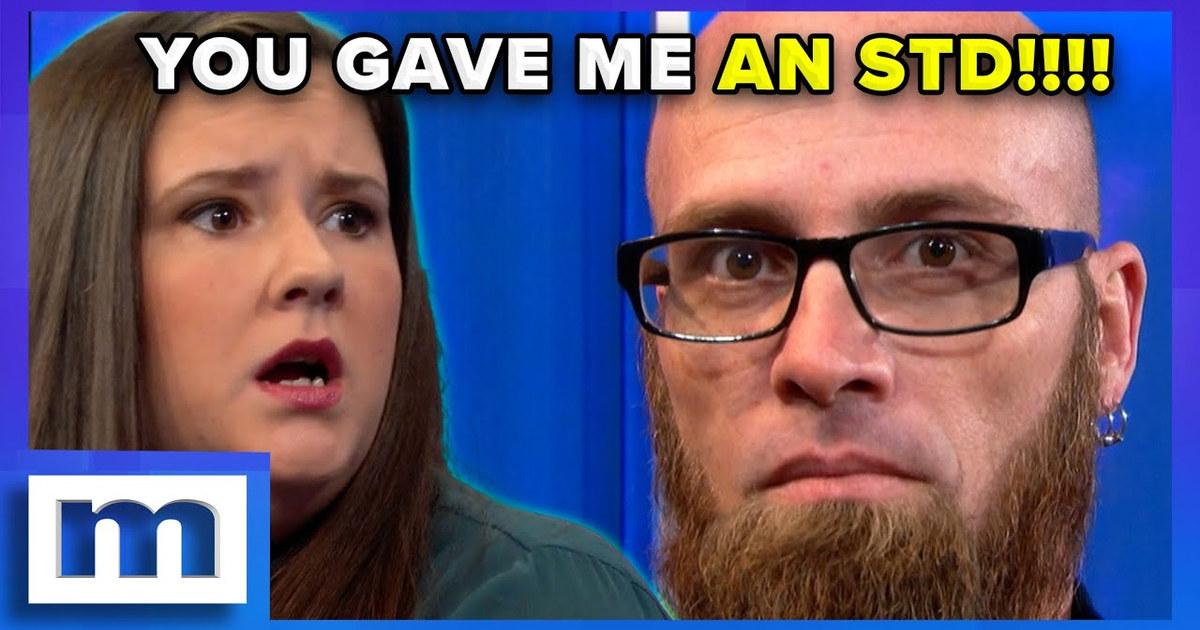
Now apply that to Shane. He failed four questions: sleeping with women from Facebook, sleeping with exes, and giving Sabrina an STD. But what if Shane genuinely believes his own rationalizations? He admitted to sending “inappropriate” messages and receiving explicit photos. He called them “mistakes.” He said he never cheated because, in his mind, cheating means physical sex—and maybe he’s redefined “sex” to exclude certain acts. Or maybe he thinks the relationship was “broken up” during those periods, so it doesn’t count. A polygraph can’t distinguish between a lie and a belief. If Shane truly believes he never cheated, his body might not react the way the examiner expects. Or it might react because he’s terrified of being wrong. Either way, the test is measuring arousal, not intent.
And let’s talk about the STD. Shane’s chlamydia result is real medical evidence. That’s not a polygraph reading—that’s a lab test. It proves he had unprotected sex with someone else. It doesn’t prove he lied about it. It doesn’t prove the polygraph is accurate. But the show bundles them together to create a package of guilt: the STD, the failed questions, the audience’s jeers. It’s a narrative sleight of hand. The STD is damning on its own. The polygraph adds nothing but drama.
[[AD]]
Here’s the thing: Shane is probably lying about something. He’s sketchy. He’s defensive. He’s got a history of sketchy behavior. But the point isn’t his innocence. The point is that the polygraph is the wrong tool for the job. The audience’s certainty comes from a machine that can’t deliver it. They’re not reacting to evidence. They’re reacting to a ritual. And that’s exactly what Maury wants.
The Real Problem: 'Broken Up' Means Nothing Without Boundaries
The consensus says Shane is a serial cheater who used arguments as excuses. And look, the lie detector results are brutal. He failed on every question. During your relationship with Sabrina, have you slept with any of the women you messaged on Facebook? Lie. Have you slept with any of your exes? Lie. Did Sabrina get an STD from you because you were sleeping with another woman? Lie. Case closed, right?
Wrong. The real crisis isn't the cheating. It's that Sabrina and Shane never agreed on what 'broken up' actually meant. The Maury Show treated Shane's defense—'every time you argue, you usually leave'—as a cheap excuse. But listen to what he's actually saying. He's describing a pattern. Sabrina leaves during fights. She left for a whole year. Then she came back. And when she came back, she assumed they were monogamous again. Shane assumed they were... whatever was convenient for him.
That's not a defense. That's a confession that he never took the relationship seriously during conflict. But it also shows Sabrina's pattern of leaving as a weapon. You can't storm out the door every time things get hard, disappear for a year, then come back and expect the other person to have been waiting like a loyal golden retriever. That's not how humans work. That's not how relationships work.
Ross and Rachel Already Fought This War—And Nobody Won
[[VIDEO]]
Pop culture gave us the template back in 1997. Friends, Season 3, Episode 15, 'The One Where Ross and Rachel Take a Break.' Directed by James Burrows, runtime 22 minutes, originally on NBC. Ross sleeps with Chloe the copy girl. Rachel finds out. Ross screams the immortal line: 'We were on a break!' And for nearly thirty years, fans have debated who was right. The answer, of course, is that they never defined the break. Ross assumed 'break' meant 'pause, but I can still do whatever I want.' Rachel assumed 'break' meant 'we're still together, just not talking right now.'


