Part 1
The Consensus: Maury Is Guilty-Pleasure Trash. I'm Not Buying It.
Everybody knows the drill. You're flipping channels on a Tuesday afternoon, you land on The Maury Show, and you feel that little twinge of shame. You watch it ironically. You laugh at the screaming matches, the chair-throwing, the dramatic "you are NOT the father" sprints backstage. It's lowbrow. It's trash TV. It's a guilty pleasure — emphasis on guilty. That's the consensus, and it's been the consensus for decades. I'm here to tell you the consensus is wrong.
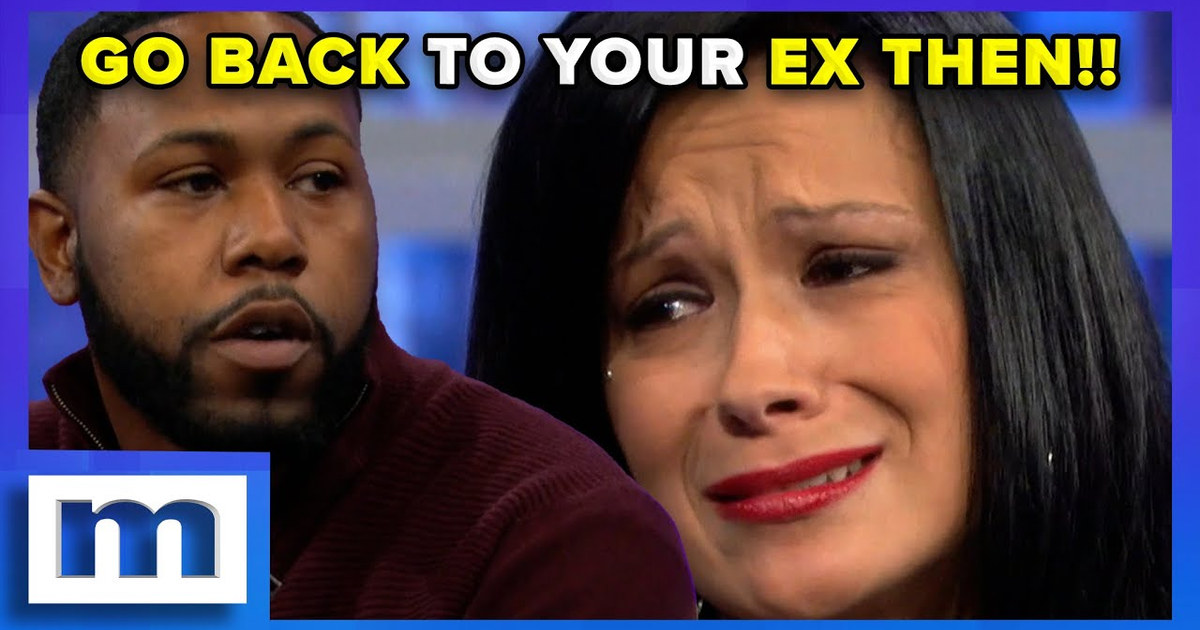
Take the Sheba, James, and Gina episode. It's Exhibit A for everything critics hate about Maury Povich's syndicated daytime juggernaut, which ran from 1991 to 2022. Sheba thinks her fiancé James cheated. She's got an accidental voicemail where he brags to a buddy about sleeping with other women. She found a pair of underwear in her drawer that wasn't hers — and James said they might belong to Gina, his ex-sister-in-law. She found scratch marks on his back. She found a blonde hair in his beard. She even clocked him staring at other women in public. Then comes the lie detector test. On paper, it's a circus. In practice, it's something else entirely.
Here's my contrarian take: that episode — and the Maury lie detector format as a whole — is one of the most honest things television has ever produced. Not ironically. Not as a hate-watch. Genuinely honest. It's a rare space where working-class people's relationship conflicts are taken seriously, aired in full, and resolved on camera. No irony. No prestige packaging. No glossy editing that turns real pain into a mood board. Just people, a host, a polygraph, and a verdict. Compare that to The Bachelor (ABC, 2002–present), where relationships are manufactured for drama and the "winner" gets a ring and a breakup special six months later. Or Love Is Blind (Netflix, 2020–present), where the experiment is the point and the couples are curated for maximum Instagram appeal. Maury doesn't pretend to be anything other than what it is. And that's exactly why it works.
Now, let me be fair to the other side. Maury Povich's show has been called exploitative by critics for decades. And they're not wrong about everything. The producers clearly cast for conflict — you don't accidentally book a woman who thinks her fiancé slept with his ex-sister-in-law and then found a blonde hair in his beard. The "you are not the father" meme culture has turned real people into punchlines. There's a classist sneer baked into the way we talk about daytime TV, as if the people on Maury are somehow less real, less worthy of dignity, than the contestants on The Bachelor. I get it. I've laughed at the memes too. But laughing at the meme and dismissing the show are two different things. And dismissing the show is a mistake.
So here's what I'm going to do. Over the next three sections, I'm going to dismantle the consensus piece by piece. First, the lie detector is not a gimmick — it's the engine of the entire moral universe of the show, a genuine narrative device that forces truth in a way no other format does. Second, the class politics of who gets to have "serious" relationship TV: why do we treat The Bachelor as legitimate and Maury as trash when both are produced for entertainment? Third, the Sheba/James/Gina episode as a case study in how Maury actually delivers closure that prestige TV never does. And at the end, I'll concede the strongest counter-argument — because I'm not here to pretend the show is flawless. I'm here to argue it's honest. And honesty, even messy, even uncomfortable, even on daytime TV, is worth defending.
Let's start with the lie detector. It's not a prop. It's the whole point.
Dismantling the Consensus, Part 1: The Lie Detector Is Not a Gimmick — It's the Most Honest Thing on TV
The consensus says the polygraph is a cheap prop. A ratings stunt. Pseudoscience wrapped in a blinking box. And look, I get it. Polygraphs are not admissible in most US courts. They have error rates that would make a forensic scientist weep. But here's the thing: The Maury Show never claims legal validity. It claims relational validity. And within the moral economy of this specific episode, the lie detector is the only thing that actually resolves anything.
Let's walk through what happens when the machine speaks. Gina denies ever making a sexual advance toward James — truth. James denies making an advance toward Gina — truth. Gina denies secretly wanting a relationship with James — truth. Gina denies any sexual contact with James — truth. James denies sleeping with exes — truth. James denies having a secret Facebook to cheat — truth. James denies sleeping with women from work — truth. James denies the blonde hair belonged to a woman he slept with — truth. James denies any sexual contact with any other woman during his relationship with Sheba — truth.
Every single denial. Truth. Every single one. The machine doesn't flinch. It doesn't care about Sheba's tears or James's 'that ain't me' routine or Gina's outrage. It just reads the sweat and the breath and the pulse and delivers a verdict. And that verdict is the only moment in the entire episode where anyone stops performing.
Because make no mistake: Sheba's accusations are performance. James's denials are performance. Gina's 'I don't look at him sexually' is performance. They're all playing to the audience, to Maury, to each other, to the cameras. The machine is the only cast member not playing to the audience. It's the only one that doesn't care if you believe it. It just is.


