Part 3
The stepmother Brandy is a perfect example of secondary character engineering. She’s not the focus, but she shifts the dynamics. When Taylor says, “I can’t wait to prove that Kota’s brother Chris is not the father because I want him out of our lives,” Brandy’s doubt undercuts that confidence. Brandy says she doesn’t think Kota is the father. That’s a signal to the audience: don’t trust Taylor’s certainty. It’s a foreshadowing subroutine. And when Brandy says, “I may be your mom, but I need to be your mom,” she’s not just a character; she’s a function that returns tough love. The system uses her to add layers to the conflict without distracting from the main thread. That’s efficient design.
The host’s questions are the API calls. Maury asks Taylor: “How do you know?” She says, “Look at the head, look at the head. He look nothing like him. They have the eyes, the nose, the face—they have nothing.” That’s not evidence; that’s a heuristic. Maury asks Kota: “What’s going to happen if you’re not the father?” Kota says, “I really don’t know. I mean, I might not stay with Taylor.” That’s a conditional statement that raises the stakes. Maury asks Chris: “Do you feel bad about sleeping with your brother’s girl?” Chris says, “I feel bad for sleeping with my brother’s girlfriend for my brother, but not for her, because I wanted to prove to him that she was—” and then he gestures. That’s not remorse; that’s justification. Every question is designed to elicit a response that moves the system closer to the climax. The audience reactions are the feedback loop—they cheer when Chris says he wanted to prove she was a hoe, they applaud when Maury reads the results. The commercial breaks are the latency. They’re not just pauses; they’re opportunities for the audience to speculate, to argue, to invest. By the time the results come, the system is running at full capacity.
The double reveal is the system’s output, but it’s also a reset. Chris is not the father. Kota is not the father. The audience is stunned. Taylor says she knows who the father is, and he wants nothing to do with him. That’s a new input that spawns a new episode. The system is designed to never truly resolve; it’s designed to perpetuate. That’s the genre’s engine. And it works because it’s built on universal fears: paternity, betrayal, forgiveness, and the terror of not knowing. The craft is in the engineering—the way the inputs are selected, the way the conflicts are escalated, the way the climax is timed. It’s not high art, but it’s precise. And for the genre fan, that’s enough. For the craft lover, it’s a masterclass in emotional mechanics.
Pure Craft: Editing, Pacing, and the Art of the Reveal
If you’re the kind of viewer who watches *The Maury Show* for the engineering, this is the section for you. Forget the shouting matches for a second. Watch the cuts. Watch the rhythm. This is where the show earns its reputation as a masterclass in reality TV post-production. And if you’re just here for the drama, don’t worry—the craft is what makes the drama hit so hard.
Let’s start with the edit. The episode builds tension like a well-compiled program. The cold open introduces Taylor, Kota, and Chris with quick cuts between their pre-interview clips. Each soundbite is a single line, stripped of context, designed to lodge in your brain. “I’m 100% sure that he is the father.” “I wanted to prove to my brother that his old lady is a hoe.” These aren’t accidents. They’re hooks. The editor knows you’ll stay through the break to see who eats those words.
[[AD]]
Then comes the studio segment. Watch how the camera cuts between Taylor, Kota, and Chris. When Taylor says “look at the head,” the director cuts to a tight shot of Kota’s face—confused, hurt. When Chris says “that’s a fat face baby,” we get a reaction shot of Taylor rolling her eyes. These cuts aren’t random. They’re timed to the millisecond. The editor is building a case, not just documenting a fight. You’re being programmed to feel the paternity test before it’s even read.
And then there’s Maury himself. The host’s pacing is surgical. He doesn’t rush. He lets the silence sit. When he says, “In the case of one-year-old Noah, Chris, you are not the father,” he pauses after “are.” That pause is the entire show. It’s a classic suspense technique, the same one Alfred Hitchcock described as “the bomb under the table.” Maury is the bomb. The audience is the table. And we all know what’s coming.
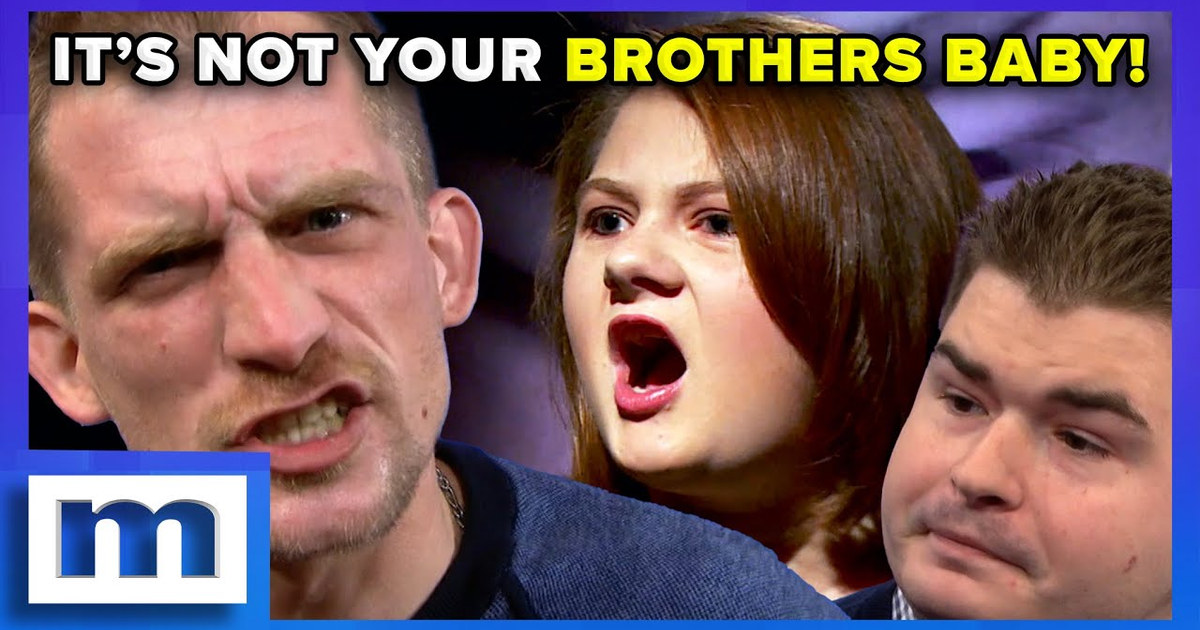
But the real genius is in the reveal sequence. Chris is not the father. The audience erupts. Taylor’s face cycles through shock, relief, and then—wait for it—dread. Because if Chris isn’t the father, that means Kota is. Or does it? The edit cuts to Kota, who looks like he’s just been told his dog died. Then Maury delivers the second blow: “In the case of one-year-old Noah, Kota, you are not the father.” The music swells. The crowd gasps. Taylor’s legs give out. It’s a one-two punch that no scripted drama could match.
How does the editing amplify the shock? By cutting to reaction shots at the exact moment of impact. We see Kota’s jaw drop. We see Chris smirk. We see Taylor’s stepmother, Brandy, cover her mouth. These cuts are not just capturing emotion—they’re directing it. The editor is telling you how to feel. And you obey.


