Part 3
Brandy’s presence changes the math. She’s not just a family member; she’s a character witness. And in the Maury ecosystem, character witnesses are everything. They’re the Greek chorus. They tell the audience how to feel. They validate the suspicion that’s already bubbling in the room. When Brandy says she doesn’t think Kota is the father, she’s not just expressing an opinion — she’s giving the audience permission to doubt Taylor too. And they take it.
The racial and class dynamics here are impossible to ignore, though the show never names them. Chris calls Taylor a "hoe" on national television, and the audience applauds. Not everyone — but enough. The word lands differently when a Black man says it about a Black woman on a stage built for white consumption. Maury’s audience is mostly Black and brown, and the show has always trafficked in a specific kind of respectability politics: the good mother, the bad mother, the man who steps up, the man who runs. Taylor is coded as the bad mother the moment she admits she blacked out and slept with her boyfriend’s brother. Kota is coded as the good father because he changes diapers on camera. Chris is coded as the truth-teller because he’s cruel in a way that reads as honest. None of this is accidental. The editing, the audience reactions, the commercial breaks — they all shape the narrative. The show doesn’t moralize. It doesn’t have to. The audience does it for them.
And yet, for all the spectacle, there’s something painfully human happening underneath. Kota says he loves Taylor. He says he loves Noah. He says he takes care of him all the time. But he also says he might not stay if the test comes back negative. That’s not love — that’s a contingency plan. It’s the kind of love that comes with an escape hatch. Taylor, for her part, is 100% sure Kota is the father. "Look at the head," she says. "Look at the head. He look nothing like him. They have the eyes, the nose, the face — they have nothing." She’s pointing at Chris. She’s begging the audience to see what she sees. But the audience has already made up its mind. They’ve seen this episode before. They know how it ends.
The Maury Show has been on the air in various forms since 1991, and its paternity tests have become a cultural shorthand for paternity fraud, deadbeat dads, and the chaos of working-class family life. YouTube compilations of the show’s most dramatic reveals have millions of views. TikTok edits set the "You are NOT the father" moments to dramatic music. The show is a meme factory, but it’s also a mirror. It reflects something real about how we talk about sex, race, class, and family in America. It’s easy to laugh at the guy who runs offstage when the results come back. It’s harder to think about the kid who has to grow up watching this clip on YouTube.
The episode’s structure is almost identical to a Jerry Springer segment — the confrontation, the audience reaction, the family member who speaks out of turn, the host who pretends to be a referee. But Maury adds the DNA test, which turns the whole thing into a courtroom. The test is the judge. The audience is the jury. The host is the bailiff. And the guests are the defendants, guilty until proven innocent, and sometimes guilty even then.
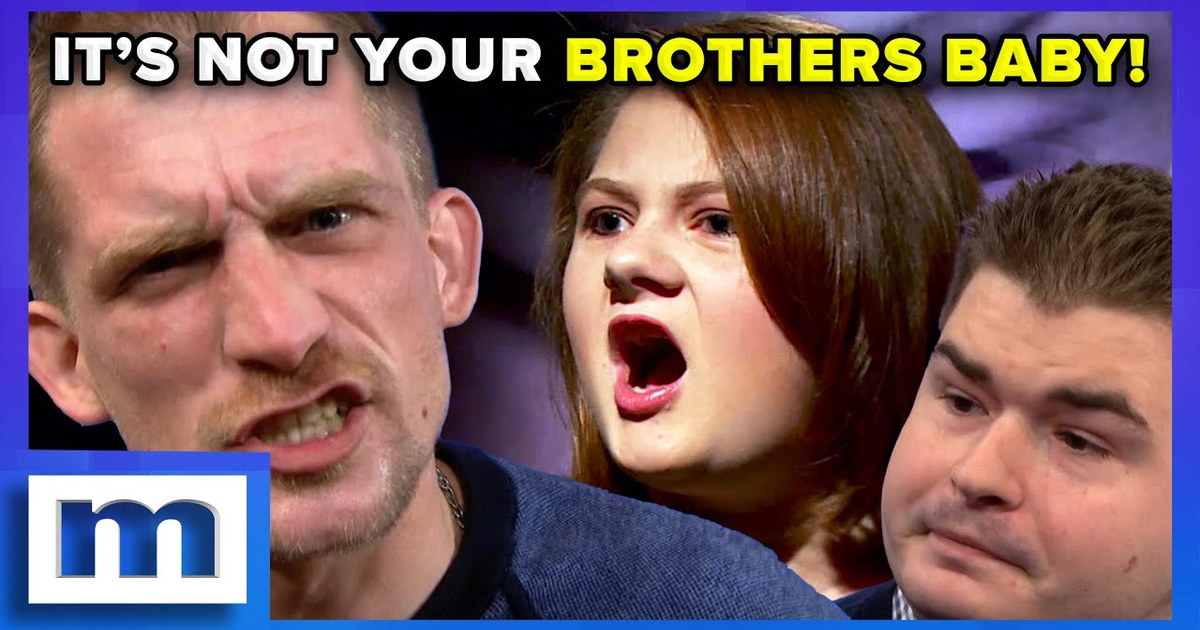
What makes this episode different from the average Maury paternity test is the brothers. Kota and Chris aren’t strangers. They’re not exes who hooked up at a party. They’re family. They share blood, history, a mother, a last name. And now they’re standing on opposite sides of a paternity test, waiting to find out which one of them is the father of the same child. The audience doesn’t just want a verdict — they want a winner. They want one brother to be vindicated and the other to be humiliated. That’s the Maury promise. That’s the Maury payoff.
Kota says he wants to be with Taylor. He says he loves her. He says he loves Noah. But he also says he might not stay if the test comes back negative. That’s not a contradiction — that’s a confession. It’s the sound of a man who has already decided that his love has limits. He’ll be a father to Noah as long as Noah is his. He’ll be a partner to Taylor as long as Taylor is faithful. But the moment the DNA says otherwise, he’s gone. And he’s telling her that now, on national television, so she can’t say she wasn’t warned.
[[AD]]
Chris, meanwhile, is already gone. He’s not waiting for the results. He’s not nervous. He’s not even pretending to care. He’s already declared his innocence based on his cheekbones and his kids’ slender faces. He’s already called Taylor a hoe and gotten applause for it. He’s already said he feels bad for his brother but not for her. He’s already won, in his mind. The test is just a formality.
The studio goes quiet. Maury holds the envelope. Kota and Chris stand side by side. They don’t look at each other. They don’t speak. The audience leans forward. The cameras zoom in. And somewhere offstage, a one-year-old named Noah has no idea that his entire future is about to be decided by a piece of paper.


