Part 2
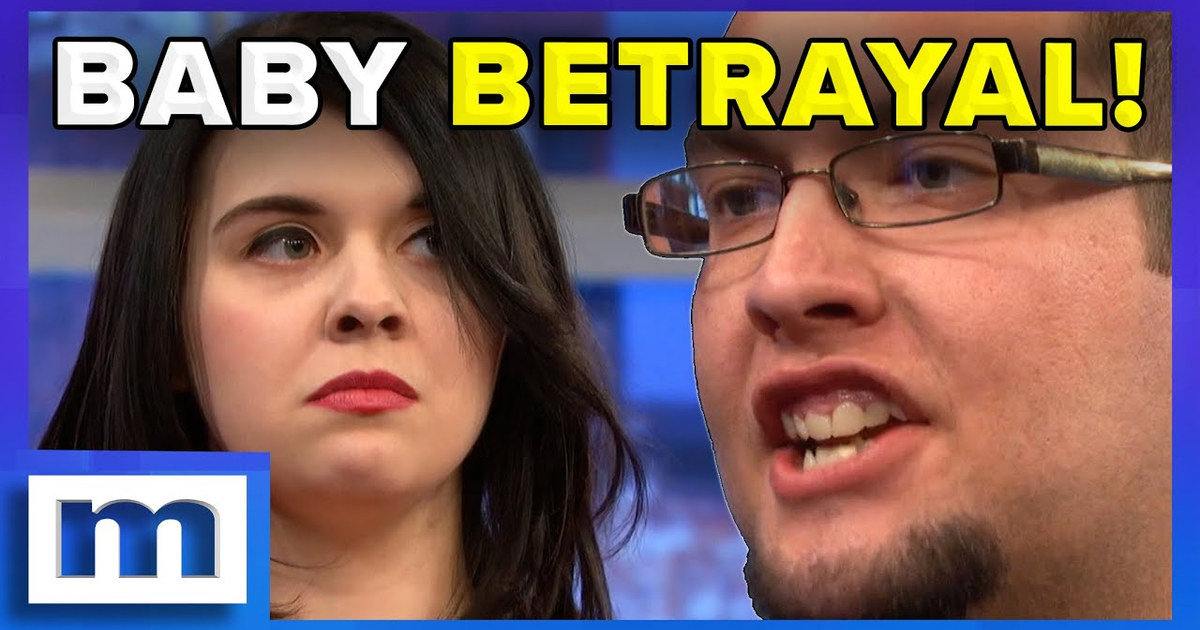
The studio lights are hot enough to make anyone squint, but Kelly doesn't flinch. She sits across from Maury Povich, hands folded, and says the date like she's reading it off a court exhibit: "July 15th, I went over to an old friend of mine and yes, there is a history there. One thing led to another." That's it. That's the whole confession. No apology, no excuse, no long story. Just a summer night, an old friend, and a door that doesn't close behind you. You can feel the heat of it—the kind of July evening where the air sits on your skin and every decision feels like it's happening to someone else. She says it plainly because she has to. Because the rest of her life is built on what happened after.
Cut to August 7th. Kelly and Daylon get married. Cut to August 25th. Kelly is at the doctor's office, and the doctor tells her she conceived on that date—after the wedding, after the vows, after the cake. She says Daylon was there at the appointment. She says the doctor told them "there is no doubt" that Daylon is the father. She says it like a fact that should end every argument. But Daylon is sitting right there on the same stage, and he doesn't look like a man who's been handed an ending. He looks like a man who's been handed a question.
This is the heart of it. Two people, one set of dates, two completely different truths. Kelly's timeline is a math problem with a single solution: July 15th was a break, August 7th was a wedding, August 25th was a conception, and the baby came nine months later. Daylon's timeline is a feeling problem. He doesn't say the dates are wrong. He says he wants to know for sure. "I want to be honest, but I want to find out for sure," he tells Maury. That sentence is the whole marriage in miniature. She's offering him evidence. He's asking for certainty. They are not the same thing.
The Maury Show has been syndicated for over three decades, and in that time it has turned paternity reveals into a kind of American folk theater. You know the beats. The envelope. The pause. The phrase "You are NOT the father" delivered like a verdict from a judge who's also a game show host. Men sprint backstage. Women collapse. The audience gasps, then cheers, then gasps again. It's a ritual, and like all rituals, it works because everyone knows their part. Kelly and Daylon know their part. They're not just a couple in trouble. They're characters in a recurring drama, and the drama has a name: The Maury Show.
But here's the thing about ritual: it makes private pain public without making it clearer. The show doesn't invent the doubt. It just gives it a stage, a lighting cue, and a commercial break. Daylon's doubt existed long before the cameras. Kelly's frustration existed long before the audience. The show takes the messiest, most intimate argument a couple can have—who is this child's father?—and turns it into a segment. That's not a criticism. It's an observation. Reality TV doesn't create the fault line. It just builds a house on top of it and invites everyone to watch.
Kelly says Daylon was happy when she got pregnant. She says he was there when she took the test. She says he went with her to the appointment. Then she says something that lands harder than any DNA result: when she was in labor, he held her hand for two minutes and then sat down on Facebook. Two minutes. That's the detail that stays with you. Not because it's dramatic, but because it's specific. It's the kind of detail a novelist would invent and then worry was too on-the-nose. He held her hand for two minutes. Then he scrolled. She says she felt absolutely alone. She says she's left him twice. Daylon says every relationship has arguments. He says nobody's perfect. He says he loves her. Both of those things can be true. That's what makes it a marriage and not a morality play.
And then there's the test itself. The paternity test isn't just a medical procedure in this story. It's a character. It's the third person in the marriage, the tiebreaker both of them believe will settle the argument. Kelly thinks the test will prove what she already knows. Daylon thinks the test will prove what he's afraid to know. They both walk onto that stage believing the same thing: that a piece of paper can fix what a conversation couldn't. But the result—"Daylon, you are the father"—doesn't answer the deeper question. It doesn't explain why he doubted her in the first place. It doesn't explain why she had to bring him on national television to prove something a doctor already told him. The test resolves the biology. It doesn't touch the betrayal.
[[AD]]
This is where the Maury Show ecosystem matters. The show has been running since 1991, syndicated across the country, and in that time it has produced a whole lexicon of viral moments. "You are NOT the father" is a catchphrase now. It's a meme. It's a t-shirt. Men sprinting backstage is a running joke. But Kelly and Daylon aren't a joke. They're a case study. They're what happens when a private doubt gets handed to a public machine and the machine does what machines do: it amplifies, it packages, it sells ads. The show doesn't make their marriage worse. It just makes it visible. And visibility, for a relationship already cracking, is its own kind of pressure.


