Part 1
The Moment the Envelope Opened: Kelly, Daylon, and the Nine-Month-Old in the Middle
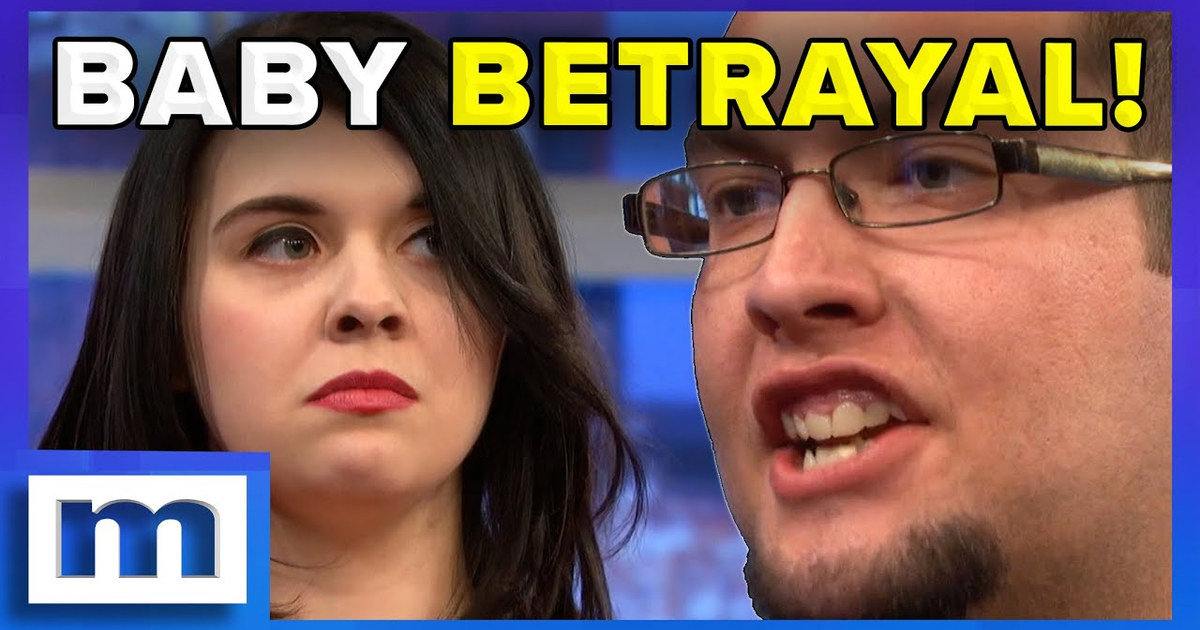
The studio lights on The Maury Show are a particular kind of bright — the kind that flattens everything into a single, unblinking plane. Under them, Kelly sits with her hands folded, and she is not crying. Not yet. She is doing something more dangerous: she is building a case out of a face. "Look at that nose," she says, and the camera cuts to nine-month-old Chase, who has no idea he is the center of a morality play. "Look at that hair. It's curly." The audience holds its breath the way audiences do when they sense a verdict coming. Somewhere off to the side, Daylon — her husband, the father in question — says only two words. "I hope." Not "I know." Not "of course." I hope. Maury Povich stands between them, holding an envelope that contains the rest of their lives. The paper is thin. The silence is not.
Here is the immediate context, and it is almost too perfect to be fiction: this is a sequel episode. A year earlier, Daylon sat on this same stage to deny paternity of his ex-girlfriend Cammie's son, Chaz. Kelly — his wife — wrote a letter to the show begging him to take the test and put the issue to rest. The result: Daylon was the father. Cammie's son Chaz had his DNA. Case closed. Now the roles are reversed. Kelly is the one demanding he accept responsibility for their son, Chase. The same man who once told Maury he wasn't a father is now telling Maury he hopes he's a father. The irony is not subtle. It is the engine of the whole hour.
The players are precise. Kelly is the wife, the letter-writer, the woman who says she helped her husband "get that issue taken care of" — and who now finds herself on the other side of the same spotlight. Daylon is the husband, the father of three other children, the man who sat down on Facebook while Kelly was in labor. Chase is their nine-month-old son, the child whose nose and curly hair Kelly offers as evidence. Cammie is Daylon's ex, the woman he once accused of lying. Chaz is Cammie's son, the child whose paternity test changed everything last year. And Maury Povich is the host — the man who reads the envelope, the referee of a game no one wins. The timeline matters: July 15th, the night Kelly says she went to an old friend's house and "one thing led to another." August 7th, the wedding. August 25th, the conception date her doctor gave her. Daylon was there for that appointment, Kelly says. He was happy. He was 100%. Then Chase was born, and something in him went quiet.
This is not a critique of The Maury Show. It is an observation about why these scenes feel like fiction even when they are real. The show has been syndicated since 1991 — over three decades of paternity tests, lie detector results, and DNA reveals. It is a cultural institution the way a courthouse is: you don't go there because you want to. You go because something has already gone wrong. The format is a modern morality play. The stage is the altar. The envelope is the scripture. The audience is the congregation, and they gasp on cue because they have been trained to. But the people on stage are not actors. Kelly's certainty is not a performance. Daylon's "I hope" is not a line. They are real, and they are trapped in a genre that turns private doubt into public theater. That is why it feels like a movie. It is not a movie. It is worse. It is television.
What makes this episode different from the hundreds that came before it is the symmetry. Last year, Kelly was the wife in the wings, the woman who wrote a letter to a TV show to fix her husband's past. She believed in the test. She believed in the truth. She believed that once the DNA was read, the issue would be put to rest. And it was — for Cammie. For Chaz. For Daylon's ex. But not for Kelly. Because the same man who denied one child is now denying another, and the same woman who demanded proof is now the one being asked to provide it. The roles have reversed, but the script has not. The Maury Show does not do sequels often. When it does, they are rarely this clean.
Return to the opening image. Kelly on stage, repeating "Look at that nose. Look at that hair. It's curly." She is not asking for a test. She is asking for recognition. She is pointing at her son's face and saying: this is not a mystery. This is a fact. Daylon, standing a few feet away, says "I hope." Two words. The gap between them is the article's central question. How does a marriage survive when one person is certain and the other is only hopeful? How does a child grow up in that gap? The next section will trace how a single night in July became the fault line under their marriage — and why the envelope, when it finally opened, did not close anything at all.


