Part 2
For the genre fan, this is the payoff. For the craft nerd, it's the output of a well-designed state machine. The accusation state transitioned to defense, then to DNA test, then to lie detector, then to resolution. Each state had a clear trigger and a clear outcome. The tension was built and released with precision. It's the kind of engineering that makes you appreciate the art of reality TV.
But let's not forget the human element. Shirley and Brandon's story is messy. They've been split up for two months. Brandon has a 4-year-old son from a previous relationship, and Shirley says Brandon stepped up to be his dad. 'He calls him dad. Brandon can punish him and get on to him for doing something wrong and he'll go back two seconds later and say I love you, Dad.' That's the kind of detail that makes the genre fan care and the craft nerd nod. It's character development in a three-minute segment.
So here's the promise: in this article, we'll alternate between genre-craft and pure-craft lenses. We'll look at how the paternity test and lie detector deliver payoff for the genre fan, and how editing, pacing, and the engineering of a reveal satisfy the craft nerd. We'll treat the Maury Povich show as a case study in how to build a segment that works on multiple levels. Because whether you're here for the drama or the design, this episode has something for you.
Next up, we'll dive into the genre-craft: how the paternity test and lie detector deliver the emotional payoff that keeps audiences coming back. Then we'll switch to pure-craft: the editing, pacing, and engineering that make the reveal feel inevitable. Stay tuned.
[[AD]]
Genre-Craft: How the Paternity Test and Lie Detector Deliver Payoff
If you're here for the genre, you know the beats by heart. If you're here for the craft, you're watching the same beats but noticing the load-bearing walls. This segment of Maury is a masterclass in both. The machinery is ancient—Facebook message, DNA swab, polygraph—but the way it's assembled is airtight. Let's take it apart.
The Facebook Message
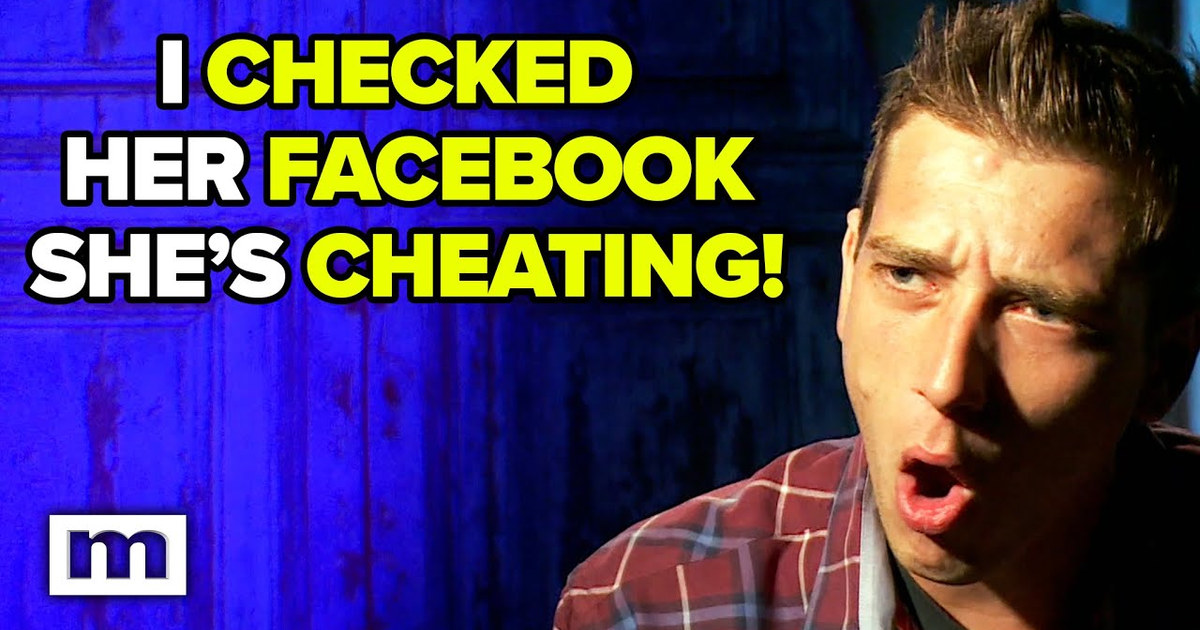
The inciting incident is almost aggressively 2010s: a Facebook message from a high school friend. Shirley says it was inappropriate, that she read it, left it visible, and told the guy to stop contacting her. "I left it on there for him to read," she says. "I told the dude that messaged me, 'Don't contact me, don't text me, don't call me, you and me are done.'"
For genre fans, this is the classic "she's hiding something" setup. For craft fans, it's a character beat disguised as plot. Shirley's defense isn't that the message didn't happen—it's that she didn't hide it. That's a subtle inversion of the usual cheating narrative. She's not denying the event; she's denying the intent. And that distinction is what keeps the segment from being a simple morality play.
Brandon, meanwhile, has been calling her a "liar and a fraud" for years. He says he's dreamed of being a father his whole life, and Shirley "stomped on my heart." But Shirley fires back: "He is so insecure. His last girlfriend took his car and made him lose his job." That's not just a cheap shot—it's context. It reframes Brandon's jealousy as damage, not pure villainy. The genre wants a villain; the craft gives you a wounded man.
The Facebook message is the engine of the conflict, but it's also the first clue that this isn't a simple case of he-said-she-said. It's a Rorschach test. If you're team Brandon, it's proof of infidelity. If you're team Shirley, it's proof of transparency. The show doesn't resolve that ambiguity—it just lets it sit, which is exactly what good drama does.
[[VIDEO]]
And then there's the four-year-old son. Brandon stepped up to be his dad. Shirley says, "He calls him dad. Brandon can punish him and get on to him for doing something wrong, and he'll go back two seconds later and say, 'I love you, Dad.'" That detail complicates everything. Brandon isn't just an accuser; he's a father who's already been doing the work. The genre loves a redemption arc, and this is the setup for one.
The DNA Test
Maury sets the stage with his signature move: "Take a look at that little girl. She looks exactly like you." The audience knows what's coming. Brandon, however, is still hedging. "Half the world has blue eyes," he says. "If you're around somebody long enough, you're going to look like them." That's not just denial—it's a man trying to protect himself from hope. The craft here is in the delay. Maury doesn't rush. He lets Brandon squirm.
Then the result: "In the case of three-month-old Rose Lyn, Brandon, you are the father." The audience erupts. Brandon breaks down. "I'm so sorry. I'm going to make it up. I'm going to be there." This is the genre's catharsis—the moment the truth lands and the villain (or the doubter) crumbles. But for craft fans, it's also a study in release. The tension has been building for eight years, and it's resolved in a single sentence.
What makes this work is that the DNA test isn't just a plot device. It's a character test. Brandon's reaction—immediate, tearful apology—tells you he wasn't lying about wanting to be a father. He was just scared. The genre gives you the answer; the craft gives you the why.


