Part 2
Mecca watches this unfold. She's sitting there, eighteen years old, in her parents' food truck town, learning that her first love was a fiction written by someone who may have been her own age, or may have been older, or may have been anyone at all. The fish photo was the first crack, but the whole foundation is crumbling now. She doesn't cry. She doesn't yell. She just watches. That's the thing about Catfish—it's not about the reveal. It's about the moment before the reveal, when the person on screen is still holding onto the hope that they weren't wrong about everything.
The episode doesn't end there. It can't. There's a drive to Texas, a meeting in a parking lot, a confrontation that will either break Mecca or free her. But that's the next part of the story. For now, all we have is the photo. A boy, a fish, a lie. And a girl in Tampa, staring at her phone, wondering how she got here. Wondering if the person she loved was ever real. Wondering if she was ever real to them.
Catfish has always been about the gap between who we are and who we pretend to be online. But in Mecca's case, the gap is a canyon. She fell in love with a profile picture. She stayed for a voice on the phone. She gave her password to a ghost. And when the ghost sent her a photo of a catfish, she didn't run. She wrote to MTV. She asked for help. That takes a kind of courage that most people don't have. It takes a willingness to be seen as foolish, to be vulnerable on national television, to admit that you loved someone who might not exist. And that's why we watch. Not for the drama, but for the humanity. For the moment when a person decides that the truth is worth more than the lie, even if the truth is just a boy holding a fish.
[[AD]]
The Unraveling of Ryan, Taylor, and the Small-Town Secret
Nev Schulman and Max Joseph are hunched over a laptop in a Tampa hotel room. On the screen: Ryan’s old Facebook profile, a ghost ship from 2012. Every post is a love letter. “I hope that my baby knows that I love her with all my heart.” “I love you Mecca.” The words repeat like a prayer. But then Max scrolls down, and the prayer turns into a puzzle. Ryan — a 14-year-old straight male from Texas — is a member of an LGBTQ support group. Max says it out loud: “What 14-year-old straight male from Texas is part of a GLBTQ support group?” The question hangs in the air like a hook.
[[VIDEO]]
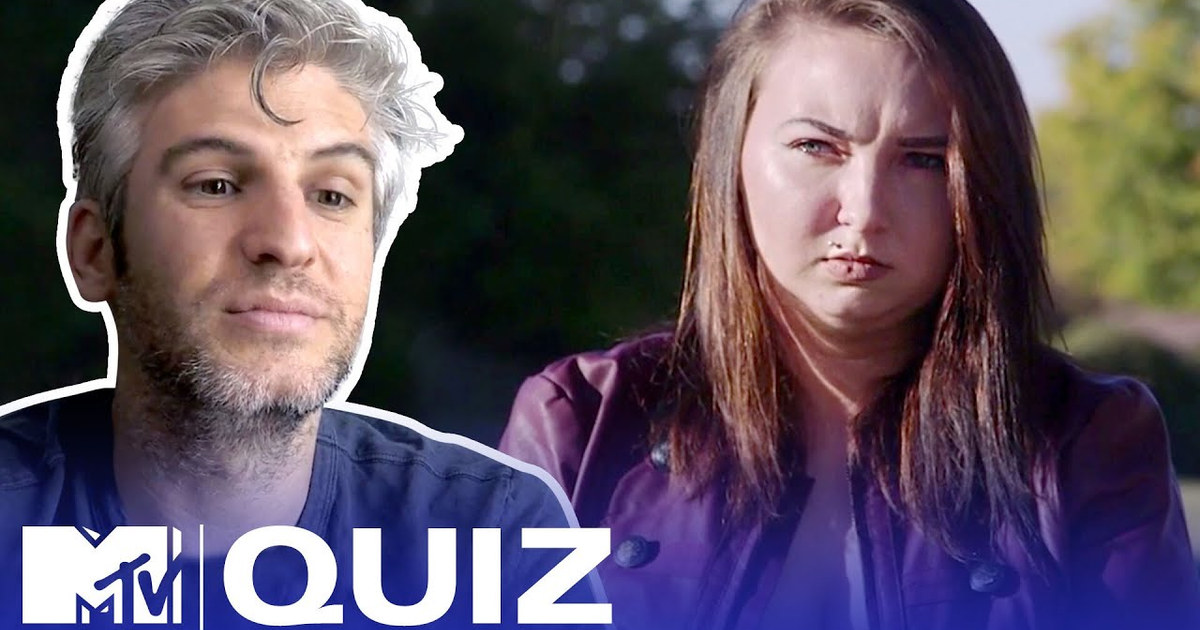
Mecca is sitting across from them, her face a mix of confusion and dread. She’s 18, from Tampa, works at her parents’ food truck called Hot Mess. She met Ryan five years ago, when she was 13 and being bullied so badly that she had no one else. Ryan was her life support. Now Nev and Max are showing her something she’s never seen: posts written in her voice, from her account, inside that same LGBTQ group. “I love hot emo scene guys.” “I’m sexy and I know it.” Mecca’s eyes go wide. “No, I actually never wrote that,” she says. “That’s weird.” Then a photo of her appears — one she never posted. “Someone’s been pretending to be you,” Max says. Mecca’s voice drops. “That’s creepy.” She gave Ryan her password years ago. “Because we’re like, oh trust, blah blah blah.” Trust. The word lands like a punch.
The violation is intimate. Someone logged into her account, wore her skin, and spoke to strangers as her. Four years ago. Mecca is seeing it for the first time. “Why would he go on and pretend to be you on the gay group?” Nev asks. There’s another post. “Whoa,” Max says. “This is really disturbing.” Mecca’s head is spinning. “This is trippy.” They decide to reach out to Taylor — the girl who first messaged Mecca, claiming Ryan was her cousin. Taylor’s phone number is the same as Tanner’s. The catfish and the cousin are one and the same. Nev realizes he has to make the call. “I don’t wanna call that person,” he says. But he does.
Taylor Wilson answers. The voice on the other end is soft, unisex, scared. Nev and Max ask about Ryan. Taylor says she’s Ryan’s cousin, but the story cracks. They ask to meet. Taylor hesitates. Then Tanner calls them. Tanner’s voice sounds like Taylor’s. Tanner is scared to meet. Nev and Max suspect Tanner might be Taylor. Or Tanner might be trans. The name Tanner is close to Taylor. The pieces are falling into place, but the picture is still blurry.
They drive to Brownwood, Texas — a small town where everyone knows everyone, where churches outnumber coffee shops, where being gay is not something you announce at the dinner table. They find Taylor’s workplace. They call Taylor’s coworker, Lakeisha. She confirms Taylor is a real girl. But then Tanner calls again. Tanner is scared. Tanner is hiding. Nev and Max go to the door. They knock. They coax. Finally, Tanner opens the door.
It’s Taylor.
Taylor admits everything. She started talking to Mecca as Taylor, asked if Mecca was interested in girls. Mecca said no. Taylor didn’t respect that. So she created Ryan. She never meant to hurt Mecca. She says she doesn’t remember posting as Mecca in the LGBTQ group. But she used Mecca’s account to post as her, to get people to hit her up. That’s disturbing. It’s a violation that goes beyond catfishing — it’s identity theft as a cry for help.


