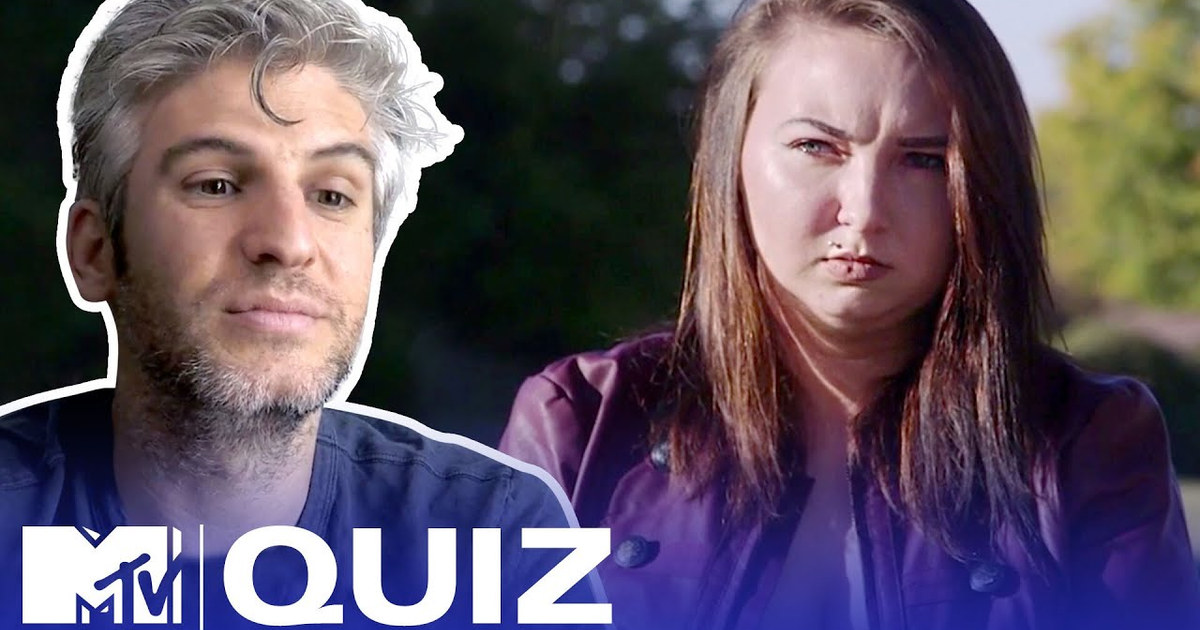
Part 2
The cold open is the email. Mecca, 18, from Tampa, Florida, writes to Nev and Max with a subject line that's already a thesis statement: "My first love is actually now my second love." She met Ryan five years ago. He lived in Texas. After a few weeks of nonstop texting and phone calls, he became her first love. The hosts can't help but poke at that: "I don't think that's how that works." It's color commentary, but it's also genre calibration—we're being told this is a story about a feeling that outran its facts.
Then the backstory drops, and the stakes get real. Mecca was bullied at school. She didn't have anyone but Ryan. He was her life support. That's the emotional engine of every great catfish episode: isolation plus attention equals attachment. The genre doesn't need a monster; it needs a void, and someone willing to fill it.
The suspicious video chat is the first real set piece. After months of dating, Mecca convinces Ryan to video chat. But she can't see him—it's dark, and he's wearing a hoodie. Nev's reaction is pure genre shorthand: "Somebody who's misrepresenting... super sketchy." The hoodie is a costume. The dark room is a set. And the audience knows the rule: if you can't see the face, you're not seeing the person.
The confession arrives like a plot twist in a procedural. Ryan breaks down and admits he's not the guy in the pictures. He sends a photo of a completely different guy. His name is Tanner. And then Mecca delivers the line that flips the script: "I know he could still be lying, but he was my first love. I still love him. Please help." That's not denial. That's a choice.
Here's where *Catfish* the show diverges from *Catfish* the movie. The 2010 documentary, directed by Ariel Schulman and Henry Joost, introduced the term and the template: a filmmaker's online romance turns out to be a fabrication, and the reveal is uncomfortable, ambiguous, and deeply human. MTV's *Catfish*, which premiered in 2012 and is still running, took that template and turned it into a weekly ritual. Cold open. Host reaction. Location shoot. Confrontation. After the show update. The formula is consistent because it works.
[[AD]]
But this episode adds a layer of self-awareness that the genre rarely allows. Mecca already knows Ryan isn't the guy in the pictures. She's not the victim in denial—she's a participant in a relationship she knows is partly fiction. That breaks the usual trope. The suspense isn't "will she find out?" It's "what will she do with what she already knows?"
The comedic relief is pure genre engineering. When the catfish photo turns out to be a guy holding a catfish, it's a meta-joke that lands because the show knows exactly how absurd its own premise can get. It's a pressure valve. Without it, the episode would be unbearable. With it, you can keep watching.
Compare this to other MTV episodes and the formula holds: the hosts roll up, the location shoot happens in Tampa, the confrontation is staged for maximum tension, and the after-the-show update ties a bow on it. But this one adds a wrinkle. Mecca's "I know he could still be lying" is a line that acknowledges the genre's own rules. She's watched the show. She knows the beats. And she's still in love.
That's why genre fans love it. The emotional payoff is real. The confrontation is earned. And the ending is ambiguous—will Mecca meet Tanner or not? The show doesn't answer that in the first act. It leaves you hanging, because the genre thrives on the gap between what we know and what we feel.
[[VIDEO]]
For the genre tourist, this is a masterclass in tension. For the craft engineer, it's a case study in how to build a thriller from a teen's inbox. And for both, it's a reminder that the best stories are the ones that know exactly what they're doing—and do it anyway.
Pure-Craft: Engineering a Con—The Programmer's Guide to Tanner's Stack
Let’s switch hats. Forget the genre thrills for a second—if you’re the kind of viewer who sees a catfish story and thinks, “Okay, but how would I build that?” then this section is your debugger. Tanner’s deception isn’t just a plot twist; it’s a system. A stack of technologies and psychological exploits, running on a lonely 18-year-old’s phone. And like any good engineer, we can reverse-engineer it.
First, the identity layer. Tanner didn’t just pick a random face; he stole photos—probably from some unsuspecting guy’s Facebook or Instagram. That’s the equivalent of copying a UI from a popular app and slapping your logo on it. The fake Facebook profile is the frontend: a few public photos, a bio that says “Texas,” and a friend list that looks plausible. But here’s the tell: the photos are static. No live video, no candid shots that match the conversation. It’s a cached version of a person, not a real-time API.
Then there’s the communication channel. Tanner used text, phone calls, and eventually video chat. Text is asynchronous and easy to fake—you can craft responses, Google jokes, and never worry about your face. Phone calls add a voice, but voices can be disguised or just… not match the photos. The video chat is where the stack starts to crack. Mecca finally convinced “Ryan” to video chat, but she “couldn’t exactly see him since it was dark and he had a hoodie on.” That’s a failure to render a face. In engineering terms, it’s a null pointer exception. The system couldn’t produce the expected output, so it threw a generic error: “dark room, hoodie.” Classic.


