Part 2
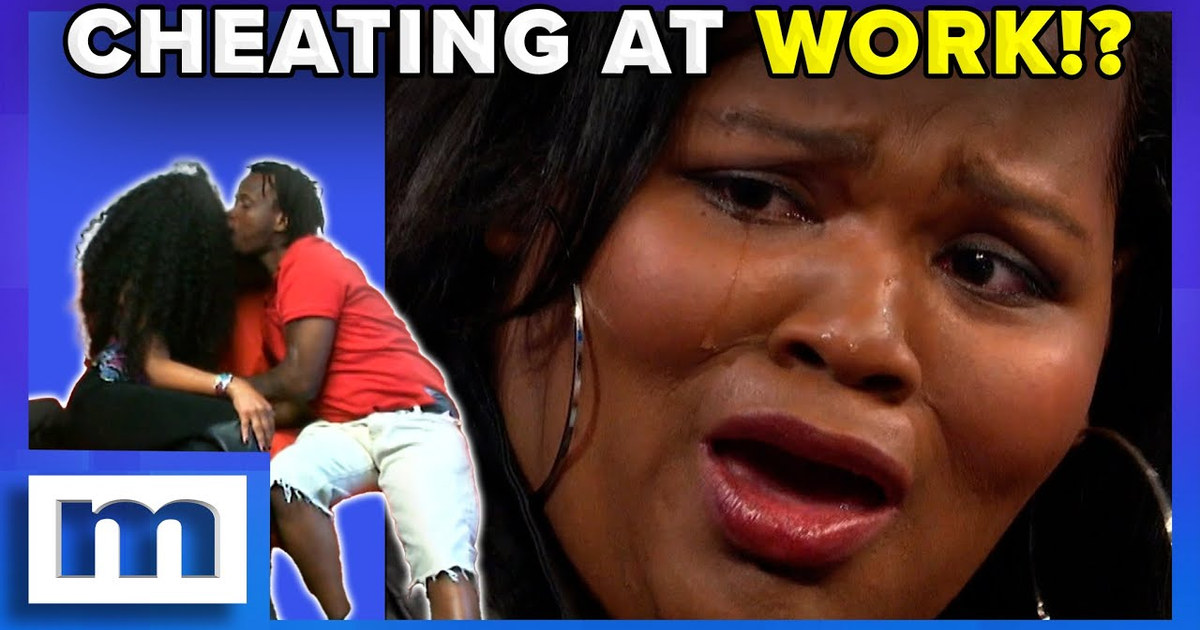
Andrea's co-worker tipped her off that Shawn was using the storage closet at work as a love nest. That's the origin story of this whole Maury episode. But before we get to the closet, we have to get through the phone. Andrea took Shawn's phone. She bought the phone, so she took it. That detail matters, and Shawn knows it matters, because he brings it up like it's the crime of the century. "I have four Facebook pages because I have no privacy," he says. Four. One, two, three, four. Maury counts them out on the screen like a man doing inventory.
Now, ask yourself the question the audience is already asking: who needs four Facebook pages? I've got friends who run small businesses, fan pages, meme accounts — that's two, maybe three if you're chaotic. Four is not a privacy strategy. Four is a filing system. Four is one page for family, one for work, one for the side conversations, and one you forgot to delete. Shawn's defense is that Andrea is "always on" his stuff. Andrea's counter is simple and brutal: if you want privacy, be single. You want privacy, you don't get to have a girlfriend going through your phone at 2 a.m. You want privacy, you live alone with a plant.
This is where the tour gets interesting, because Shawn doesn't stop at Facebook. He keeps opening doors and hoping we don't look inside. Female friends, he says. It's always "a friend or cousin." Every woman who sends him pictures is a friend. Every picture is nothing. Maury pushes back — "go get me a friend" — and Shawn has no answer. That's the rhythm of the whole segment. Shawn offers a category, Maury asks for a name, and the category collapses.
[[AD]]
The Neighbor, the Secret, and the Child Who Told the Truth
Here's the stop on the tour that you cannot skip. Andrea says she knows Shawn cheated with the neighbor. Shawn denied it to the end. He denied it until her son spoke up. The kid said it plain: "Mommy, I have a secret. Shawn told me don't tell you." The secret was that his little friend's mommy came over to the house. That's it. That's the whole case. A child, too young to know how to lie about it, handed over the evidence.
Andrea found hickeys and scratches on Shawn's body. Shawn's response? "You did those." Andrea's response? "How did I do those? I cut you off long ago." That's a closed loop. She removed herself from the equation, and he still tried to put her back in it. The marks didn't come from her. So where did they come from? Shawn never answers that. He just moves to the next excuse like a man changing lanes without a signal.
Notice how the denials stack. First it's nothing. Then it's a friend. Then it's a cousin. Then it's a neighbor, but only after a child exposes him. Then it's "you did those marks," except she didn't. This is not a man defending himself. This is a man improvising. And the audience can feel it, because the audience has seen this exact performance on daytime TV since the 1990s.
Tracy, the Look, and the Excuse That Arrives Too Late
[[VIDEO]]
Now Shawn pivots. Tracy came on to him a couple of times, he says. She gives him "that look." Maury asks the obvious: what look? Shawn can't describe it. He says Tracy told the producers that Shawn said, "We might as well hook up since Andrea thinks we're doing it." That's not a denial. That's a confession wearing a denial's jacket.
Andrea asks the question that cuts through everything: why didn't you tell me when it happened? Shawn's answer is that Tracy is her friend and he didn't want to break that up. Andrea's reply lands like a door slamming: "Half the time I tell you stuff, you don't even listen anyway." And then Shawn says he can't trust her. He can't trust her. The man with four Facebook pages, a secret neighbor, and a story about Tracy's look is telling the woman who bought his phone that she's the untrustworthy one.
That's the gaslighting the audience sees in real time. It's the same move you'd find in a hundred courtroom dramas and relationship thrillers, from the slow-burn manipulation of Gone Girl (David Fincher, 2014, 149 minutes) to the gaslighting in Gaslight itself (George Cukor, 1944, 114 minutes) — the original text on this exact trick. Shawn isn't a movie villain. He's a guy on a syndicated talk show, and that's what makes it land harder. No score, no lighting cues, just a man telling a woman she's the problem while the evidence says otherwise.
Maury's role here is the ringmaster. He doesn't solve anything. He lets it unfold. He counts the Facebook pages. He asks "what look?" He invites Tracy out. He's the same host who made "You are not the father" a permanent part of American pop culture, the phrase that turned a paternity test into a catchphrase and a catchphrase into a meme economy. Maury understands that his job isn't to judge. His job is to keep the doors open so the audience can see every room.
And that's the pattern. Four Facebook pages. Female friends who are always "a friend or cousin." A neighbor he denied until a child exposed him. Marks on his body that he blamed on a woman who cut him off. A coworker who came on to him, but he never mentioned it because she's Andrea's friend. Notice how the excuses multiply? This is not a one-time mistake. This is a system. A system with four login pages and no privacy settings.


