Part 3
And here's the detail that ties the whole stop together. Andrea isn't just collecting evidence. She's collecting contradictions. She's not asking you to believe her. She's asking you to notice that Sean can't keep his own story straight. If you have nothing to hide, why four accounts? If you have nothing to hide, why did the neighbor story only fall apart when a child told it? If you have nothing to hide, why did Tracy's name only come up when Sean was angry? The answers aren't in the denials. They're in the shifts.
So before we walk into the lie detector room, hold onto this: Andrea didn't build a case out of nothing. She built it out of hickeys, a neighbor, four profiles, and a best friend's photos. And Sean built his defense out of pivots. Next stop, the machine that's supposed to sort it out — and the decoy that walks in first.
Stop Three: The Lie Detector, the Decoy, and the Clothes That Weren't Hers
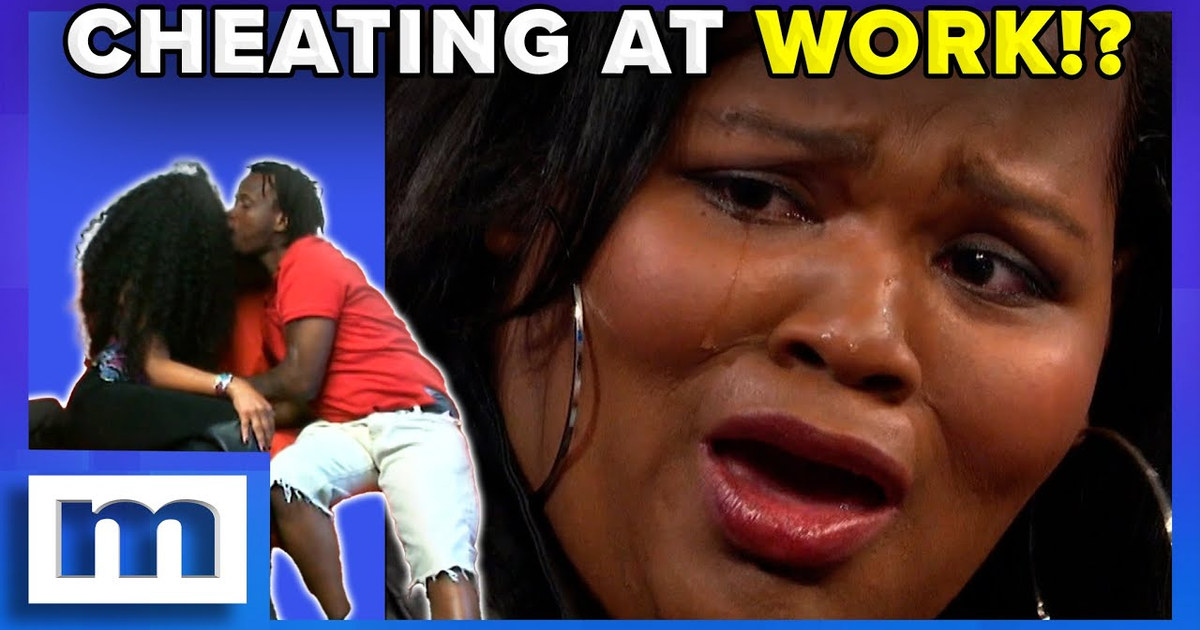
The Maury Povich Show has been running since 1991, and in that time it has turned the polygraph into a kind of secular confessional. But the episode that brought Andrea, Sean, and Tracy into the studio — and into the archive — does something the average 'you are NOT the father' segment never does. It lets the best friend speak first. It lets the machine correct the boyfriend. And it stages a twist so petty, so perfectly Maury, that you have to admire the production design.
So let's walk to the last stop on this tour. The lie detector. The decoy. The clothes that weren't hers. And the one sentence from Andrea that ends the whole thing.
Tracy goes first. That matters. On a show built on ambush, the producers hand the microphone to the woman Andrea accused of being the other woman. Tracy sits down. The questions are narrow: Did Shawn ever ask you to hook up? Tracy says yes. The polygraph agrees. She is telling the truth.
Now, before you picture anything, listen to the semantics. Sean has already told Andrea that when he said 'hook up,' he didn't mean sex. He meant something else. Something vague. Something a man says when he's been caught in a storage closet with a napkin. So the examiner asks Tracy the follow-up: Did you ever sleep with him? Tracy says no. The polygraph agrees again. She is telling the truth.
[[AD]]
Two questions. Two true answers. And suddenly the story Andrea has been carrying for months — that her best friend and her boyfriend were doing something in the storage room — splits into two separate facts. Sean asked. Tracy didn't. That is not the same thing as innocence. But it is not the same thing as betrayal either.
Then the third question. The one nobody in the studio expects. Was Tracy trying to sabotage Andrea and Sean's relationship? Tracy says no. The polygraph agrees. Truth. Three for three. The woman Andrea called a liar on national television is the only person in this triangle the machine has not caught.
Now it's Sean's turn. And this is where the episode stops being a love triangle and starts being a deposition. Every answer comes back a lie. Did you make a sexual advance toward Tracy? Lie. Have you slept with more than ten women? Lie. Have you slept with coworkers? Lie. Are you in a secret relationship with another woman right now? Lie. Did you set up Facebook pages to hide your cheating? Lie.
Five questions. Five lies. The man who walked out to defend himself — the man who told Andrea she was crazy, that she was drinking wine and forgetting things, that she needed to stop listening to everybody else — has just been contradicted by his own nervous system. On Maury, that is the moment the audience turns. You can hear it in the tape. The applause stops being polite.
But the polygraph is not the twist. The twist is a decoy.
The producers have planted a guest in the audience. A woman. And with her, a pair of clothes. The implication is simple: these belong to someone Sean has been seeing. Whose are they, Sean? He answers. The machine flags it. He is lying about the clothes. He is lying about whose they are. He is lying about a garment.
That is the detail you would not have chosen to stop on if you were watching this live. You would have stopped on the ten women. You would have stopped on the coworkers. But the clothes are the tell. A man who has nothing to hide does not lie about a shirt. A man who has been lying for years does not even notice he is doing it anymore.
Andrea's reaction is the cleanest thing in the episode. She does not scream. She does not cry for the cameras. She says he's a good dad — and then she says he can be a good dad somewhere else. She starts packing his bag. That's it. No reconciliation arc. No 'we'll work on it.' A woman who spent years being told she was imagining things has just watched a machine confirm every suspicion she ever had, and she chooses the door.
Tracy gets the last word, and it is the line the episode is remembered for. She loves him, she says. But she loves herself more. And she will be there for Andrea no matter what. Think about the geometry of that. The woman accused of the affair is the one offering unconditional support. The boyfriend is the one with five lies and a mysterious pair of clothes. The best friend is the one telling the truth.
So ask the question the episode leaves in the room. What does it mean when the best friend is the one telling the truth? It means the story Andrea was sold — that Tracy was the threat — was the wrong story. It means the person she was told to distrust was the person who had her back. And it means the man who called her crazy was the only one in the studio the polygraph could not clear.
That is the tour. The storage closet. The four Facebook pages. The lie detector. And now go back and watch the opening again. Watch Sean walk out. Watch him tell Andrea she's pushed him away for four or five years. Watch him say he didn't call the show — that she called the show. Then watch the polygraph results land. The man who spent the first ten minutes explaining why he was the victim is the same man who lied about a pair of clothes. The opening was never a defense. It was a confession with better lighting.
Next time on ReelDrop, we're leaving the studio and heading into the green room — the producers, the planted guests, and the machinery that turns a love triangle into an hour of television. Bring a napkin. You'll need it.


