Part 2
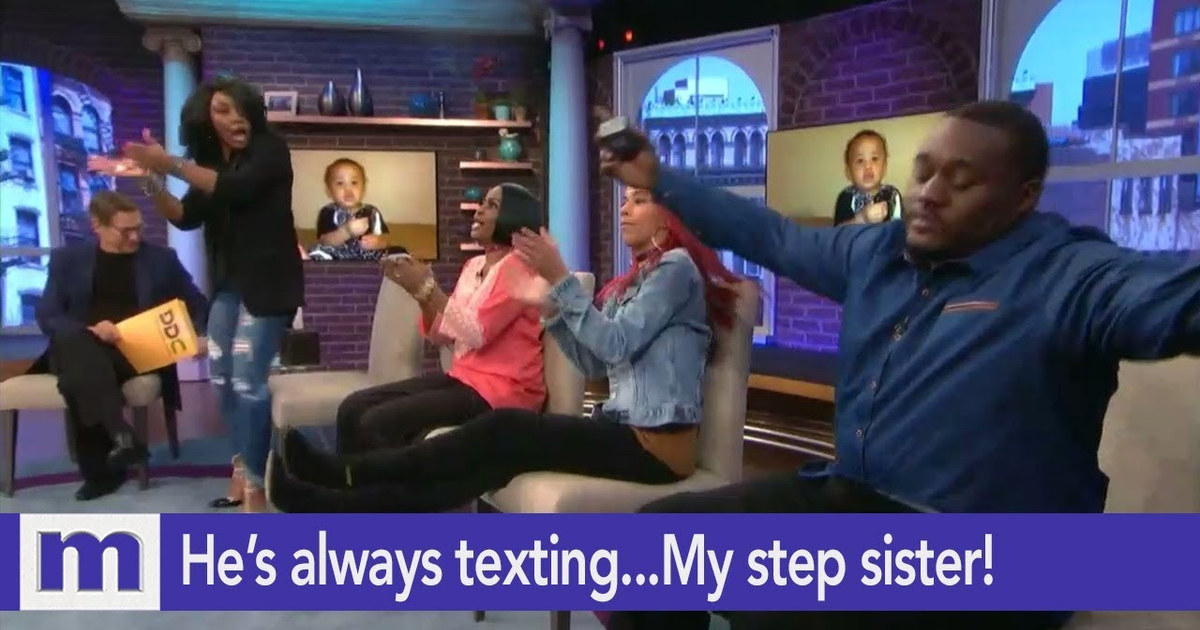
The evidence Lexie brings is pure daytime TV gold, and the show knows exactly how to present it. She pulls up text messages between Dwayne and Akia—messages where he’s asking her step sister to go shoot pool and have a drink. Then there’s a Facebook photo of Dwayne and Akia together, the kind of picture he never takes with Lexie. And the kicker: Dwayne blocked Lexie on Facebook. The production team doesn’t just let her describe it; they throw it up on the screen in a split-screen graphic, with Lexie on one side and the evidence on the other. It’s a technique straight out of a true-crime documentary, but here it’s used to maximum emotional impact. The audience gasps on cue.
[[AD]]
Then comes DeShae. Lexie’s best friend of five years, the godmother to Lexie and Dwayne’s three children, and the mother of a baby named DeShawn. Lexie believes Dwayne is the father because the baby has the same eyes as him—never mind the color, which he got from his mother—and because the name DeShae plus Dwayne equals DeShawn. It’s the kind of logic that sounds crazy until you see the photo. And the show makes sure you see it. They cut to a side-by-side of Dwayne and the baby, zooming in on the eyes. It’s manipulative, sure, but it’s also effective television. The audience murmurs. Maury raises an eyebrow. You can feel the room turning against Dwayne.
The climax of the episode is the lie detector test and the DNA test. The build-up is shot like a courtroom drama—think A Few Good Men (1992, directed by Rob Reiner, 138 minutes). You’ve got the same tension: a man under oath, a woman demanding the truth, and an audience holding its breath. The difference is that here, the verdict comes in real time, and the host is the judge, jury, and executioner. Maury reads the results with the perfect pause, and the crowd reacts like they’re watching a verdict in a murder trial. It’s theater, but it’s also the reason we watch.
[[VIDEO]]
The audience is never just a passive crowd. Their gasps, applause, and boos are cut into the episode to heighten every beat. This is a technique borrowed straight from professional wrestling—WWE has been using crowd reaction shots since the 1950s—and from game shows like The Price Is Right (premiered 1972, still running). On Maury, the audience is a character. They react to the text messages, the photo, the baby’s eyes, the lie detector results. Their energy feeds the drama. Without them, the show would feel like a deposition. With them, it feels like a gladiator arena.
Dwayne’s defense is a masterclass in toxic masculinity. He claims he’s just a friendly guy. He says he gives DeShae money because he’s the godfather—never mind that a godparent’s role is to step in when the parent can’t, not to be on call 24/7. He admits he goes to the strip club because he can. He says he disappears to play basketball at 10 p.m. and comes home at 6 a.m., and we’re supposed to believe that’s normal. The show frames all of this as evidence of his guilt, but also as a window into a certain kind of man—the kind who thinks being a provider means he can do whatever he wants. Lexie calls him out: “You like to throw our money at them hoes.” The audience applauds. It’s uncomfortable and riveting.
Then the lie detector results come in. Dwayne passed on the questions about sleeping with DeShae and Akia. But he failed on the questions about sleeping with strippers and other women. So he’s not a cheater with the two women Lexie suspected, but he is a cheater. And the DNA test proves he is not the father of DeShawn. It’s a mixed verdict, the kind that leaves everyone unsatisfied. Lexie doesn’t get the clean win she wanted. Dwayne doesn’t get full exoneration. The rings are still on the line.
Lexie’s reaction is the most telling part. She’s not satisfied. She says if he fails the test, he can take the rings and shove them where the sun don’t shine. But he didn’t fail—not on the big questions. So what now? The episode ends on that ambiguity, and it’s a smart choice. It leaves the audience wanting more, and it sets up the final section of this article: what this means for the couple and for the genre. Because if a lie detector test can’t give you a clean answer, what can? And why do we keep watching?
What to Watch For: The Cinematography of Confession and the Future of Daytime TV
The moment Maury reads the lie detector results, the camera holds on Dwayne’s face. It’s a tight close-up, maybe a 75mm lens, and you can see the exact second his jaw goes slack. The lie—sleeping with strippers—lands like a punch. Then the cut to Lexie: her eyes, once full of hope, now flat with resignation. That’s not accidental. That’s cinematography.
As someone who’s shot second-unit on reality shows, I can tell you: capturing that kind of raw transition is harder than it looks. The Maury Povich DNA test and lie detector episodes are a masterclass in confession cinematography. They use the same visual grammar as Keeping Up with the Kardashians (2007–2021) and The Real World (1992–present), but with higher stakes and lower budgets. And it works.


