Part 2
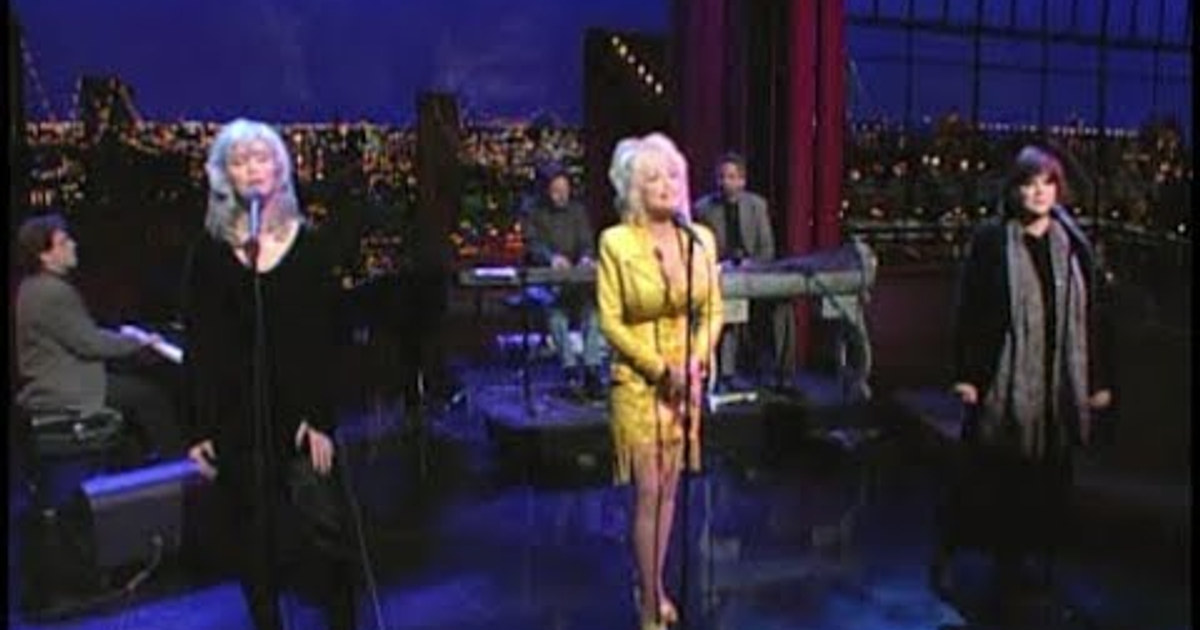
The performance itself is deceptively simple. No flashy choreography, no backing track overload. Just three voices, a guitar, and that strange, ethereal glass harmonica weaving in and out. The audience is silent, then erupts. You can hear individual whoops and hollers, the kind that come from people who know they’re witnessing something rare. The camera cuts to the host, who’s nodding like he can’t believe his luck. He probably can’t. This is the kind of moment that late-night shows dream about.
So if you’re new to Trio, start here. Watch this performance. Then go listen to the albums. The first Trio (1987) has “To Know Him Is to Love Him” and “Telling Me Lies.” Trio II (1999) has “After the Gold Rush” and “High Sierra.” Both are essential. But the live performance? That’s where you see the chemistry in real time. That’s where you understand why these three women, with all their separate careers and separate sounds, decided to make music together. It wasn’t for the money. It wasn’t for the fame. It was because they sounded like they were meant to.
If you’ve never heard these three sing together, you’re missing one of the great musical collaborations of the 20th century.
Why 'After the Gold Rush' Hits Different with Trio
You know that feeling when a song you've heard a hundred times suddenly feels like the first time? That's what happened when Emmylou Harris, Linda Ronstadt, and Dolly Parton sang Neil Young's 'After the Gold Rush' on their 1999 album *Trio II*. It's not just a cover—it's a reimagining that strips the song to its bones and lets three of the greatest voices in music history do what they do best: tell a story that haunts you long after the last note fades.
Neil Young wrote 'After the Gold Rush' in 1970 for the album of the same name. It's a cryptic, dreamlike tune that touches on environmental destruction, war, and a glimmer of hope. The original is sparse—piano, harmonica, and Young's plaintive voice. But when Trio got their hands on it, they turned it into something else entirely: an acoustic guitar-driven meditation where three voices weave in and out, trading lines and blending in ways that feel both intimate and epic.
Let's break down why this version hits so hard. First, the arrangement. There's no grand production here—just a gentle acoustic guitar and those voices. That simplicity forces you to listen to the lyrics. And what lyrics they are. The opening verse paints a medieval pageant: 'I dreamed I saw the knights in armor coming, saying something about a queen. There were peasants singing and drummers drumming, and the archers with the tree.' It's like a tapestry from a forgotten time. Then, like a punch to the gut, the chorus: 'Look at mother nature in the 20th century.' It's a stark warning that still feels urgent today.
[[AD]]
The second verse shifts to a burned-out basement, a place of loss and longing: 'I was lying in a burned-out basement with the full moon in my eyes. I was hoping for replacement when the sun burst through the sky.' There's a sense of waiting for something better, a replacement for what's been destroyed. The chorus repeats, hammering home the environmental message. Then the final verse goes full apocalyptic: 'I dreamed I saw the silver spaceships flying in the yellow haze of the sun. There were children crying and colors flying all around the chosen ones.' It's beautiful and terrifying at the same time.
So why does this song work so well for Trio? Because their harmonies add layers of sorrow and resilience. Dolly's high, pure voice cuts through like a ray of light. Linda's powerful alto brings a grounded strength. Emmylou's warm mid-range is the glue that holds it all together. They trade lines—Dolly takes the first verse, Linda the second, Emmylou the third—and then they blend on the chorus. It's a masterclass in vocal chemistry. You can feel the weight of the song's themes, but you also feel a sense of hope, because these three women are singing it together.
Now, if you're a longtime fan, you might be thinking, 'Didn't they already cover this song?' And you'd be right. 'After the Gold Rush' appears on *Trio II*, the long-awaited follow-up to their 1987 album *Trio*. But the version we're talking about here is from a live performance—the one that had the audience spellbound. The studio version is gorgeous, but live, there's an extra electricity. You can hear the crowd's hushed reverence, the slight catch in their voices, the way they lean into each other. It's the kind of performance that makes you pull over to the side of the road and just listen.
Speaking of *Trio II*, let's talk about why it took so long to happen. The first *Trio* album was released in 1987 and won a Grammy for Best Country Performance by a Duo or Group with Vocal for 'Telling Me Lies.' It was a massive success, but the three women were busy with their solo careers. Dolly was building her empire, Linda was exploring different genres, and Emmylou was constantly touring and recording. Plus, there were tensions—creative differences and scheduling conflicts that kept pushing the sequel back. Finally, in 1999, *Trio II* arrived. It was highly anticipated and well-received, debuting at number four on the Billboard Country Albums chart. It didn't win a Grammy for Best Country Album (that honor went to Dixie Chicks' *Fly* that year), but it did win a Grammy for Best Country Collaboration with Vocals for 'After the Gold Rush.' So yes, this song is Grammy-winning.


