Part 2
Ronstadt, meanwhile, refused to be pigeonholed. After her rock and pop hits in the 1970s, she pivoted to Broadway, starring in a 1980 production of The Pirates of Penzance. In 1987, she released Canciones de Mi Padre, an album of traditional Mexican folk songs that honored her father's heritage. It became a surprise hit and won a Grammy. She explored jazz, big band, and even opera. Linda was a chameleon, and she wore every color brilliantly.
[[AD]]
Harris took a different path. She became the patron saint of alternative country, releasing critically acclaimed albums like Wrecking Ball in 1995, produced by Daniel Lanois. She collaborated with everyone from Gram Parsons—her mentor and former partner—to Rodney Crowell, and she never stopped pushing the boundaries of what country music could be. Her voice, always aching and true, found new depths with each passing year.
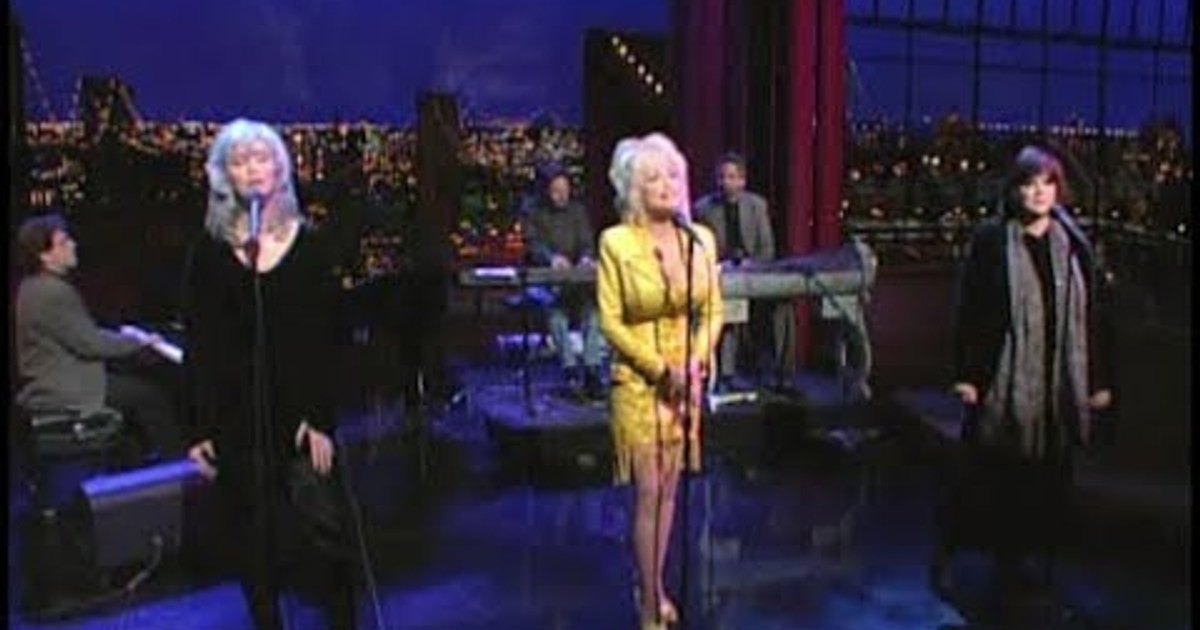
By the late 1990s, the stars finally aligned. The three women reunited in the studio, this time with producer George Massenburg, and the result was Trio II, released in 1999. The album picked up where its predecessor left off, but with a wiser, more weathered beauty. Among its highlights was a cover of Neil Young's 'After the Gold Rush'—the very song they performed on national television with a glass harmonica in hand.
Neil Young wrote 'After the Gold Rush' for his 1970 album of the same name. It's a song steeped in apocalyptic imagery: knights in armor, peasants singing, drummers drumming, archers, a burned-out basement, silver spaceships, and a mother nature that we've neglected. It's a dreamscape about environmental destruction, war, and the fragile hope that we might still wake up. When Harris, Ronstadt, and Parton sing it, their voices wrap around the lyrics like a protective shroud, and the glass harmonica adds a ghostly, ethereal texture that makes the whole thing feel like a séance.
The instrument itself—invented by Benjamin Franklin in 1761—was a deliberate choice. Its otherworldly tone matches the song's dreamlike atmosphere, and it's the kind of detail that shows how much thought went into the performance. This wasn't just three legends singing a cover; it was a carefully crafted moment of artistic synergy.
[[VIDEO]]
But the significance of Trio II goes beyond any single song. It represents a rare moment of female camaraderie in country and rock music, a genre that has often sidelined women after a certain age or reduced them to novelty acts. Harris, Ronstadt, and Parton were trailblazers who refused to be pigeonholed. They didn't compete; they collaborated. And in doing so, they created a harmony that is both nostalgic and forward-looking—a reminder of what women can achieve when they lift each other up.
The twelve-year gap between Trio and Trio II wasn't a failure. It was a testament to their individual journeys, and when they finally came back together, they brought all of that experience with them. The result is a record that feels like a homecoming and a new beginning all at once. It's the sound of three friends who've lived, loved, and lost, and who still find joy in singing together.
In a way, the glass harmonica is the perfect symbol for this collaboration. It's fragile, strange, and beautiful—just like the bond between these three women. It's an instrument that almost nobody plays, and yet there it was, on national television, supporting one of the most iconic vocal trios of all time. That's the magic of Trio II: it takes the unlikely and makes it inevitable.
So when you watch that performance of 'After the Gold Rush', listen closely. You're hearing more than a song. You're hearing a decade of waiting, a lifetime of harmony, and the sound of three voices that were always meant to find each other.
The Legacy of Three Voices: Why This Moment Still Matters
The glass harmonica hums first—a ghostly, ethereal whine that seems to come from nowhere and everywhere. It’s the kind of sound that makes you lean in, as if the television might be haunted. Then the host cracks a joke about electrocution, and the audience laughs, but the three women stepping forward don’t flinch. Emmylou Harris, Linda Ronstadt, and Dolly Parton take their places, and suddenly the strange instrument isn’t a novelty anymore. It’s a portal. The first notes of “After the Gold Rush” rise, and the room changes. What was a quirky TV moment becomes something else entirely: a culmination. Decades of friendship, artistry, and stubborn persistence distilled into four minutes of harmony.
That performance—captured on a soundstage for a show that loved surprises—wasn’t just a promotional stop for Trio II. It was a victory lap that few saw coming. When the original Trio album dropped in 1987, it was a critical and commercial smash, winning a Grammy for Best Country Performance by a Duo or Group with Vocal in 1988. But the follow-up took over a decade to materialize. Life, solo careers, label politics, and the simple difficulty of getting three superstars in the same room delayed it. By the time Trio II arrived in 1999, the world had changed. Country music had changed. But the voices hadn’t. If anything, they’d grown richer, more lived-in, more willing to take risks—like inviting a glass harmonica to the party.
[[AD]]
A Grammy, a Gold Record, and a Decade of Waiting
Trio II wasn’t just a reunion; it was a reaffirmation. The album was certified Gold by the RIAA, and it won the Grammy for Best Country Album at the 42nd Annual Grammy Awards in 2000. That’s right—the same year Santana swept the show, three women who’d been making music since the 1960s proved they could still take home the gold. The win wasn’t a fluke. It was recognition of a chemistry that can’t be manufactured. When Dolly, Linda, and Emmylou sing together, they don’t just blend; they converse. Each voice has its own distinct character—Dolly’s bright, quivering soprano; Linda’s powerful, emotive alto; Emmylou’s warm, crystalline mezzo—and yet they weave into something seamless. It’s the musical equivalent of a three-way conversation where everyone finishes each other’s sentences.


