Part 1
The Glass Harmonica: A Strange Instrument Steals the Spotlight
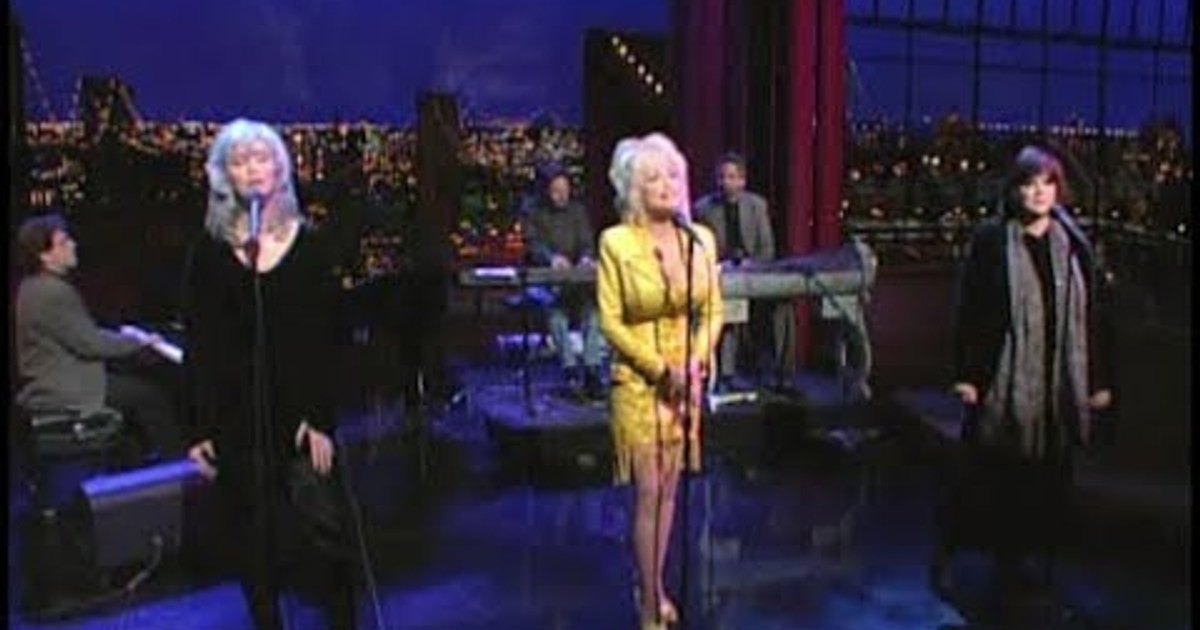
The host holds it up like a relic from another century. The studio lights catch the rims of the glass bowls, and for a second the whole set goes quiet. He says the words "glass harmonica" and then, almost as a punchline, adds that it was invented by Benjamin Franklin. There's a nervous laugh from the audience. He asks if there's any danger of electrocution. More laughter. The three women standing beside him — Emmylou Harris, Linda Ronstadt, Dolly Parton — smile, but their eyes are on the instrument. It looks fragile, almost impossible. Then the applause fades, the band settles, and the room holds its breath. The music hasn't started yet, but something already feels otherworldly.
This is a TV performance, the kind of late-night or variety show moment that used to stop the dial. The host is promoting Trio II, the long-awaited follow-up to the Grammy-winning Trio album from 1987. That first record was a landmark: three of the biggest voices in American music — Harris, the cosmic folk interpreter; Ronstadt, the genre-hopping powerhouse; Parton, the songwriting titan — trading verses and harmonies like old friends. Now, over a decade later, they're back. And they've brought a glass harmonica.
The instrument itself is a piece of history. Benjamin Franklin invented it in 1761, improving on earlier designs by using a series of glass bowls nested inside one another. You play it by wetting your fingers and rubbing the rims. The sound is eerie, ethereal, almost ghostly — a high, singing tone that seems to come from nowhere. In the 18th century, it was briefly fashionable, then fell out of favor. Rumors spread that it drove players mad. Some places banned it. Whether or not that's true, the glass harmonica has always carried a whiff of the strange, the uncanny. It's the perfect instrument for a song about dreams, war, and the end of the world.
The song they perform is a cover of "Mother Nature's Son" — no, wait. The lyrics don't match. "I was lying in a burned-out basement" — that's not "Mother Nature's Son." The lines about knights in armor, peasants singing, drummers drumming, archers with the tree, silver spaceships flying in the yellow haze of the song — these are from a different song entirely. It's a song about the 20th century, about mother nature, about a dream that turns apocalyptic. The glass harmonica's haunting tone fits it perfectly. As the three voices intertwine, the instrument shimmers underneath, like a ghost in the room.
Harris takes the first verse, her voice clear and searching. Ronstadt answers, her tone richer, more grounded. Parton comes in on the chorus, her high, bright harmony cutting through the haze. They don't compete; they braid. The glass harmonica weaves in and out, a strange, fragile thread. The audience is silent, caught in something they didn't expect from a TV performance. This isn't just three legends singing together. It's a moment out of time.
And that's the thing about this performance. It's not just a promotional stop for Trio II. It's a window into a much longer story — the decades-long friendship and collaboration of Harris, Ronstadt, and Parton, the long-delayed sequel to their iconic album, and the way three voices can make something that feels both ancient and new. The glass harmonica is the perfect symbol: a strange, fragile instrument, invented by a founding father, banned for madness, now sharing a stage with three of the biggest voices in American music. It shouldn't work. But it does.
From Trio to Trio II: A Decade of Waiting, A Lifetime of Harmony
The first time Emmylou Harris, Linda Ronstadt, and Dolly Parton stepped into a studio together, it was 1978. Nothing came of it. The tapes sat in a vault, unfinished, while each woman went on to conquer her own corner of the world. Nine years later, in 1987, they tried again. This time, the result was Trio, released on Warner Bros. Records, and it changed everything.
The album was a dream project for Harris and Ronstadt, who had been trying to get Parton into a recording booth since the 1970s. They saw something in each other that the rest of the industry was too slow to notice: three voices that could weave together like threads in a tapestry, each distinct, each essential. The record-buying public agreed. Trio won the Grammy for Best Country Performance by a Duo or Group with Vocal in 1988, and it spawned a string of unforgettable tracks: 'Telling Me Lies', 'Those Memories of You', and their haunting take on 'To Know Him Is to Love Him'.
But the real impact of Trio wasn't the awards or the chart positions. It was the proof. Three superstar women—each with a career that could fill arenas on its own—could share the spotlight and create something greater than the sum of its parts. In a genre often dominated by men, they stood shoulder to shoulder, and the harmony they made was nothing short of revolutionary.
So why did it take twelve years for a follow-up? The answer is as sprawling and human as the women themselves. Life got in the way. Schedules clashed. Solo careers demanded attention. Labels hesitated. And each artist was busy building an empire.
Parton, for starters, was everywhere. In 1980, she starred opposite Jane Fonda and Lily Tomlin in the workplace comedy 9 to 5, directed by Colin Higgins. That same year, she opened Dollywood, her theme park in Pigeon Forge, Tennessee, which would become a cornerstone of her business empire. In 1989, she appeared in Steel Magnolias alongside Sally Field, Julia Roberts, Shirley MacLaine, Olympia Dukakis, and Daryl Hannah—a film that remains a touchstone for its blend of humor and heartbreak. She launched her own production company and kept churning out albums and TV specials. Dolly wasn't just a singer; she was a brand.


