Part 2
[[AD]]
Snorkel Parkas and Bathtub Bedrooms: The Surrealism of Youth
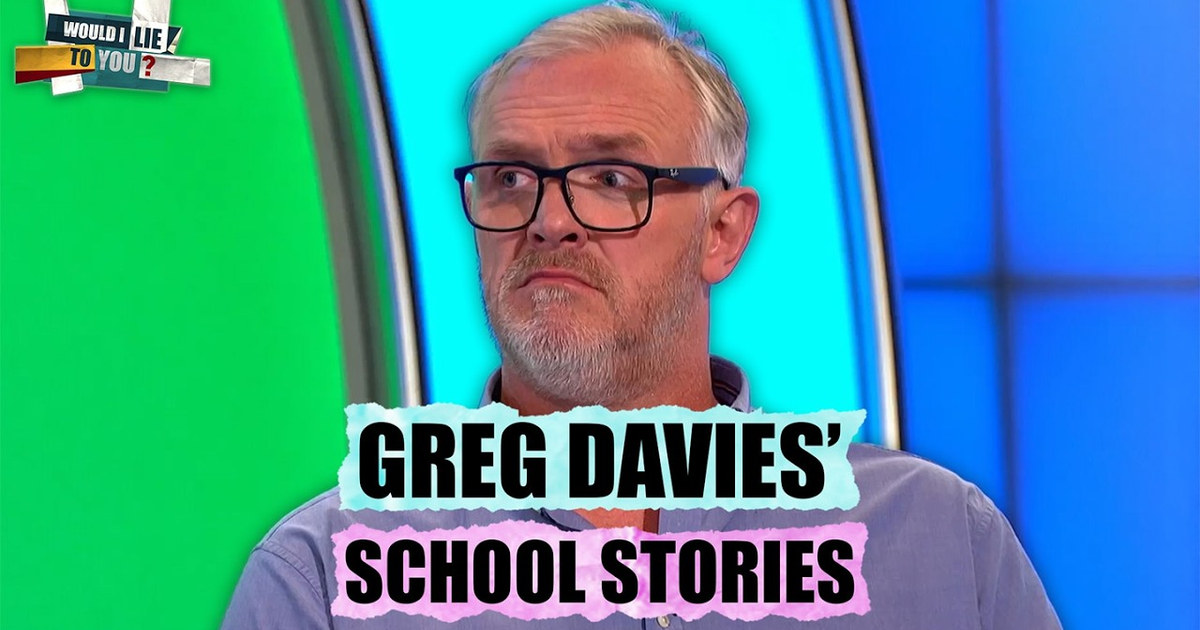
Davies' stories often explore the bizarre rituals of youth, where boredom is the mother of surreal invention. Take the game of "Snorkel Parker Music Practice Room." The rules, as Davies explains them, are delightfully simple: a group of teenagers zip up their fur-lined snorkel parkas until only their eyes are visible, duck beneath the window of a music practice room, and slowly rise up to terrify a student in the middle of a violin lesson.
The physical demonstration of this game on the show—with Davies, Lee Mack, and Richard Ayoade slowly rising behind their desks—is one of the most iconic moments in Would I Lie to You? history. It highlights how Davies' comedy transcends words; it is about the visual gag, the slow-motion absurdity of human behavior. The fact that this game was played consistently from age thirteen through the sixth form makes it even more glorious. It is a monument to harmless, persistent idiocy.
In contrast, the story of Davies sleeping in a bathtub for his first term at university because of a housing mix-up is revealed to be a brilliant lie. Despite the vivid details of the 1970s corner sofa cushions fitting perfectly into the tub and the constant bruising of his cheek against the taps, the logistics fall apart under scrutiny. Why not sleep on the floor? Why sleep at the tap end? It is a reminder that while Davies' life is chaotic, even he has limits.
[[AD]]
The Hoot-Hoot of Death: A Gothic Masterpiece
Perhaps the most revealing story in Davies' repertoire is "The Hoot-Hoot of Death." As a schoolboy, Davies and a friend created a mythology around a crude drawing of an owl. Anyone who found this drawing slipped into their pocket was marked for imminent demise. It was a campaign of psychological terror waged by "nerdy cowards" against their enemies, including a boring English teacher who was left visibly shaken after discovering the drawing mid-lesson.
When Davies draws the owl on set, the result is both hilarious and genuinely unsettling. It is a childish scribble, yet it carries a strange, primitive power. This story, which turned out to be entirely true, reveals the gothic undercurrent that runs through all of Davies' work. He understands that comedy and horror are close cousins, both relying on the sudden disruption of the ordinary.
By planting the owl of death in the pockets of his peers, the young Davies was already practicing the art of narrative manipulation. He was creating a fiction—a curse—and watching as reality bent to accommodate it. It is the exact same skill he uses on the stage of Would I Lie to You?, spinning yarns that leave his opponents searching their own mental pockets for the truth.
[[VIDEO]]
[[AD]]
The Legacy of Greg Davies' Deceptions
Ultimately, Greg Davies' appearances on Would I Lie to You? are more than just memorable television; they are a celebration of the oral tradition of British comedy. In an era of highly polished, heavily scripted entertainment, there is something deeply comforting about a giant of a man sitting in a chair, holding a room captive with nothing but his voice and his memories.
He reminds us that our lives, no matter how mundane, are filled with the raw material of myth. We may not all have catapulted chocolate across a courtyard or bled on a coach to Paris, but we have all felt the desperate, suffocating need to laugh at something entirely inappropriate. Davies elevates these moments of suburban madness into high art, proving that the line between a truth and a lie is often just a matter of how well you tell the story.
We return, finally, to that rumbling coach on the road to Paris. The blood has dried on the floorboards, the Austrian teacher has long since stopped shouting about vegetables, and the children have finally found their passports. But the image of the knee pressing into the metal remains—a silent, painful monument to the lengths we will go to share a joke with a friend. It is a reminder that sometimes, the most ridiculous stories are the ones that are entirely, beautifully true.


