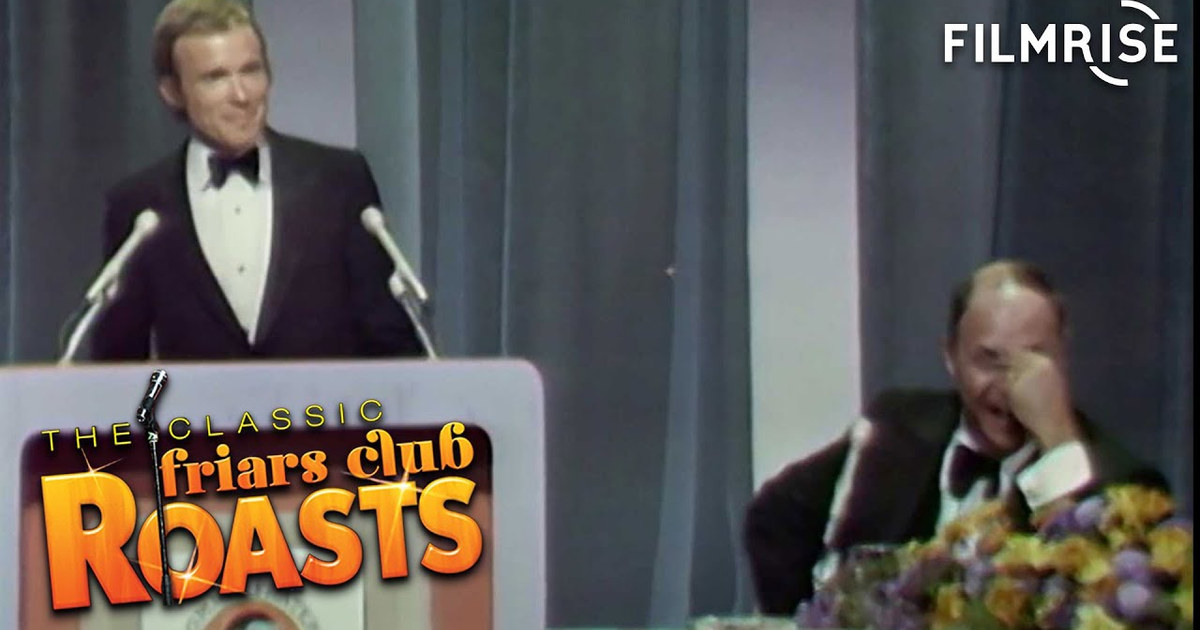
Part 5
The roast is the only format where both can breathe. Try putting the girdle joke on the evening news. Try putting the news bulletin in a nightclub set. Neither survives. Both survive here. That's the edit doing the labor.
The Tape Cuts Out Mid-Sentence
Then the reel ends. Not on a curtain. On a hard cut.
The transcript stops mid-Carson. He's introducing another guest. Somebody who is on opposite him at 11:30.
In 1970, that means one thing. Late night. The Tonight Show slot. A rival network's talk show, sitting directly across the dial from Johnny.
No name needed. The slot says it. The rival says it.
And the tape just stops.
Use the cut. That's content. This isn't an ending. It's a splice point. Whoever held the reel back then didn't stop because the night was over. The night wasn't over. Somebody pulled the plug, or the tape ran out, or the archive only kept the first canister.
Either way, the last thing we hear is Johnny Carson — the editor-in-chief — throwing to a rival.
That's the funny thing about a roast. It's all about who gets the last word, and the tape takes it away from everybody.
The sign-off is still hanging there. Next we play it again and see what it costs.
The Button: Play It Again, Chet
“Good night, Walter.”
Now you know what it cost.
Here's the thesis, in beats. “Good night, Walter” is a joke about a farewell. That's all it ever was on the night — a newsman borrowing his own sign-off and cracking it open in a room built for insults. Fifty-five years on, it plays as something else. The man being roasted is gone. The room is gone. The format survived by becoming the exact thing it used to mock.
Cut. Keep the line in your hand. We'll come back to it before the reel runs out.
Beat One: The Exit Interview
Start on the dais. Chet Huntley.
Johnny Carson sets him up first, because that's the job. “In 15 years the words 'good night, Chet, good night, David' have become household words — particularly in the household they set up together in Georgetown.”
Big laugh. Then the intro line: “the newsman's newsman and Vice President Agnew's favorite entertainer, Mr. Chet Huntley.”
Take a second on that Agnew crack. In 1970 the Vice President had spent a year publicly swinging at the press, and here's the anchor they attacked, getting handed to a room of comedians as a punchline. Topical, brutal, and delivered as a compliment.
Huntley walks to the podium. Half of the most trusted broadcast team in America, stepping into a Friars Club roast. The wrong tool for the job. Which is exactly why he's the right one.
He opens with the only fact he's sure of about the room. “Being invited to this affair tonight is a refreshing change for me — for one thing, I never knew anything happened after 7:00.”
Then he explains the booking. Why him? “I've had such long experience communicating bad news.”
That's the trick. It's all there. The man who told America the worst things that happened, warming up a dais. No impressions. No rimshots. He does bulletins.
He reads fake wire copy about the cancelled Don Rickles show — the one ABC dropped a couple of years earlier. The reels get sealed in cement. Loaded onto an Army train. Hauled toward a seaport. Dumped in the ocean. Protests break out in the towns along the route — not out of grief, but because folks along the tracks are afraid of leakage.
That's a newsman's joke. Structure, attribution, and a clean kicker. He didn't learn that at the Friars Club. He learned it reading copy about assassinations and moon landings.
And then he signs off.
Facts, cold. Huntley left NBC in 1970. The Huntley-Brinkley Report signed off for good on July 31, 1970. He moved to Montana. Co-founded the Big Sky Resort. Died March 20, 1974.
Look at the shape of that move. He bent the format — a newsman, doing stand-up, in a room built for insult comics. Then he quit the format that made him.
Same move Rickles pulled his whole life. Bend it. Then leave it.
Nobody in the room was thinking about any of this. They were thinking about the shrimp. Fine. That's the job.
Beat Two: The Toy With a Face
Cut forward twenty-five years.
- Toy Story. Pixar. Eighty-one minutes. The first fully computer-animated feature, and the movie that turned a studio into a machine. A cowboy, a spaceman, and a plastic potato with a detachable face.
Mr. Potato Head. Voiced by Don Rickles.
Think about that casting for one second. A toy built out of a face. A comedian whose entire act was a face — the eyebrows, the sneer, the slow burn before the kill — lands a character whose face you can pull off, spin, and snap back on wrong.
Nobody writes that. Nobody could write that. It just happened. The best cuts always just happen.
He came back. Toy Story 2 in 1999. Toy Story 3 in 2010. Then posthumously — Rickles died in 2017 — Toy Story 4 in 2019. Not one of them runs past 103 minutes. Kid-scale, every time. The insult comic works best when the audience is sitting on the floor.
Here's the shift, and it's the biggest one in this whole piece. Sit on it. A kid who couldn't have named Don Rickles in 1970 now knows his voice before they know his name. They've heard it in the car. They've heard it in a theater. They've heard it a hundred times. They've never once seen the act.


