Part 1
Dollywood at 40: A Masterclass in Immersive Set Design
I’ve shot second-unit on a lot of sets, and the first thing you learn is that authenticity can’t be faked. You can dress a soundstage to look like a Smoky Mountain holler, but the light never lies. So when Dolly Parton says, “My fingerprints are everywhere,” about Dollywood, I believe her—because I’ve walked those 150 acres in Pigeon Forge, Tennessee, and every sightline, every paint chip, every note of ambient bluegrass feels like it was blocked by someone who grew up in that exact holler. That’s not marketing. That’s production design at a level most Hollywood art departments only dream about.
Dollywood turns 40 this year, and the park’s enduring success isn’t just about roller coasters or cinnamon bread. It’s proof that authentic personal branding is the ultimate production design. Every ride, show, and hotel is a deliberate set piece in the life story of Dolly Parton—and she’s been the director of photography for four decades, maintaining visual continuity like a seasoned DP who never misses a cue.
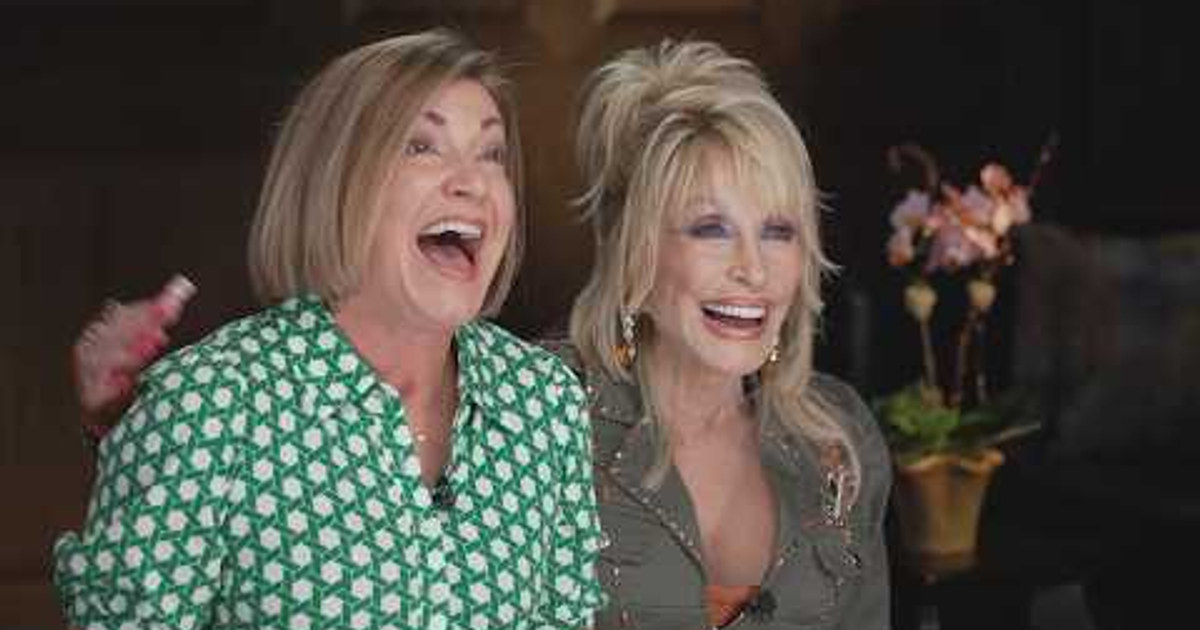
Think about the moment Dolly tells the story of walking through the gates and seeing something new every year. She calls herself the “Dream Room Chief,” a title that sounds whimsical until you realize it’s basically the role of a director of photography for an entire experiential universe. She’s not just signing off on logos; she’s in the room, planning new attractions, making sure they connect to her life. “We try to connect it to parts of my life and to Dolly,” she says. “We kind of call it to make sure that people can feel the connection—not just having stuff out there just to have stuff.” That’s a DP talking about motivated lighting. Nothing in frame is arbitrary. Every prop, every sightline, every color temperature serves the story.
Let’s break down the cinematography of Dollywood itself. First, the natural light. The park sits in the foothills of the Great Smoky Mountains, and the designers didn’t fight that—they leaned in. The Smokies are famous for their blue haze, a phenomenon caused by volatile organic compounds released by the trees. It’s nature’s own atmospheric diffusion, softening every background and creating a depth of field that no lens filter can replicate. The park’s layout uses those layered ridges as a backdrop, so when you’re standing on the midway, you’re not just looking at a roller coaster; you’re looking at a composition that stretches for miles. That’s motivated lighting at a landscape scale.
Then there’s the color palette. Dollywood doesn’t do neon and chrome. It’s earthy tones, warm wood, and nostalgic Americana—the same palette you’d find in a Gordon Willis film like The Godfather (1972, 175 minutes), where amber and shadow tell you everything about family and heritage. The buildings are clad in rough-hewn timber, the signage is hand-painted, and the streetlamps cast a honeyed glow after dusk. Even the newer areas, like Wildwood Grove (opened 2019), stick to that warm, organic scheme. It’s a unified visual language, and it’s maintained year after year because Dolly is in the room, making sure the new stuff matches the old.
The layout itself is a masterclass in blocking guest flow. You enter through Showstreet, a wide boulevard that establishes the scale and the theme—turn-of-the-century Appalachian town. From there, the park funnels you into themed areas: Craftsman’s Valley, Rivertown Junction, Timber Canyon. Each transition is a scene change, and the paths are designed to reveal vistas gradually, like a slow dolly push. You don’t see the Lightning Rod roller coaster until you’re right on top of it, and when you do, it’s framed by pine trees and rockwork. That’s deliberate. That’s blocking. The park guides you through a narrative arc: arrival, exploration, climax (the coasters), and resolution (the shows and shops). It’s a three-act structure you walk through.
Now, let’s talk about the Lightning Rod. When it opened in 2016, it was the world’s fastest wooden coaster, hitting 73 mph. But the stats aren’t the story—the theming is. The coaster is styled as a 1950s hot rod culture tribute, with a garage-themed station and a soundtrack of revving engines. Why hot rods? Because Dolly grew up in Sevierville, Tennessee, and her family’s rural life was surrounded by cars, trucks, and the culture of the open road. The Lightning Rod isn’t just a thrill ride; it’s a character beat. It tells you something about Dolly’s childhood, her Tennessee roots, and her love of Americana. Compare that to, say, the roller coasters at Six Flags, which are often themed to generic superheroes or cartoons. Dollywood’s rides are personal. They’re motivated by story.
That personal touch is exactly why Dollywood succeeds where other celebrity-branded parks falter. Take Graceland, Elvis Presley’s mansion in Memphis. It’s a museum—a preserved time capsule. You walk through roped-off rooms and look at velvet curtains. It’s reverent, but it’s static. Then there’s Opryland USA, which operated from 1972 to 1997 and was themed around country music, but it lacked a single, unifying creative vision. It was a corporate product. Dollywood, by contrast, is a living storyboard. Dolly treats it as an ongoing production, not a memorial. She’s not preserving her past; she’s directing her present. Every year, she gets with the crew to plan new things. “I’m involved because I love getting with the crew every year when we plan new things to talk it down to see what would be good and then how we can kind of make it personable for me and for them,” she says. That’s a showrunner’s mentality. She’s not just the face; she’s the editor, the colorist, the gaffer.


