Part 2
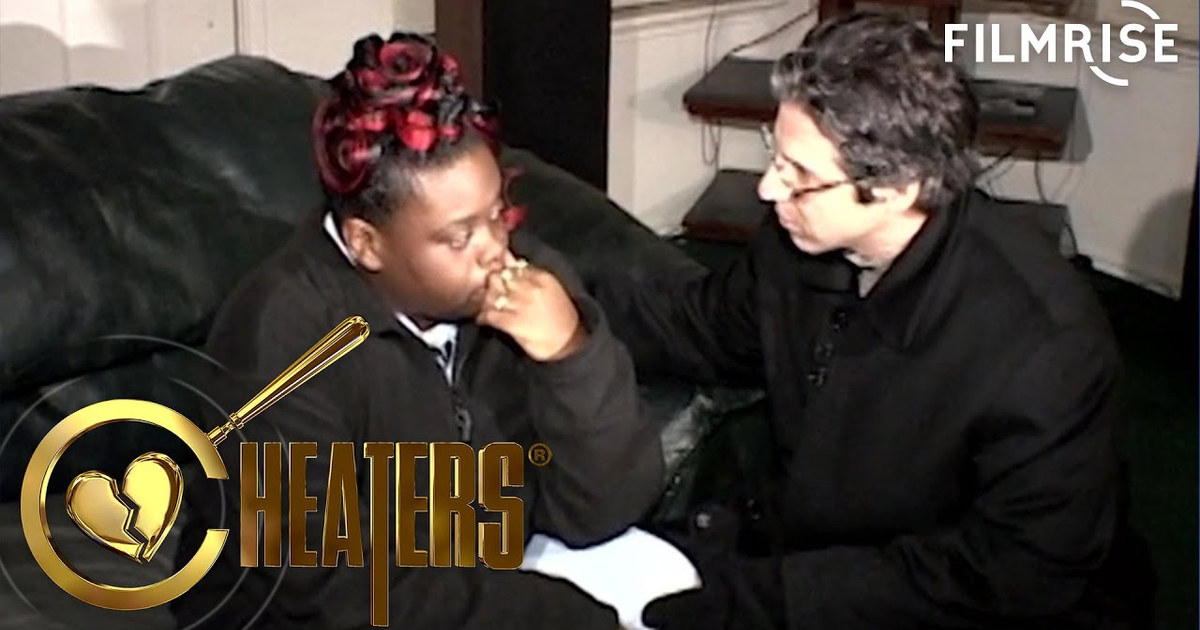
The burning pile of garments serves as an erratic, high-temperature key light flickering at 1800K, casting dancing orange highlights across Andrea's jawline and Joey’s windbreaker. Meanwhile, the unblinking, cool white camera light acts as a hard fill, resulting in an aggressive color-temperature split that narrative colorists spend tens of thousands of dollars to emulate in DaVinci Resolve. The fire crackles, Jermaine scrambles into Lynn's vehicle to make his getaway, and Andrea stands illuminated by the destruction of her four-year relationship.
In the quiet aftermath, as Joey checks on Andrea and law enforcement units take over perimeter security, the camera retreats to a respectful mid-shot. The operator finally drops the focal length back to a natural 35mm equivalent, letting the visual breathing room emphasize her emotional exhaustion. Jermaine later claimed entrapment and demanded compensation for his incinerated wardrobe, while Lynn brushed off the production with dismissive barbs, but the optical proof was already baked into the tape.
The Retrospective Setup: Contrast, Rationalization, and Clean Keys
Cut to the cold-wash studio retrospective where twenty-year-old Margot Vargas sits directly beneath a harsh overhead softbox to litigate her past ambush on Jerry Vielma.
[[AD]]
This revisit format represents a completely different philosophy of visual staging. By ripping Margot out of the kinetic handheld realm of her original ambush—where she was cornered coming out of a commercial storefront with another partner—the producers place her in an intentionally clinical, controlled environment. The key light here is elevated, slightly steep, creating light falloff beneath the orbital sockets that subtly accentuates defensiveness.
Watch the way the cutting pattern plays against the flashback footage. In the archive clip, the camera tracks Jerry Vielma's raw heartbreak as he confronts Margot hand-in-hand with someone else, framed with erratic zoom snaps and unstable Dutch angles that mirror his panic. But in the present-day interview, Margot’s frame is locked on a heavy pedestal mount. There is zero camera float.
Her rationalizations—alleging illicit financial pursuits on Jerry's part and arguing she had to protect her children—are shot with crisp, razor-sharp focus. Yet, the framing places her slightly off-center in the negative space. In cinematic visual grammar, pushing a subject toward the edge of the quadrant while they justify leaving a dedicated partner leaves the audience feeling inherently uneasy.
[[VIDEO]]
She insists that while her children loved Jerry, her new fiancé, Jesse, provides stability despite acting merely as an adequate figurehead. When the camera holds on her unbroken close-up as she announces she is getting married on Saturday, the lack of an insert cut forces the viewer to confront the stark emotional coldness of the transition. It is clean, clinical television editing designed to counterpoint the messy, fire-lit inferno of Andrea Pleasant’s domestic reckoning.
[[AD]]
What to Watch for: Deconstructing Surveillance Realism
When you revisit classic surveillance television, train your eyes to look past the interpersonal screaming and study the technical execution happening directly behind the viewfinder.
First, watch for the telltale signs of extreme telephoto racking during night exteriors. Notice how the ambient headlights bloom into massive, circular bokeh discs when the operator loses focus, and pay attention to how quickly an experienced camera technician finds the iris sweet spot amidst chaotic, unpredictable subject movements.
Second, analyze the deliberate deployment of camera-mounted direct lighting. Notice how the sudden introduction of a hard, unsoftened halogen source completely disorients unsuspecting subjects inside their own homes, creating high-contrast emotional paralysis that producers harvest for peak broadcast drama.
Finally, track the editing cadence between chaotic handheld verité during an ambush and the static, locked-down compositions of retrospective interviews. That juxtaposition is where the true narrative craft lives, converting raw human heartbreak into an indelible piece of late-night television history. Stay tuned for our next deep dive, where we tear down the multi-camera fleet logistics behind daytime court television.


