True visual comedy isn't born from writers standing behind microphones, but from directors who know how to frame chaos so tight inside an anamorphic lens that the frame itself feels ready to shatter under the pressure.
When you spend your nights pulling focus or balancing practical floods on second unit, you develop a ruthless eye for screen space. You stop caring about the patter and you start looking at the optics—how wide an actor is pushed into the edges, how deep the focal plane goes, and whether the guy behind the camera understands how to use a standard spherical package versus CinemaScope to amplify pure lunacy. Most TV directors flatten everything out into flat, three-point sit-com soup, killing timing under soft lighting.
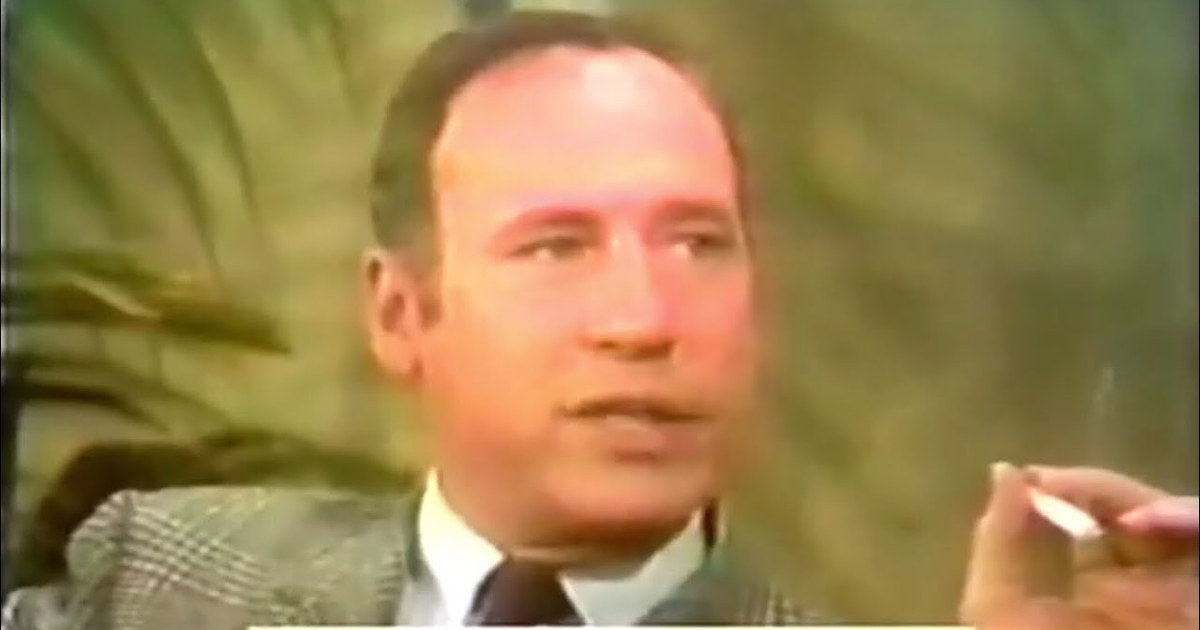
Then you look at Mel Brooks hitting the circuit to promote his directorial debut, *The Producers*. You see a performer clowning with Steve Allen on tape, but underneath the manic Borscht Belt rhythm is a filmmaker who understood exactly how blocking, casting optics, and theatrical scale interact on 35mm stock.
[[AD]]
The Wide Stance: Squeezing Borscht Belt Energy into Wide Lenses
The visual engine of Mel Brooks’ transition into motion pictures kicks off the second he walks into Steve Allen's television lights, instantly clowning about being squeezed into a widescreen aspect ratio. 'Am I a big motion picture? Yes, I'm in CinemaScope folks, look wide!' Brooks yells, immediately mugging toward the boundaries of the lens.
That crack reveals the whole battle of transitioning from a live variety tube to a feature director. In late-night television, you shoot on loose quad-format video cameras with bland pedestals, bathing the floor in harsh white fill so the host doesn't catch shadows. But Brooks didn't direct *The Producers* like an elevated TV sketch; he framed it like a classical widescreen chamber piece that weaponized visual proximity.
When you put Zero Mostel's thunderous frame opposite a trembling accountant in an office set, you can't cut back and forth using lazy medium close-ups. Brooks understood that to sell the scale of Max Bialystock's frantic hustle, you need wide master shots where the actors eat up negative space, testing the glass of every wide-angle lens with every frantic gesture.
[[AD]]
The Wilder Exposure: Gene Wilder's Raw Micro-Expressions
The true test of Mel's eye isn't just framing wide theatrical gestures; it's how he tracked Gene Wilder’s micro-reactions from a single tiny bit part in *Bonnie and Clyde*. Brooks tells Allen about spotting Wilder playing Eugene Grizzard, the captured undertaker who cracks when his fiancée admits her age. Brooks saw that twitchy, high-tension mug on the big screen and instantly cast him as Leo Bloom for practically scale.
From a camera operator's perspective, capturing Gene Wilder requires exceptional depth control. Wilder doesn’t push his energy outward like Zero Mostel; he implodes into the center of the frame, holding tension in his pupils and the tight lines of his jaw before detonating into panic.
If you blow the lighting and wash out his eyes with diffuse fills, you completely lose the fragile breakdown of Bloom clutching his blue blanket. Brooks knew how to let the camera linger on Wilder in a solid two-shot, giving him enough visual oxygen so that every subtle twitch register with the force of an unpinned grenade.
[[AD]]
The Big Number: Staging 'Springtime for Hitler' for the Screen
The entire concept crystallizes when Brooks lays out the plot of his audacious film: an unscrupulous producer and an anxious accountant deliberately engineering a massive box-office catastrophe named *Springtime for Hitler*. They raise a million dollars for a show that costs sixty-five grand, planning to close on opening night and run to Rio with the surplus capital.
The brilliance of the musical sequence within the movie isn't just the jaw-dropping shock value of the lyrics; it's the lavish, Busby Berkeley overhead cinematography Brooks used to stage it. Parodying Hollywood excess requires matching Hollywood production values—down to dynamic crane tracking shots, high-key backlighting on the kickline, and dizzying kaleidoscopic compositions.
If you shoot a bad Broadway musical with cheap, amateurish camera coverage, the joke evaporates. You have to shoot the world's most offensive show tune with pristine, symmetrical studio glamor so that the cinematic apparatus itself highlights the madness of the performers.
[[VIDEO]]
Steve Allen reads an unsolicited letter backstage from Peter Sellers, who hailed *The Producers* as an unmatched comic achievement. Sellers understood screen comedy better than almost anyone in the business, and he knew that Brooks had captured lightning on high-contrast film.
What to Watch for on Your Next Rewatch
Next time you cue up *The Producers*, ignore the sound mix for a few scenes and just watch the blocking. Look at how Brooks stages Mostel and Wilder in that claustrophobic office, using deep staging where one character paces deep in the background while the other sits dead center in the foreground.
Notice how the camera stays rock-steady on long takes during their manic negotiations instead of cutting away to punch-up close-ups. Mel Brooks may have cut his teeth as a gag writer, but when he stepped onto a soundstage, he wielded visual composition like a veteran who knew every foot of optical glass.


