Part 3
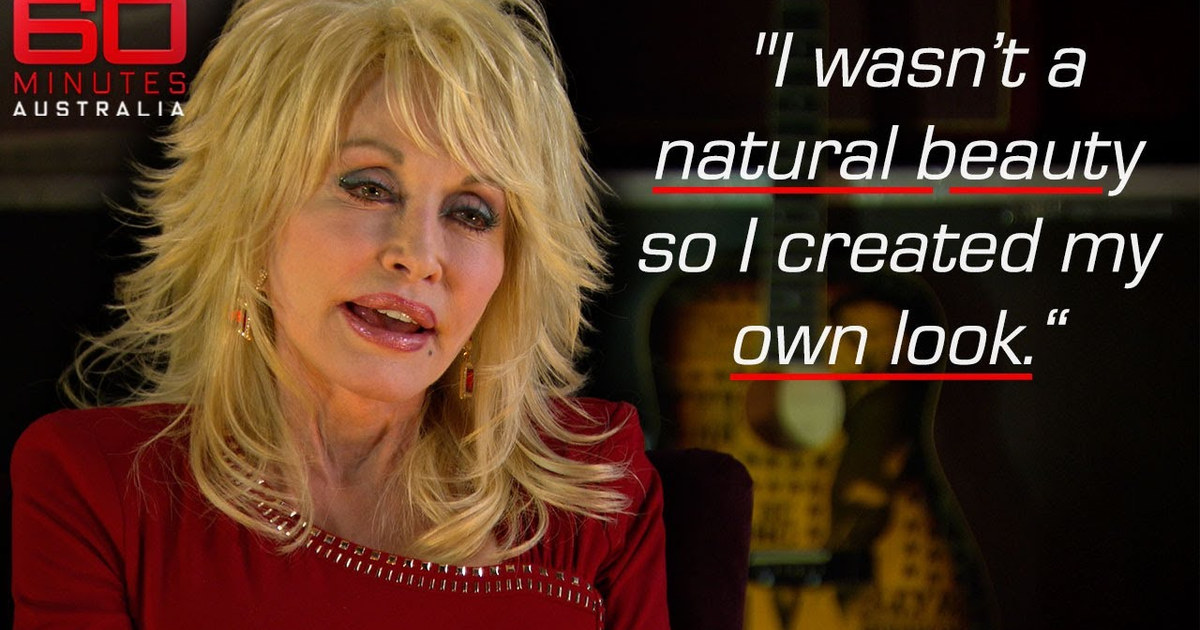
That's the thesis of her whole public life, and it's the thing to watch for if you want to read her like a cinematographer reads a set. Dolly Parton doesn't just show up. She pre-lights, she blocks, she picks the lens. She has spent six decades building a look that is instantly recognizable and technically consistent — and she runs it the way a DP runs a shoot: with a plan for every frame, and a different plan for the frames that only one person will ever see.
Two Audiences, Two Lighting Setups
Here's the beat that tells you everything. Asked whether she ever has a no-wig, no-makeup, no-heels day at home, she says yes — but seldom. Even at home she keeps the heels on, because she's so petite she can't reach her own kitchen cabinets without them. That's a practical grip note, not vanity.
Then she explains the split: she always puts on a little makeup for her husband, always fluffs the hair, because — her words — she doesn't want to look too tacky for him. She refuses to 'look good for everybody and then go home and look like hell for him.'
Read that as a lighting problem and it snaps into focus. The world gets the full rig: the wigs, the wardrobe, the hard key, the sparkle. Her husband gets the soft practical — a little makeup, hair in a scrunchie, downtime allowed. Two audiences, two setups, one subject. Most performers only ever light for the wide shot. Dolly lights for the close-up that nobody else is in the room for.
And that 47-year marriage is the proof of concept. It has outlasted nearly every public relationship in Nashville, partly because she never let the public camera become the only camera.
She Knows Any Frame Can Become THE Frame
Then comes the line that should be printed on a slate. Asked when she last just jumped in the car and went downtown without fixing up, she says she wouldn't do that — because people know her voice as well as her face. And then she names the fear directly: she wouldn't want somebody to get a picture of her looking bad, or a mug shot. She jokes that she'd get arrested on the way to the grocery store for speeding, or for indecent exposure, and that image would be the one that lives forever.
[[AD]]
That's not paranoia. That's a working knowledge of how images circulate. Every cinematographer knows the rule: you don't get to choose which take gets printed. The unflattering frame is the one that gets pulled, screenshotted, and reposted for a decade. Dolly has simply applied that rule to her own body. She treats every public appearance as if the worst frame is the one that will survive — and she dresses, lights, and composes accordingly.
It's the same instinct that made her a natural on camera in 9 to 5 (1980, directed by Colin Higgins, 109 minutes), where she held her own against Jane Fonda and Lily Tomlin, and again in Steel Magnolias (1989, Herbert Ross, 117 minutes), where she walked into an ensemble of Sally Field, Julia Roberts, Shirley MacLaine, and Olympia Dukakis and still owned her scenes. She didn't get there by being the loudest. She got there by being the most composed.
The Four Things to Watch in Every Dolly Interview
Once you know what she's doing, you can spot it in real time. Here's the checklist — the equivalent of a shot list for watching Dolly Parton being interviewed.
Watch how she controls the pace. She never rushes. She lets questions land, answers at her own tempo, and hands the conversation back on her terms. That's a performer who knows the edit is hers to shape.
Notice the self-deprecating humor as deflection. When the questions get too personal — about the marriage, about the private life — she turns it into a joke about her own hair, her own height, her own wigs. It's a soft cutaway. The audience laughs and the subject quietly changes.
See how she references her own songs as character backstory. She calls herself the 'backwoods Barbie' — the same persona she built into 'Daddy Was an Oldtime Preacher Man,' the 1970 duet with Porter Wagoner. Her catalog isn't just music. It's the production design of her public identity, and she keeps reusing the same set pieces because they still read.
Observe her physical stillness. She sits composed. She doesn't fidget, doesn't over-gesture, doesn't give the camera a bad frame to grab. That's a subject who has internalized the lesson that the camera is always rolling — even when it isn't.
The Platforms Change. The Look Doesn't.
Run the tape across formats and the consistency is the story. The daytime talk-show circuit of the 1970s and '80s. The variety-show era that made her a household name. The 2012 musical drama Joyful Noise, directed by Todd Graff, where she starred opposite Queen Latifah and proved she could still anchor a film at 66. The streaming-era interviews, the awards-show appearances, the guest spots on television. Different lenses, different aspect ratios, different decades — same silhouette, same palette, same wig logic.
That's what a 40-year run in Nashville buys you: a look so locked that it survives every format change the industry throws at it. She's been a fixture on TV and in film since the 1960s, and she's never once let the technology of the moment dictate her image. She dictates it, and the technology catches up.
So here's the takeaway. Dolly Parton is not just a subject. She is her own director of photography, her own gaffer, her own colorist. She chooses the location, sets the key, grades the image, and decides which takes get released. She has built a look that is instantly recognizable and technically consistent across six decades — and she has done it by treating every appearance, from a midnight grocery run to a network interview, as a frame worth lighting.
Next time, we'll break down how she uses wigs as continuity — and why that matters for any actor building a franchise character.


