Part 1
The Question: Can a Life Fit Into a Show?
You've probably seen the trailer for Dolly Parton's new multimedia experience at Dollywood. Maybe you've watched the quick cuts of dazzling lights, archival footage, and Dolly herself promising to take you through her life. It's a tantalizing pitch: the story of an icon, from her childhood in the Smoky Mountains to global stardom, all in one immersive show. But as you sit there, popcorn in hand (or maybe just your phone), a nagging question creeps in: Can a single life—especially one as sprawling, as legendary, as Dolly Parton's—ever truly be contained in a show? It's the kind of question that makes you pause the trailer and think. And you're not alone. Dolly herself has wondered the same thing.
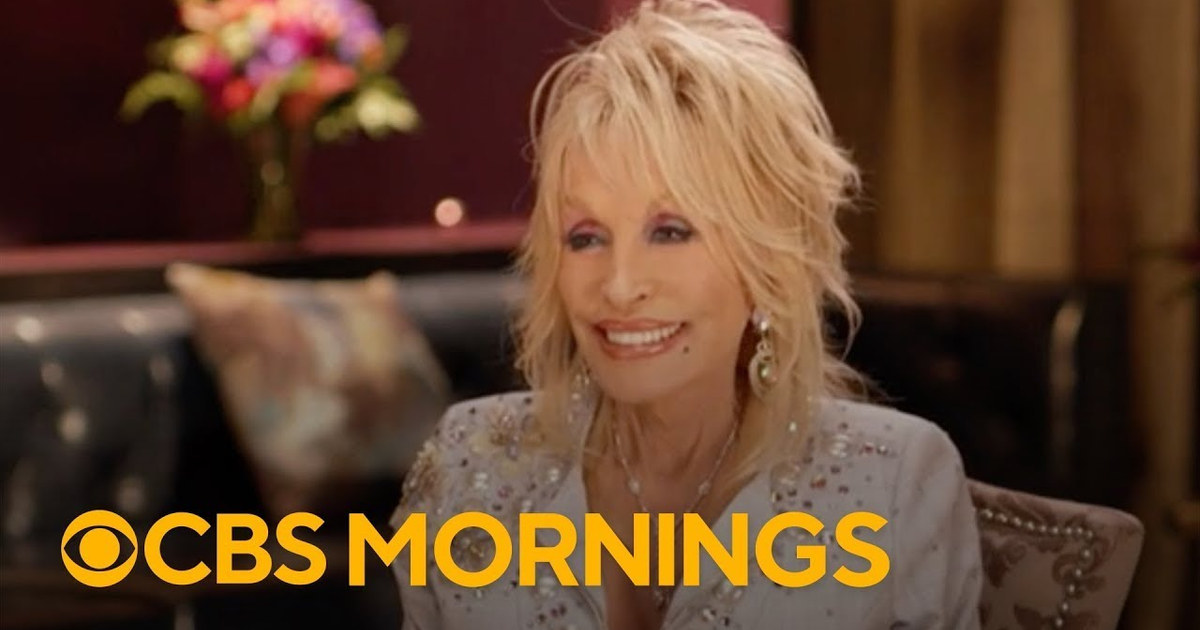
In a recent interview, she admitted, "You were trying to put all of your life into one show which seems to me almost impossible." That's a bold admission from a woman who has never shied away from a challenge. But it's also a reality check. Dolly Parton's life isn't just a series of events; it's a tapestry of music, film, philanthropy, and personal triumph over adversity. It's the kind of life that biopics have tried to capture for decades, with varying degrees of success. Think about it: how many films have attempted to squeeze a legend into two hours? Some have come close, others have fallen flat. So when Dolly says it's "almost impossible," she's speaking from experience—and from a place of deep respect for the complexity of a human story.
To understand the challenge, look at the gold standard of country music biopics: Coal Miner's Daughter (1980). Directed by Michael Apted and starring Sissy Spacek, the film chronicles the life of Loretta Lynn from her humble beginnings in Butcher Hollow, Kentucky, to her rise as the Queen of Country Music. It's a masterpiece, earning Spacek an Academy Award for Best Actress. But even at 125 minutes, it can't cover everything. It skips over Lynn's later years, her collaborations, and some of her personal struggles. It's a snapshot, not a full portrait. And that's a film widely considered the best of its kind. So what hope does a multimedia experience have? At least a film has a runtime; a show can be even more compressed, or it can sprawl across multiple rooms and screens, but it still has to make choices.
Then there's Walk the Line (2005), the Johnny Cash biopic directed by James Mangold and starring Joaquin Phoenix and Reese Witherspoon. It focuses on Cash's relationship with June Carter, his drug addiction, and his redemption. It's a powerful film, but it's not a comprehensive life story. It's a slice, a theme, a moment in time. And that's the point: biopics, by necessity, are selective. They distill a life into a narrative arc that fits a screen. Dolly's multimedia experience faces the same constraint, but with an added twist—it's not just a passive viewing; it's an immersive journey. You walk through it, you interact with it, you're surrounded by it. That might allow for more depth, more chapters, but it still can't be everything. As Dolly said, "There's a lot of chapters." And she's been at this a long time.
But here's the thing: Dolly isn't just any subject. Her life is a multimedia empire in itself. She's a singer-songwriter with over 3,000 songs, an actress (9 to 5, Steel Magnolias), a businesswoman (Dollywood, Imagination Library), and a cultural icon. Her story spans from a one-room cabin in Tennessee to the Grand Ole Opry, from Nashville to Hollywood. How do you capture that? You can't. Not fully. But you can try. And that's what makes this experience so intriguing. It's an attempt to do the impossible, to give fans a glimpse into the many facets of Dolly Parton. It's not a documentary; it's not a biopic; it's something new. And that's exciting.
So can a life fit into a show? The short answer is no. Not entirely. But the longer answer is that it doesn't have to. The goal isn't to replicate every moment; it's to evoke the essence, to tell the story in a way that resonates. Dolly knows this. She's not trying to give us a Wikipedia entry; she's trying to give us an experience. And in that sense, she might just pull it off. As she said, "We did a pretty good job of it." That's Dolly's answer: it's almost impossible, but with the right team and the right vision, you can come close. The experience at Dollywood is her attempt to do just that—to take the sprawling, beautiful, complicated life of Dolly Parton and turn it into something you can walk through, feel, and remember. It's a bold gamble, but if anyone can do it, it's Dolly.
In the next section, we'll explore how this multimedia experience evolved from a simple museum into a full-blown digital extravaganza. But for now, let's sit with the question. Can a life fit into a show? Maybe not. But Dolly Parton is proof that you can try—and that the attempt itself is worth celebrating.
The Evolution: From Museum to Multimedia
You might think a museum is the final word on a legend. Glass cases, velvet ropes, a dusty guitar. But Dolly Parton isn't a relic, and she wasn't about to let her story gather dust. The Dolly Parton Experience, which opened at Dollywood in 2024, isn't a museum. It's a full-blown multimedia extravaganza. And the journey from one to the other tells us everything about how we consume nostalgia in the digital age.


