Part 3
That humility is part of her genius. But so is her business savvy. Dolly Parton isn't just a songwriter. She's a brand. She's a mogul. She's the woman who turned a song about a beautiful woman stealing her man into a cultural touchstone that's still being reinvented fifty years later. She's the woman who wrote a ballad about letting go and watched it become the best-selling single of all time. She's the woman who, when asked about Whitney Houston's success, didn't complain about being overshadowed. She just smiled and said, 'As long as I get the cash.'
[[VIDEO]]
And that's not just a good punchline. It's a philosophy. Dolly Parton understands that art and commerce aren't enemies. They're partners. You write the song. You own the song. You let the world do what it will with the song. And you keep writing. Because the next 'Jolene' is always just around the corner. The next 'I Will Always Love You' is always waiting to be written. And the next Whitney Houston — or Beyoncé — is always out there, ready to take your words and make them their own.
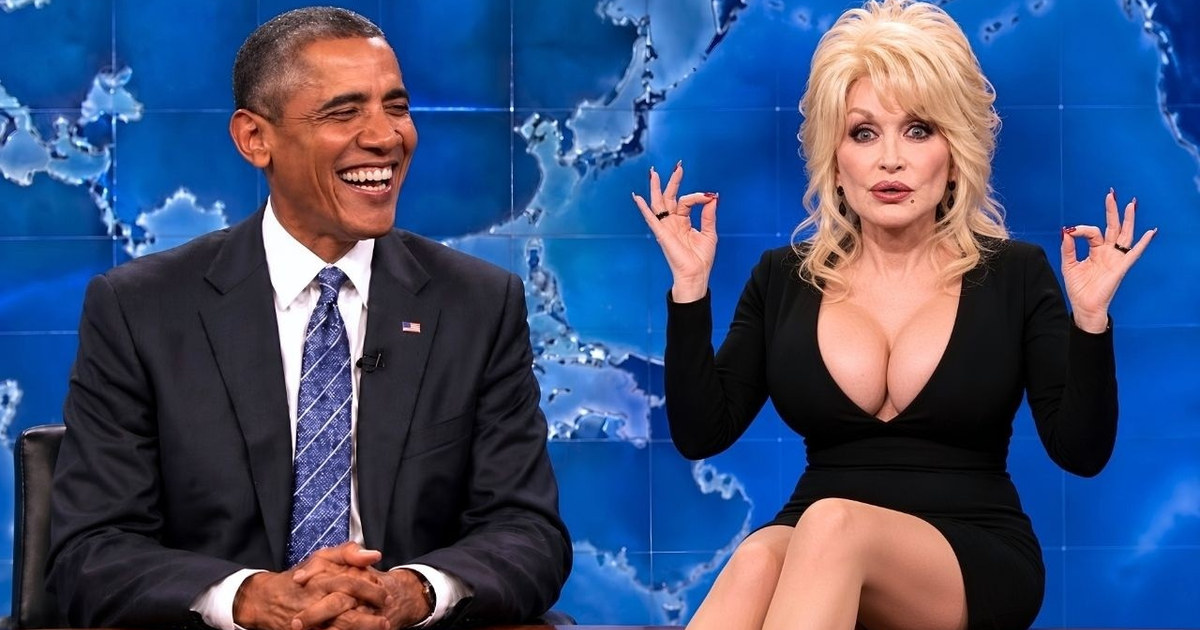
But Dolly's influence isn't just musical. It's cultural. It's personal. It's the way she makes people feel when they're in her presence. It's the way she can make a talk show host laugh, a president admit a mistake, and a global superstar thank her on national television. It's the way she can be outrageous, gaudy, friendly, warm, likable, and really weird-looking — all at the same time — and make it look effortless. Because for Dolly, it is effortless. She's not performing. She's just being Dolly. And that's the most radical thing of all.
In 1987, Dolly appeared on her own variety show, Dolly. It was a short-lived experiment, but it showed a different side of her — the side that could carry a show, tell jokes, and hold her own with anyone. It was the same side that would later make her a beloved guest on The Tonight Show, The View, and every other platform that wanted a piece of her. Dolly Parton doesn't just write songs. She writes moments. She writes punchlines. She writes the kind of scenes that people remember for decades. And she does it all with a wink and a smile, as if to say, 'I know exactly what I'm doing. And I'm having a ball doing it.'
So when Whitney Houston thanked Dolly at the Grammys, it wasn't just a nice moment. It was a full-circle moment. It was the moment when the songwriter became the legend. It was the moment when the woman who wrote 'I Will Always Love You' got to hear someone else sing it back to her — and got to smile, and laugh, and say, 'As long as I get the cash.' Because that's Dolly. She's the genius behind the curtain. She's the pen behind the hits. She's the woman who wrote the songs that made us cry, and then made us laugh about it. And she's not done yet. Not by a long shot.
Next: the wig, the president, and the unchanging heart. Because Dolly Parton isn't just a songwriter. She's a cultural institution. And her story is far from over.
The Wig, the President, and the Unchanging Heart
Jimmy Fallon is sitting behind the Tonight Show desk with a Dolly Parton wig on his head. It's a towering, platinum-blonde confection, a wig that looks like it was spun from cotton candy and ambition. He turns to Dolly, who is sitting right next to him, and asks her how he looks. Without missing a beat, she tilts her head, gives him a once-over, and says he looks 'a little more like Paula Deen and Gary Busey.' The audience howls. Fallon, to his credit, laughs hardest of all. And Dolly, the woman who has sold more than 100 million records, who wrote 'Jolene' and 'I Will Always Love You,' who has been a cultural force for six decades, just sits there grinning, delighted that she could make a late-night host the butt of a joke that he will happily tell for the rest of his life.
That's the thing about Dolly. She can wear a wig that requires its own zip code, stand next to a man wearing a cheap imitation of it, and instead of protecting her iconic image, she turns the whole thing into a bit. She doesn't need to be the coolest person in the room. She just needs everyone in the room to be having a good time. It's a generosity of spirit that runs through everything she does, from the way she talks about other artists covering her songs to the way she handles criticism, and even to the way she handles the President of the United States.
The wig itself is a character in the Dolly Parton story. She has said she wears them because she's too busy to do her own hair, which is a practical explanation for a look that is anything but practical. The wigs are big, blonde, and unapologetically artificial. They sit atop a face that has been open about cosmetic procedures, a face she once joked about by saying, 'God didn't make plastic surgeons so they could starve.' The whole package—the wigs, the makeup, the rhinestones, the heels—is a costume she puts on to become Dolly, and she has never pretended otherwise. She once described herself as 'outrageous, gaudy, friendly, warm, likable, but really weird-looking.' That's not self-deprecation as a strategy. It's self-awareness as a superpower.


