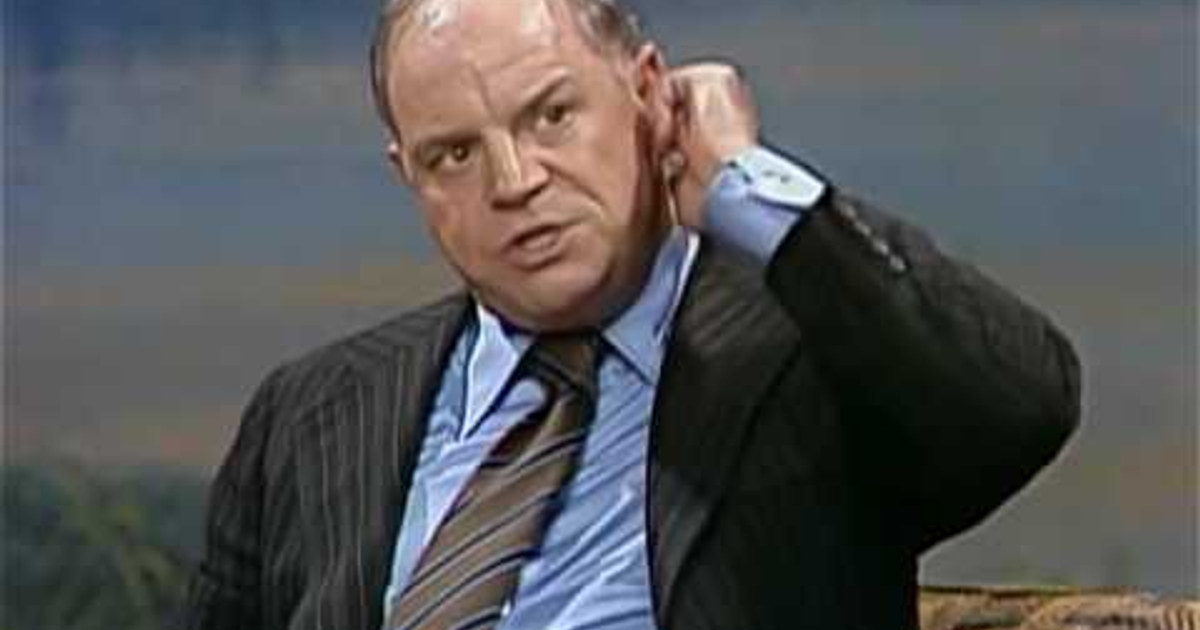
Before Don Rickles even lowers his rear into the leather guest chair, he freezes on the Burbank soundstage in a stiff, tailored jacket, eyes darting like a poker cheat working a crowded room. Johnny Carson watches him from behind the polished mahogany desk, arms folded, grinning with the wary amusement of an explosive technician who just smelled sulfur. 'Look at this,' Johnny says dryly, voice slicing through the studio horns. 'He shot a bear and made an outfit.' Rickles does not break character to laugh. Instead, he pats the synthetic hide, scowls into the glare of the camera monitors, and snaps back: 'That's ultra-suede.' In that two-second pause, the entire universe of late-night television teeters on the edge of utter chaos.
That tiny standoff captures the exact spark that made their dynamic legendary. Rickles was ostensibly there to plug his NBC sitcom CPO Sharkey and hyping an upcoming weekend residency at the Sahara Hotel in Las Vegas. Carson had prepared his standard index cards, ready to steer the ship with his customary midwestern grace. But the minute Rickles marched past the curtain, every rule of polite network broadcasting evaporated into thin air.
To watch Don Rickles share a desk with Johnny Carson is to watch a masterclass in controlled detonation. Most talk show guests arrive with rehearsed anecdotes polished until they gleam like plastic fruit. Rickles arrived with a machete, ready to hack through every ounce of television decorum.
[[AD]]
The Stand-Off: Refusing to Sit in the King's Court
The opening routine is pure kinetic theater. Rickles hovers by the guest armchair, refusing to take his seat because Johnny is still standing. 'I was waiting for you to sit down,' Don mutters, eyeing the host like an uninvited bouncer. Johnny shrugs back, wondering aloud if Don was simply frozen by an arthritis attack. Within seconds, Rickles turns the routine furniture of a television studio into a psychiatric holding cell: 'Are you going to strap me in, or can I talk first?'
Nothing is safe from that opening barrage. Not Johnny's plugs, not Ed McMahon's booming laugh, and certainly not the delicate illusions of show business camaraderie. When Johnny brings up how they've known each other for nearly two decades, Rickles weaponizes the memory instantly. He doesn't offer warm nostalgia; he drags Johnny back to Basin Street East in New York, back when both men were still hungry, restless, and running through clubs until dawn.
Then comes Ed McMahon, sitting on his couch like a grinning monument. Rickles pivots on his heel and fires without hesitation. He mocks Ed's marriage, fabricates childhood sweethearts, and paints Ed as a man wandering the park looking for his youth. It looks savage on paper, but the Burbank crowd is howling because they understand the secret: Rickles only targets the people he genuinely loves.
[[AD]]
Puncturing the Myth of Hollywood Friendships
The sharpest weapon in Rickles’ arsenal was always his refusal to protect celebrity myths. While other comedians bowed before the royalty of Frank Sinatra and Gregory Peck, Rickles treated the A-list like backyard neighbors who owed him money. He openly mocks Johnny's high-society lifestyle, drawing a sharp line between Johnny’s glamorous elite circle and the grimy trenches of everyday show business.
He paints a hilarious picture of Johnny trying to work his way into Frank Sinatra's inner circle, only for Frank to dismiss him from across the room. When Carson reveals that Sinatra invited him on a massive group trip to Israel, Rickles ruins the prestige in a heartbeat. 'Then what good is the trip?' Rickles barks, pointing out that Sinatra invited hundreds of Gentiles while Rickles assumed he was getting an exclusive VIP pass. 'Now it'll become a rally, and we'll have to raise money!'
Even best friend Bob Newhart gets caught in the crossfire. Rickles recounts their travels abroad, juxtaposing Newhart’s stoic German-Irish Catholic demeanor against his own neurotic, unvarnished Jewish identity. In Don's hands, sacred rites and Hollywood legends become absurd everyday scenes, stripped clean of pretension.
[[AD]]
WWII Battle Stations: When the Clowns Talk About the War
Just when the segment threatens to break into complete hysteria, Johnny pivots to their military service. Both men served in World War II, a shared reality that grounds their biting banter in genuine history. Yet even the theater of global conflict becomes raw fuel for the comedy mill.
Johnny was an ensign; Ed was a decorated Marine colonel. Rickles? He proudly reminds the crowd he was a Seaman First Class. When Johnny presses him about his actual naval division—expecting Gunnery or Communications—Rickles deadpans that his primary duty was painting the ship. When Johnny asks if he rose in rank, Don treats the question like an interrogation: 'What are you, with the CIA? Am I up on charges?'
There is a rare, flickering beat of honesty beneath the joke. Rickles openly admits that he never made rank because he simply was not book-smart. He talks about cheating during high school Regents exams in New York and being thrown out of class by an exhausted teacher. For three seconds, you see the insecure kid from Jackson Heights peeking through the armor before the insult comic storms back onto the stage.
[[AD]]
The Unsung Rhythm of Carson's Perfect Defense
Most hosts crumble when a hurricane like Rickles enters the room. They interrupt, panic, or laugh nervously into their cue cards. Johnny Carson never made that mistake. Carson understood that against an unguided missile, the desk was an anchor and deadpan silence was the sharpest punchline.
Watch Carson's eyes throughout the exchange. He feeds Rickles straight lines with surgical precision. When Don pauses to catch his breath, Carson drops a single, needle-sharp observation about his outfit or his notes, baiting Rickles into another furious sprint. It is a comic duet that required immense trust and absolute fearlessness.
[[VIDEO]]
That trust is why Rickles could joke about Johnny's private life, his divorces, and his contract negotiations without ever genuinely wounding the host. They were veterans of the smoky club circuit, survivors of an era when you fought for every single laugh with your bare hands. The insults were not cruelty; they were late-night love letters written in fire.
[[AD]]
The Bear Skin That Never Left the Room
Return for a moment to that opening image: Don Rickles standing beside the couch in that ludicrous ultra-suede jacket, waiting for Carson to sit first. Seen in isolation, it looks like a ridiculous comedy bit about a bad fashion choice. But seen through the lens of their entire history, it is something much deeper.
That jacket was armor. Rickles stepped onto that stage ready to battle the smooth, unflappable monarch of television, armed only with neurosis, rapid-fire pacing, and zero shame. When Johnny called him a bear hunter, he wasn't just making a cheap wardrobe crack. He was naming the predator in the room—and welcoming him home to the desk.


